Showing posts with label november release. Show all posts

Sunday, October 19, 2014

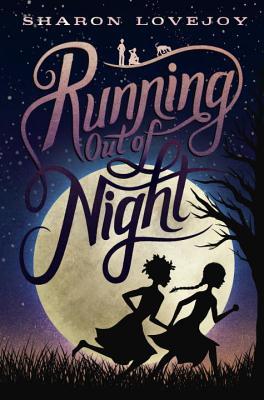
Running Out of Night by Sharon Lovejoy

She's never had a name, and she's never known a friend.  She takes care of her father's house and is treated brutally.  Everything changes when Zenobia, a runaway slave, stumbles into her home.  Zenobia names the girl Lark, and the two set out together, determined to find their freedom.

Such an interesting story.  Very different from other middle grade of YA stories I've read about slaves running during the 1800s.  First there is the aspect that Lark is white, but no less a slave than Zenobia is.  She realizes though, that while she was cruelly treated, it was still nothing like what Zenobia and other Black slaves suffered.

Unusually, story begins and ends in Virginia.  Zenobia and Lark run, but they never actually get very far away from Lark's home, despite all their traveling and hardships.  This book really showed the ruthless determination that slave catchers had, especially when a big reward was involved.  And Lark's father is not about to let her go so easily.  We never actually see any of the characters safe to freedom.  We never see them get out of Virginia.

Zenobia knows about the Underground Railroad, but despite that, it's not so easy to jump on.  And even when they do find a safe house, they're not safe.  That was definitely a theme of the book, looking for safety and freedom, never quite finding it, never stopping hoping it's out there somewhere.

Zenobia and Lark are taken in by a Quaker woman, Auntie, who shelters them and arranges for Zenobia's escape to Canada.  Canada, at this point in history, is pretty much the only safe place to run to, because even if a slave made it to the North, they could still be captured and returned.  The Quakers believe in nonviolence and are against slavery.  Many in the Quaker community are becoming reluctant to help runaways, because the runaways' harsh treatment is coming down on them too.  Indeed, when Zenobia is discovered and taken, Auntie is taken too.  She never stops believing that nonviolence is the only answer though.

Lark undergoes some changes throughout the book.  At first, she's too afraid to have anything to do with Zenobia.  She doesn't want any more trouble then she already has.  But she can't help but see Zenobia's fear is similar to her own.  And Lark starts to think about why she's never left the people who hurt her.  She realizes she's been a slave too, and that she doesn't have to anymore.  She can care and help other people, too.

The book ends with hope.  And we are left so wanting these characters to find their Promised Land, after everything they've been through.  Great historical fiction read.

Running Out of Night comes out November 1, 2014.

Friday, November 26, 2010

The Mockingbirds by Daisy Whitney

Alex got drunk for the first time at a concert. And that night she was date raped. Alex knows the administration at her prestigious boarding school has a history of looking away from any issues that might make their students seem less than perfect. So Alex goes to the Mockingbirds, a secret student organization that tries crimes and doles out punishment. As Alex slowly remembers more and more about that night, she wonders if she's doing the right thing.

I had mixed feeling about this book. On the one hand, I think date rape is an important topic to talk about. Rape does not have to be done by someone the victim doesn't know; it doesn't even have to be especially violent. The lack of consent is what makes it rape. Alex struggles with this, wondering if it's her fault. She got herself drunk, she was talking to Carter. Is it his fault? Or is it her fault? Does she have a right to be upset about it?

Tuesday, November 23, 2010

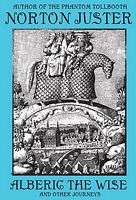
Alberic the Wise and Other Tales by Norton Juster, illustrated by Domenico Gnoli

A compilation of three short fairy tales: "Alberic the Wise", about a man named Alberic who spends his life searching for wisdom and trying out many vocations along the way, only to find as an old man he is perceived as wise because of his experiences; "She Cries No More", about a young boy named Claude, who doesn't care about anything until he steps inside a painting to help a beautiful lady; "Two Kings", where a king who lives in poverty and a king who lives in great abundance set out to find out if there's another kingdom better off or worse off than they are.

While this was a very short book (only 88 pages) and it wasn't very complex, and it has pictures and all, this isn't really a children's book. In the same that fairy tales weren't really meant for children, it just ended up that way. They are stories that teach a lesson, and they were nice stories, and I enjoyed them very much, but I also don't really see myself recommending this as a fun read for very many children. It is the kind of book a parent gets to read aloud to their kid and then talk about it.

For example, in "Two King," Good King RNP's kingdom is in ruins. The weather is always bad, no one has any money, and no one even knows who the king is. He's completely miserable, but his only adviser assures him that it's probably worse everywhere else. Meanwhile, King Magnus the Abundant's kingdom is beautiful, happy, and plentiful. However, King Magnus wonders if somewhere out there there's some who has more than he does. Both kings set out to see for themselves. King Magnus' people love him so much they don't want him to be sad when he gets somewhere where people don't greet him, so the entire kingdom packs up and secretly travels to King RNP's kingdom, fixes everything up, and then lines the street to greet him. King Magnus is happy, until he sees how new and beautiful everything is and thinks that someone does have things better than he does. King RNP arrives and King Magnus' deserted kingdom, where a storm as destroyed much of it. He looks around at the destroyed, abandon town, and thinks that some does have things worse than he does. King RNP goes home happy, and King Magnus goes home sad.

I was most interested in "Alberic the Wise," where Alberic goes from vocation to vocation, but not really being good at anything and then moves on. This reminded me very much of Lloyd Alexander's Tarran Wanderer. I bet there's some Old Norse or Old English story that both were based on. Maybe I'll email my Literature and the Fantastic teacher and ask her.

So anyway, I liked it a lot, I love Norton Juster, good stories, not exactly a kid's book though.

Monday, November 22, 2010

The Sweetness of Salt by Cecilia Galante

Julia has just graduated from high school. She was valediction. She's getting a free ride to college where she will be pre-law. She will be spending her summer at a law related internship. Everything is perfect, just as Julia's life has always been. Then Julia's sister, Sophie, comes home. Sophie never got along with their parents. She's still angry about the time they spent in Milford, before Julia was born. Julia thinks she knows everything that happens, but Sophie says there's something that their parents haven’t told her. Julia ends up spending the summer with Sophie, helping Sophie getting ready to open her own bakery. Julia wants to learn the whole truth, but even Sophie has a hard time explaining.

This book and I got in a fight on page 105. This is Sophie talking to Julia about her bakery: "Plus, I want to have a wall for all different kinds of specials. Maybe a certain bread - like Irish soda bread for St. Patrick's Day, fruitcake for Christmas, or challah bread for Passover - whatever." Challah is eaten on Shabbat. Shabbat starts every Friday night and ends Saturday night. Every single week. On Passover, Jews don't eat any food that has leaven, so Passover is actually one of the few times when challah would NOT be eaten. Why, when writers are writing about a culture that is not their own, don't they double check things? Why don't the editors? I'm sure this happens all the time and I don't pick up on it because I don't know. But when I can pick up on it, it annoys me to no end. So of course, I immediately went to my computer to send an email to Bloomsbury. There's usually a "please e-mail your comments" address on the back of ARCs. Which there was. And the contact person was Deb Shapiro. You know how cranky it made me that I had to email someone name Deb Shapiro and tell her that Jews don't eat challah on Passover? I know, I know, I'm sure Deb didn't have anything to do with the editing of the book. They have not emailed me back, by the way.

Thursday, July 15, 2010

The Marbury Lens by Andrew Smith


OK, so I'm going to preface my summary with the fact that I've just spent 15 minutes trying to write two sentences summing up the brilliant beginning of Andrew Smith's book. It is a seemingly impossible task for me. There's too much. Not just plot but character details. It is more or less impossible to completely encompass this book concisely and not give some vital detail away. So I'm going to take the easy way out and give you the summary off of Amazon.com:

"Sixteen-year-old Jack gets drunk and is in the wrong place at the wrong time. He is kidnapped. He escapes, narrowly. The only person he tells is his best friend, Conner. When they arrive in London as planned for summer break, a stranger hands Jack a pair of glasses. Through the lenses, he sees another world called Marbury.

There is war in Marbury. It is a desolate and murderous place where Jack is responsible for the survival of two younger boys. Conner is there, too. But he’s trying to kill them.

Meanwhile, Jack is falling in love with an English girl, and afraid he’s losing his mind.

Conner tells Jack it’s going to be okay.

But it’s not."

AND THAT DOESN'T EVEN SCRATCH THE SURFACE OF THIS BOOK

Saturday, July 3, 2010

Matched by Ally Condie


Cassia lives in a perfect Society. Her government makes sure that life is lived optimally, pre-planning everything from birth to death so that everyone can have the best life that they can have. Cassia is seventeen and everything is about to change for her. She is being matched to her optimal spouse, she is about to be assigned to her career, and her grandfather is turning eighty and going to die. The happiest night of her life is when the cracks start to show. She is matched to her best friend Xander, but later a different face, an acquaintance named Ky, is shown as her true match. Her grandfather shows her banned poems before his death, poems that make her wish that she could create instead of organize. Cassia's life is crumbling as she has to decide whether freedom of choice is worth the safety of everyone she loves. Her family is being watched, the Society seems to be pushing measures of equality further than are comfortable, and as Cassia starts to fall in love there are whispers of dissent.

When I started reading this I was strongly reminded of The Giver by Lois Lowry: sorting children into proscribed paths, pills to keep the masses calm, and how the the need for choice and independence of mind will eventually buck under a dictatorial government. Unfortunately the similarities ended there. There were good points, I enjoyed Cassia's interactions with her family and the burgeoning realization that she needed more out of life than what she was receiving. But I felt that the romance side was rather weak, which unfortunate as this is essentially a romance in the trappings of a Utopian dystopia.

Related Posts Plugin for WordPress, Blogger...