Darryl Cunningham debunks a number of prevalent myths, from the moon landing being a hoax to vaccinations causing Autism. For each myth Cunningham uses science and proven facts to explain why the myths are just that: myths.
I found this to be a very informative book, but it's also a book that's preaching to the choir. You're not going to pick up this book if you're a person who thinks climate change doesn't exist or that there's no such thing as evolution. This isn't going to be the book that manages to convince naysayers otherwise, because the naysayers aren't going to pick up a book on exposing the myths of science denial, even if it's in a friendly graphic novel format.
But if you're a person who's interested in where these myths come from, and how they can scientifically be refuted (so you can impress your friends and be prepared for your next cocktail party when someone says, "So what do you think about fracking?") this is the book for you.
What I liked about it was that it stressed critical thinking and the scientific method. Cunningham was very clear that just because we find something to be true now using the scientific method, doesn't mean that that will always be the case. Some new piece of information or research might come along that changes things. Something new might be discovered. But we must think critically and base our understanding on facts that come about through careful experimentation and observation. We can't disregard pieces of information because they don't fit with what we personally think, or what we'd like to be true.
Cunningham provided evidence for each issue he was looking at, as well as explaining how the myth originated, and how scientific data and facts can prove the myth inaccurate.
The writing is clear and straightforward, although I found some concepts easier to understand than others. I still find the concept of fracking confusing. Also, frack will never not make me think of Battlestar Galactica (the one with the moral dilemmas, not the one with the laser beams).
The book is arranged in strips, with three rows on each page with two panels per row with little variation. The art is carrtoonish, and is mixed with real photographs and detailed portraits of individuals mentioned. It made for an interesting mix.
While younger middle school students might have difficult, I think this would be appropriate for 8th grade and up.
Showing posts with label YA. Show all posts
Tuesday, April 21, 2015
Tuesday, February 24, 2015
Jane, the Fox & Me by Fanny Britt, illustrated by Isabelle Arsenault
Helene used to be friends with a group of girls at schools. But now
they all make fun of her, calling her fat. Helene has no one now. She
finds comfort in reading Jane Eyre. Jane had no on either, but
she was still smart and capable. The final straw comes when Helene is
humiliated in front of everyone on a school trip. Not even Jane Eyre is
enough anymore.
This was lovely. A heartfelt story about bullying, the feeling of isolation, and the impact a single person can make by reaching out to another.
Helene takes things especially hard because the girls who are now tormenting her were once her friends. Helene doesn't really know what happened, but now she has no one. No one will talk to her. She is a social outcast. Helene works her way through Jane Eyre, finding a companion in isolation and comfort that things can work out OK, even for someone who is friendless. Helene begins to despair when things take a bad turn for Jane, and she has to go on a retreat with her whole class.
It's on this retreat that Helene, feeling more alone than ever, sees the fox. The fox is beautiful and approaches her. But even this magical moment is ruined and makes her feel like a freak.
I was confused throughout the book by how Helene was draw. All her ex-friends are calling her fat. She's sure her mother is ashamed of her. But she didn't look overweight at all. It all becomes clear toward the end when Helene goes for her yearly physical and her doctor informs her she's right on track. Helene insists she's fat. The doctor informs her she isn't anything of the kind. The kids at school calling her fat got into her head until Helene truly believed that she was. And the kids calling her fat were just being cruel. It was based on nothing.
The illustrations were for the most part in gray and black, reflecting Helene's depression and feelings of isolation. The only color was when we saw Jane Eyre. Jane's life had a little color in it, although Jane herself was still all black and white. For Helene, everything is gray until the fox appears. The fox is bright with color. A fleeting brightness in Helene's life. But then it's gone and everything is black again.
As Helene makes friends with Geraldine, color begins to come into Helene's world. Not right away. But after making a friend and realizing she isn't actually overweight, we begin to see a few spots of color. On sneakers and tee shirts, in the trees, and it ends with Helene walking into a world of color.
Wednesday, February 4, 2015
I'll Give You the Sun by Jandy Nelson
Twins Jude and Noah once shared everything. But when they were 13, a chain of events pushed them apart. Now at 16, the two hardly speak, each having knowledge of something that would make the puzzle pieces of the last three years fit together. But each is trapped in their created world of lies and jealously and fear.
I'll Give You the Sun just won the 2015 Printz Award. So convenient since I'd just read it the week before and it was my favorite YA of the year. The Printz Award has never gone to my favorite YA of the year, so it was all very exciting.
This was really beautiful. The framing device worked perfectly, the characters were relatable, and even when they did some pretty terrible, I cared about them and wanted everything to work out in the end. I actually ruined it for myself by flipping around and reading things out of order to find out what happened. Don't do that! It all comes together quite nicely if you let it.
Labels:
family,
fiction,
LGBTQ,
relationships,
serious issues,
YA
Thursday, January 29, 2015
Gabi A Girl in Pieces by Isabel Quintero
Gabi starts keeping a diary the summer before her senior year of high school. She writes about her life. Her best friend Cindy, who finds out she's pregnant, her father and his meth habit, her mother who worries that Gabi's too fat, her friend Sebastian who's just come out, the boys Gabi has crushes on, and the poetry class she is coming to love.
It sounds like every single Issue Storyline is in this book. And I guess it is. But it worked, so, so well. It did not feel like an after school special. It felt heartbreakingly realistic. This was Gabi's daily life. This is what she is surrounded by in her community.
Gabi is hysterical. She's sassy and vulgar and completely open. She does not mince words. She's full of self-doubt like any teenage girl, but also has a wonderful spirit. She is empowered. And she only becomes more so.
Her mother is constantly telling her she's too fat and to lose weight. No one will ever love her when she's fat. Gabi thinks about this sometime. She'd like to lose weight and be skinny and, in her mind (and her mother's), prettier. But it's also clearly not the most important thing to her. Gabi thinks on it, certainly, but she does not let it define her, despite her mother. The other physical aspect Gabi thinks about is her skin color. She's light skinned, and people sometimes don't know she's Mexican. Some people think she doesn't look Mexican enough. It frustrates her and makes her angry.
Gabi has two great friends who are also going through some tough issues. Cindy is pregnant and is going to keep the baby. Sebastian has been kicked out of his house after coming out to his parents. Gabi tries to be a good, supportive friend, even though she doesn't always agree with their actions.
The saddest part of the story, I thought, was Gabi's father. He's a meth addict, and is constantly disappearing for weeks or months on end. Gabi is afraid he'll die while he's out on one of his binges and they'll never see him again. She's so angry with him for doing this to their family, but loves him anyway. She loves her mother, even though sometimes her mother says some really cruel things to her. She tries to help her little brother, who acts like he's OK, but is feeling so much it's exploding out of him in destructive ways.
All this serious stuff is going on, but they're all still just teenagers, and Gabi wants to find herself a boyfriend. She's excited to go out on dates and kiss boys. She makes lots of mistakes, messes things up, tries to fix things.
A definite bonus to this book was that the diary entries were done in a realistic way. There was no, "I'm writing this while I'm supposedly in the middle of a big dramatic fight with someone." All the entries are Gabi writing after the fact, telling what happened and reflecting on how she dealt with things and how she feels now.
Gabi is such a wonderful, relatable, joyful character. Teens will connect with her and care about her and see aspects of their own lives in her stories. This is definitely a book for older teens, because language and some graphic content.
Really wonderful. A must read.
Labels:
family,
fiction,
friendship,
realistic fiction,
relationships,
serious issues,
YA
Sunday, January 18, 2015
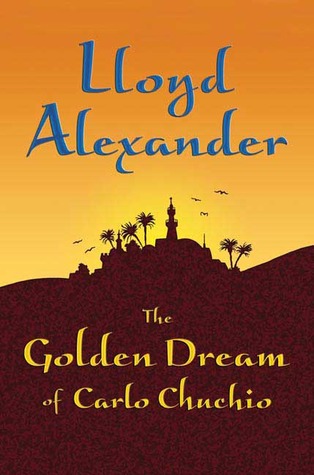
The Golden Dream of Carlo Chuchio by Lloyd Alexander
After years of working (and supported by) for his uncle, Carlo is on his own. In his possession is a treasure map to the hidden treasure on the Road of Golden Dreams. Carlo doesn't know if the map is even real, but he is willing to take the chance. Carlo sets off on his journey picking up along the way a rag-tag group of wanders who together try and find their heart's desires.
I am a Lloyd Alexander fan. I loved The Chronicles of Prydain series. I read those over and over again growing up. This is the last book of his that was published. I had high expectations that were not met.
I just wasn't very interested in either the story or the characters. Neither seemed to have much of a point. The plot wandered along, seeming unsure if it wanted to be a philosophical tale or an adventure story.
The characters lacked depth, which was very disappointing. We don't even really get to know Carlo that well. He seems a bit of a bumbling fool. Is there more to him? It's hard to say. We learn absolutely nothing about Shira, the Kirkassi girl who is traveling with him. He falls in love with her. She falls in love with him. Why do they like each other? She's really beautiful. He's kind of an idiot. I have no idea what she saw in him. We'll never know since her character is completely undeveloped.
The two others in their party are Baksheesh, the world's worst camel-puller and Salamon, a philosopher who loves animals. Off all the characters, I thought Baksheesh was the most developed. We learn a lot about him through his dialogue. He's a lazy sneak who will do anything to avoid work. He's a fast talker who can talk his way out of almost anything and is also fiercely loyal. Salamon was another character that I wasn't quite sure why he was there. We didn't learn much about him. He's wise and wants to see the sea. He's good with animals. That's about it.
The adventure story was mixed with philosophical musings about life and dreams. It didn't work well together. I think this last work was meant to be a look at the meaning of life, but it doesn't really come through.
Not Lloyd Alexander's best.
Labels:
adventure,
boy appeal,
fiction,
middle grade,
YA
Thursday, December 25, 2014
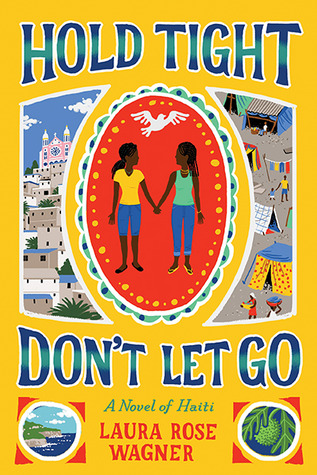
Hold Tight, Don't Let Go by Laura Rose Wagner
Magdalie was living with her aunt and sister-cousin Nadine in Port-au-Prince when the earthquake struck. Magdalie's aunt is killed when the house she worked in collapsed. Magdalie and Nadine are like sisters. They forget that in actuality they are cousins and that Manman wasn't Magdalie's mother by blood. This makes all the difference now, because this means that Nadine, who's father is in the United States, can get a visa to go live with him, and Magdalie can't. Nadine promises to do everything she can to bring Magdalie to the U.S., but years pass, and Magdalie has difficulty letting go of her anger at being left behind.
Nadine leaves to live with her father early on in the book. She swears she will bring Magdalie to America. She'll convince her father, who she hardly knows, to get another visa. At first, Magdalie and Nadine talk often. Nadine says she's doing her best. But as time goes on, Nadine calls and texts less and less often. And when she does, she does not mention bringing Magdalie to live with them.
As long as Magdalie has the hope that Nadine will find a way to bring her to America, she has no reason to try and make things better for herself in Haiti. What's the point of going back to school? Or finding a better place to live? Or making connections with anyone? She'll be leaving soon. She tries some desperate schemes to make money to buy a plane ticket, even though she doesn't have a visa and couldn't have gone anyway. Magdalie falls into an angry depression.
Her life is grim. She's living in a refugee camp with an uncle she was never close to, but they are each other's only family in the city. There's little food, Magdalie doesn't have the money to return to school, and there's violence and despair everywhere. Is there any reason to try and move forward?
Magdalie struggles with that question. She isn't able to move forward for years after the earthquake and Nadine leaving. Magdalie grows up a lot during those years, and finds her inner strength, and the strength to let go, move forward, and move on.
The book ends with a hopefully look at the future. The author envisions Haiti in 2020, clean, safe, rebuilt and beautiful. Magdalie and Nadine are reunited, and Magdalie is able to understand why Nadine drifted away after leaving. It is a beautiful picture on Haiti, let's hope it comes to pass.
Hold Right, Don't Let Go comes out on January 6, 2015.
Labels:
family,
fiction,
growing up,
middle grade,
realistic fiction,
serious issues,
YA
Monday, December 1, 2014
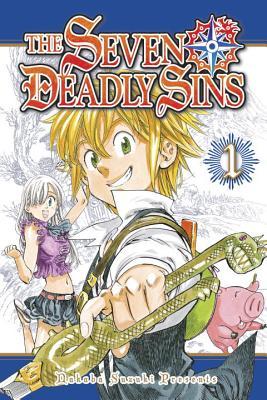
The Seven Deadly Sins by Nakaba Suzuki
In Britannia, The Seven Deadly Sins, feared worries, have been exiled. But when the king's guards, the Holy Knights, imprisoned the king and stage a coup, princess Elizabeth goes off to search for The Seven Deadly Sins, the only ones who could fight the Holy Knights.
Dammit, The Seven Deadly Sins. I am so disappointed in you. It all started off so promising. "This is great," thought I. A middle grade manga with action and adventure and a cool story. But no. No. It is not to be.
Because of the groping and the breast grabbing and ass touching and obnoxious innuendo turns what would have otherwise been a delightful middle grade read into something I can't justify putting in my library. And I am highly annoyed.
The first of the Sins Elizabeth comes across is Meliodas, who's apparently Wrath despite the fact he's perpetually cheery. Elizabeth faints pretty much as soon as she gets in the door of Meliodas' tavern. She was dressed in armor, so he's surprised to see she's a girl. He proceeds to confirm the fact she's a girl by sniffing her (the drawing is him sniffing her crotch) and squeezing her breasts.
The first chapter has Meliodas rescuing Elizabeth from various near death experiences. She keeps getting flung into the air. Meliodas catches her, and every time he does, we get another breast grabbing picture.
Elizabeth is portrayed as naive and dense. At no point does she tell him to knock off groping her. She is just so grateful for his help. At one point, they're searching for another one of the Sins in a forest. Elizabeth says, "Something's touching my butt." "Don't worry. It's just me" (illustration of him with her hand under her skirt touching her ass) "Oh, that's a relief. I was scared for a second there" is her response. Ew. Gross. Making me uncomfortable. Meliodas has a talking pig, Hawk, who tells Meliodas to "stop," and "this is not the time," and "That shouldn't be a relief!" I think having a character say those things is suppose to make the fact that those things are happening OK. But it doesn't. It doesn't stop it from being icky or from Elizabeth submissively taking it.
And it doesn't make it any better for a middle school librarian looking for manga. I cannot put this in my library, and that's frustrating, because there's nothing wrong with the story. Why'd the smarmy groping have to be put in? It doesn't add anything. Meliodas isn't even the Sin of lust. At least then he'd have a reason (although not an excuse) for his actions.. All it accomplishes is limiting who can read this book.
The Seven Deadly Sins is rated T, which is 13+ but I don't think that's appropriate. I mean, the story is definitely T, but the fondling puts it out of the T range. Again, it's a shame.
Monday, September 1, 2014
Stronger Than You Know by Jolene Perry
Joy is fifteen and until three months ago she lived a terrifying existence with her mother. Now her mother is in jail, and Joy is safe, living with her aunt, uncle and two cousins. But Joy doesn't feel safe, even though she knows she is. She can't stop the panic attacks when she has to talk to someone, especially men. She feels completely crazy and out of control and isn't convinced that things will ever get better.
For most of the book, it isn't stated explicitly what happened to Joy. Depending on the maturity of the reader, you might make different assumptions. Joy has a very hard time speaking to men. Being alone with a man, even her uncle or cousin, can cause a panic attack. She's afraid of the smell of beer. She can't stand people looking at her. I assumed she's been emotionally and physically abused by her mother, and raped by her mother's boyfriend, which we find out at the end of the book, at the trail of her mother, that's what happened. The word "rape" is not mentioned the entire time until one sentence at the very end.
Because of this, this book might be a good choice for upper middle grade looking for a serious issues book. It's not graphic or explicit. It deals mainly with the aftermath and Joy trying to work her way through what happened to her and try and learn that she's safe now.
It does not happen all at once. When the book starts, Joy has been with her aunt and uncle for three months and hadn't made very much progress. She's not convinced she'll ever make progress. But she slowly begins to. She's able to be in the same room as her uncle, and then she's able to talk to him. They eventually become close and he becomes her biggest advocate. Joy starts making friends. She is able to speak up a little more, and discovers new things about her personality.
It isn't all smooth sailing. Joy has lots of stops and starts, and sometimes she falls backwards. She worries what an imposition it must be to her aunt and her family to have to take her in. She is surprised to learn her aunt feels horrible guilty for not getting Joy away from her mother earlier. Joy has to deal with one of her cousins who is tired of everyone tiptoeing around her and doesn't understand why she can't just be normal already.
I thought Stronger Than You Know did an great job showing the aftermath of trauma and how it is truly a process to overcome it. The book ends with hope, and we know, that even as Joy continues to struggle, she'll come out on top.
Stronger Than You Know came out September 1, 2014.
Labels:
fiction,
middle grade,
realistic fiction,
serious issues,
YA
Thursday, August 7, 2014
One of Those Hideous Books Where the Mother Dies by Sonya Sones
Ruby's mother died, and now she has to leave her home and her friends, her boyfriend and everything she's ever know and move in with her father on the opposite coast. Her father who left before she was born, who Ruby has never seen or spoken to. At least in real life. Ruby's father is a famous actor. And now she's stuck with him.
One of Those Hideous Books Where the Mother Dies was written in verse, which for most books written this way I often feel that it doesn't work super well, like the writer just didn't want to have to worry about hashing things out and went with stream of consciousness instead. In this case, however, I liked it a lot. It made sense that Ruby would be writing in a fractured, distracted kind of way. She feels fractured and distracted. She's mourning the loss of her mother, but on top of that, she's mourning the loss of everything that's been familiar to her her entire life.
When Ruby first arrives in L.A., she's naturally miserable. She angry and resentful of her father, who couldn't take the time from his busy movie career to call or visit her. She misses her best friend and her boyfriend. She misses her aunt, who's going off on a six month archaeological dig with her boyfriend and won't even be available for Ruby to talk to. And, of course, she misses her mother. And on top of all that she has to start a new school, which turns out to be this weird, hippy place full of famous actor's kids and Ruby feels lost and out of place.
As time goes on, Ruby struggles to stay miserable. Her father, Whip (yes, Whip) is always nice to her and is always trying to give her things and take her places. Her father's assistant is really nice and he and Ruby get on great. She's making some friends. She even flirted with another guy and instantly feels guilty. And as the book goes on, we learn more about Ruby's mother. Ruby's mother wasn't perfect. Not that she was a bad parent by any means, but that she had her flaws, just like anyone else. Ruby feels guilty thinking about that too.
Spoilers
Labels:
family,
fiction,
middle grade,
realistic fiction,
relationships,
serious issues,
verse,
YA
Monday, July 7, 2014
YA Author Coffee Klatch
Something my fellow library friends and I have been doing regularly for the last several years is YALSA's YA Author Coffee Klatch. It's usually held on Sunday morning, and it's like author speed dating. You sit at a table and every two or three minutes a whistle is blown and a different author sits down with you to chat about their latest books and answer questions.
Last year the Klatch started almost 15 minutes late, and the authors had five minutes at the table. This year things ran much more smoothly, and authors had less time at the tables but it allowed us to talk to many more authors. I liked the shorter amount of time, actually. I thought things ran very well this year.
Labels:
ala 2014,
ALA Conference,
YA,
YALSA
Sunday, June 22, 2014
This One Summer by Mariko Tamaki and Jillian Tamaki
Rose and her parents have been going to Awago Beach since Rose was five. Rose loves it there, and loves seeing her summer friend, Windy. This summer, however, things are not the same. Rose's mother is acting odd, and her parent's keep fighting. Rose and Windy find themselves witnessing the drama of the local teenagers and taking sides. Everything seems the same but different.
Beautiful coming of age story. There's so much that's left unsaid, that doesn't need to be said because of the power of the illustrations.
I don't think it's ever explicitly said how old Rose is. My guess is 12, maybe? She's in that in-between stage. She isn't a teenager, not in high school yet. She's too old to think of herself as a kid anymore. She's getting crushes on boys, thinking about getting breasts and her period. Her best summer friend, Windy, is about a year younger than she is.
It's unclear for most of the story what's going on with Rose's mother. Is she sick? She does appear to be very thin and drawn. She portrayed coughing a few times. But we come to understand that Rose doesn't know what's going on with her mother either. Just that she very withdrawn, often short-tempered, doesn't seem to have to patience for things they've always done.
Rose is close with her father. He laughs and jokes and teases her. She feels abandoned when he leaves to go back to the city in the middle of their summer. Now Rose feels she's completely on her own, trapped with her mother who isn't acting like her mother.
Windy's relationship with her mother is a sharp contrast to how Rose feels about her own mother. Windy's mother seems open and passionate and outwardly shows her love for her child. All the things Rose feels like are missing right now. Although it's never said, Rose also feels some resentment toward her mother for wanting to have another child. Why doesn't her mother feel like she is enough, like Windy's does?
Rose finds herself witness to the drama of the older teenagers of Awago Beach. Rose has a crush on Doug, who works at the town store. His girlfriend, Jenny, gets pregnant. Doug won't talk to Jenny or call her. Rose immediately falls into defending Doug in her head. What if Jenny's lying? What if it's not Doug's? What if Jenny is cheating on him? That Jenny is a slut. Rose has no base for any of this thinking, really. She has none of that "girls should stick together" mentality. She just wants the boy she likes to be a nice, good guy.
There's a theme of children and childbirth. Wanting babies, not wanting babies. Being too old to have one, being too young to have one. It gave the story a life-cycle feel. Beginnings and endings. Summer beginning, summer ending. Growing up, getting older.
The art if just beautiful. It's black and white, but the blacks have shades of blue and gray. The quietness and peace of the summer that Rose so loves is reflected. Through uses of close-ups and wordless panels, we get a clear understanding what the characters are thinking and feeling.
Quiet, beautiful, powerful story. Highly recommended.
Monday, June 2, 2014
The Undertaking of Lily Chen by Danica Novgorodoff
Are the accidental death of Deshi Li's brother, Deshi sets out to find a bride that will keep him company in the afterlife. When a woman's body is hard to find, Deshi turns to more desperate means find one.
Deshi Li is the younger son, and clearly his older brother was the favored one. His parent doted on him. As the book progresses, we learn about the older son and how he was not quite as perfect as his parents thought. Deshi struggles with his guilt over the part he played in his brother's death, which he does not tell his parents about. Deshi Li does not believe in the custom of burying unmarried men with a woman to keep them company, but he is determined to do this for his brother and to give his parents a reason to take pride and comfort in him.
Deshi is a scared and timid character. We really learn very little about him, even over the entire course of the story. It's not clear what motivates him, aside from fear of his parent's and guilt about his brother. What does he want? What does he hope for? I have no idea. We learn much more about Lily.
Labels:
adult,
boy appeal,
fiction,
graphic novel,
journeys,
YA
Friday, May 16, 2014
This Song Will Save Your Life by Leila Sales
Elise Dembowski has always been an outsider. She makes one final attempt to change herself and make friends, and when that fails she thinks she's ready to give up for good. Then Elise comes across and underground party and finds her passion - DJing. With it come real friends and crushes, but Elise still hasn't made her night life and the rest of her life come together.
Elise is an odd duck. The kind of kid who I see in high school sometimes and I just want to tell them to hang on until they can go to college. That it's going to get so much better for them. She's not interested in things most other kids her age are interested in. She doesn't like the sorts of clothes they wear so she doesn't dress like most kids. Without common interests, Elise is alone most of the time. She doesn't really know how to interact with people her own age. Elise gets teased and bullied constantly. She's always alone. School is a torment for her.
The book kind of starts in the middle of the story. Elise is reflecting back on her attempt to reinvent herself the summer between freshman and sophomore year. She buys new clothes. She studies pop culture and TV even though she doesn't care about any of it. And on the first day of school she realizes it's never going to work. She's always just going to be herself. Elise decides she's going to kill herself. But after cutting herself she realizes she doesn't actually want to die, but just wants to be noticed and cared about.
This attempt comes back to haunt her later on, when someone starts an online journal under Elise's name. The journal says things about how everyone hates her (Elise) and she wants to kill herself. Elise doesn't know who's doing it, but everyone at school thinks it's really her.
While Elise is suffering at school, she's blossoming in the underground club scene. She accidentally stumbles upon the party during one of her evening walks and, amazingly to her, makes friends with two girls, who introduce her to the DJ Char, who takes her under his wing. Elise feels like a different person there. A confident person with friends who is talented and has something to give. As DJing becomes more important to her, Elise finds it hard to keep on getting up to go to school each day. And DJing can't magically make all her problems go away.
Elise continues to struggle with her feelings of worthlessness. She starts hooking up with Char, even though she knows he fools around with lots of other girls. When Elise is offered her own DJing gig, rather than be happy for her, Char is jealous and wants her to turn it down. Elise doesn't know what to do. She's gone so long believing that she'll never be good enough, never be what anyone wants. I wanted to grab Elise and shake her and say, "Don't listen to that stupid boy! You're going to be awesome! He's just jealous of you! Also you should probably stop hooking up with him!"
Elise's two worlds collide when her parents see a journal entry on the fake Elise's site that says she's going to kill herself. Her parents, of course, freak out and set out to find her. With everything out in the open, real change can finally be made.
The book doesn't end with everything being fixed and better. But we are left with the feeling that Elise is going to be OK. She's found a place for herself, and she's found a way to bring that person she is at night into the rest of her life.
It's a great story and also deals with those tricky themes of bullying and identity that can so easily become heavy handed and preachy. It was an finding yourself with an edge, realistically portrayed. I found Elise's voice to very true and on point. Highly recommended.
Labels:
bullying,
family,
fiction,
friendship,
realistic fiction,
relationships,
serious issues,
YA
Tuesday, April 22, 2014
Sekret by Lindsay Smith
Yulia lives in Communist Russia in the early 1960s. Yulia has an unusual ability, she can read the minds of people she touches, and when she touches objects can read the memories of the people who have touched them. Yulia is captured by the KGB and forced to work as a spy, along with a handful of other psychic teenagers. Their job is to find a traitor in the Russian space program who is passing secrets to the Americans. Yulia quickly realizes that she is not being told everything about her powers, and that her mind is not truly her own.
I was enjoying this when it first started off. But then things started making less and less sense and I had more and more questions.
I liked the idea behind the story, and I liked the setting. Russia during the Cold War in the midst of the Space Race. Yulia has learned first hand that while everyone is supposed to be equal in Communist Russia, some people are more equal than others. The KGB can show up at any time and take you or your family away, which is exactly what happens to Yulia. She agrees to work for the KGB because they have her mother and brother.
Yulia finds that the other kids in the program have different kinds of psychic abilities. Some can see the future, others can view remotely, one can even manipulate people's thoughts. The head of the program, Rostov, is also a "scrubber," someone with the ability to manipulate people's minds, and Yulia beings to realize she can't trust her own thoughts. What is her own and what's been erased or put there by someone else? It's difficult to know who to trust. So a good premise, but there were a lot of holes.
There will be lots of spoilers, so just be prepared.
Labels:
alternate histories,
fiction,
romance,
series,
supernatural,
YA
Sunday, March 30, 2014
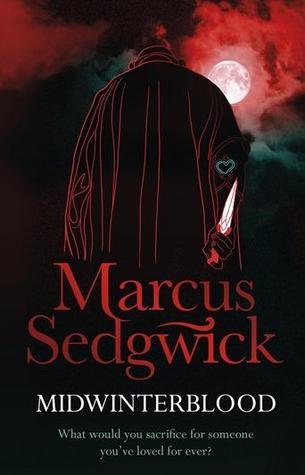
Midwinterblood by Marcus Sedgwick
Have you ever had the feeling that you've lived another life? Been somewhere that has felt totally familiar, even though you've never been there before, or felt that you know someone well, even though you are meeting them for the first time? It happens. In 2073 on the remote and secretive island of Blessed, where rumour has it that no one ages and no children are born, a visiting journalist, Eric Seven, and a young local woman known as Merle are ritually slain. Their deaths echo a moment ten centuries before, when, in the dark of the moon, a king was slain, tragically torn from his queen. Their souls search to be reunited, and as mother and son, artist and child, forbidden lovers, victims of a vampire they come close to finding what they've lost. In a novel comprising seven parts, each influenced by a moon - the flower moon, the harvest moon, the hunter's moon, the blood moon - this is the story of Eric and Merle whose souls have been searching for each other since their untimely parting (Goodreads).
Midwinterblood won the Printz award this year. I can see why. It's certainly an interesting, engaging read. The way it was framed was intriguing, leaving you confused and guessing for most of the book. I enjoyed it. It was not the best thing I read all year, but then the Printz committee doesn't ask me.
The book goes backwards. We start in 2073, with journalist Eric Seven arriving on the strange island of Blessed with a specific task in hand - find out about a mysterious flower that possibly has the power to prolong life. However, once he arrives on the island he begins to forget why he's there, along with the rest of his life. But he has a strange feeling that he's met a woman, Merle, before. As Eric is about to be killed as a sacrifice, we go back in time.
At first there was a bit of consistency how far we'd go back, the first few times it was around 50 years, but then as we got father back there were bigger jumps. In each life, there's a Merle and an Eric. In each life (for the most part) Merle lives and Eric dies. Their relationships are different each time, sometimes they're brother and sister, sometimes they're lovers, sometimes they're parent and child, but each relationship is one of love. Often, but not always, Eric would sacrifice himself in some way so that Merle could live. It all went back to the first life, when Eric was sacrificed but promised his wife, Merle that he would come back seven times and find her, and so they keep living different lives, but each time Eric dies and they don't get to be together.
I liked the story, but the little inconsistencies bothered me. Why did Tor (a character that often served the role of parting Eric and Merle) only show up in some of the lives? Why, if Eric died in each of the lives, sacrificing himself for Merle in some way, he didn't die, at least not that we saw, in the second to last life? Why, in 2073, did no one seem to know that it was drinking the tea made from the flower that was keeping people from having children? What was the whole vampire thing? Were the people on the island in 2073 supposed to be vampires too? What was the thing with Eric Seven's parent's religion that was alluded to? Was I just not reading carefully enough and all these questions were answered? I thought there were a lot of holes.
An interesting read for a thoughtful reader. Unlikely to have mass appeal.
Tuesday, March 25, 2014
The Coldest Girl in Coldtown by Holly Black
Tana and her ex-boyfriend Aidan are the only survivors of a massacre carried out at a party by vampires. Aidan is infected, and Tana might be infected too, it's too soon to say. Tana does the only thing she can think of - head for the nearest Coldtown, a quarantined location where vampires live and rule. Traveling with them is Gavriel, a very strange vampire who Tana saved and is now assisting them on their journey, and who is hiding a dark secret.
What made this book stand apart from other vampire books, aside from the obviously better writing and the well-rounded characters, was that The Coldest Girl in Coldtown shows vampires to be vicious and blood thirsty. They are, essentially, monsters, with no love or feelings for humans. Humans are there to be used as vampires wish.
The Coldtowns are well wired, and the lives of the vampires are the most popular reality TV to the outside world. Of course, you have people who dream of becoming vampires. Who think vampires are beautiful and sexy. Who think vampires are misunderstood. These people deliberately go to Coldtowns and try to get a vampire to turn them.
Labels:
dark,
dystopia,
fiction,
friendship,
romance,
supernatural,
vampires,
YA
Monday, February 10, 2014
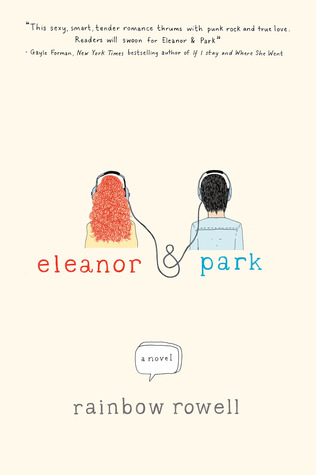
Eleanor & Park by Rainbow Rowell
Eleanor and Park meet on the school bus. Park thinks Eleanor is a freak and Eleanor doesn't think much of him either. But slowly, over shared comic books and music, they can't be apart from each other. But not even their relationship can alleviate what's happening in Eleanor's home, and it's not something that Park can help her fix.
The way Eleanor and Park are shown falling in love was great. It was perfectly captured how it made absolutely no sense at all. It didn't happen immediately. But they grew on each other. Like fungus. And then they couldn't remember how they could have ever not liked each other, even though they both clearly remember how they didn't. That sentence didn't really make sense, but I think you know what I mean.
They also didn't see each other as flawless and perfect. Park has doubts about Eleanor. He wishes she was friendlier. Then he feels guilt for wishing she was different. But he does sometimes. Eleanor is the same way. And she never open ups to Park about what is happening in her life, not until the very last minute.
Some spoilers, in the sense that I talk about details from the book.
Labels:
family,
fiction,
friendship,
romance,
serious issues,
YA
Tuesday, January 28, 2014
Bad Houses by Sara Ryan, illustrated by Carla Speed McNeil
Lewis' works with his mother, Cate, running estate sales; sorting through dead people's belongings and getting them ready to sell. Anne lives with her mother, Danica, and a house stuffed full of all the things Danica is unable to part with. Lewis and Anne get to know each other after meeting at an estate sale. Anne is trying to understand why people keep things and leave things, and what makes something important.
Such an interesting story. I liked the juxtaposition of Lewis and his mother running the estate sales, and Anne and her mother, who live in such disorder. One family whose job it is to clean up and arrange and get rid of things, and another incapable of getting rid of things.
I found myself strongly empathizing with both Anne and Lewis, but Anne is particular. Maybe because I like to keep thing pretty neat and clean. I felt her shock, horror and betrayal when she found her mother and filled her room with junk in order to clear out the living room so she could invite her new boyfriend over. Anne's room was her one safe space, where there was no clutter or mess. Now her safe haven had been infiltrated and there wasn't any place left for her.
I was frustrated at both Lewis and Anne's parents for their selfishness, even though I knew that there was a lot more going on than selfishness. I wanted to shake them and say, "Can't you see what this is doing to your kid? Don't you care?!" Of course they cared, but they had their own issues to deal with as well.
We have two stories going on. We have the story of Lewis and Anne, who meet and start dating and fall in love, and struggle with their own personal problems, and we have the story of Cate and Danica, or in particular, their back story, and how what happened in the past is effecting what is happening to Lewis and Anne today.
Spoilers
Friday, January 24, 2014
Bandette: Presto! by Paul Tobin, art by Colleen Coover
Bandette is the greatest thief in France. She's also a teenager. Other criminals despise her, and Police Inspector Belgique can't stand her, but will still call on her for help. When a rival thief warns Bandette about a dangerous criminal group determined to get rid of her, Bandette laughs it off. But will she be able to survive the evil Finis?
Bandette is kind of a Robin Hood figure, but not quite as selfless. Yes, she does rob bad guys and resteal stolen items, but she's also totally OK with snatching things she likes and keeping them for herself. She helps the police when it suits her. She has a band of "street urchins" she calls on for help. It is unclear if any of them actually live on the street. I don't think so. I think it's just a pet name.
I didn't love. It was cute and all. Fast paced. I thought the level the book was written at was a little odd. I had thought this was a middle grade book. It had that appearance, and the language was fairly simplistic, as was the story. But then we had pictures of people in their underwear in sexual situations and some profanity which took it out of the middle grade range and put it into YA. I just wasn't grabbed by the story in any way, or cared very much about any of the characters.
Bandette is very caviler about the danger to her, which is fine, I guess, but she also seems totally fine with putting all her friends in danger as well! Less cool. We really didn't learn anything about Bandette. We just know she's a flirty thief. I guess I didn't really care very much about her or worry that she might possible in danger because she clearly didn't care, and I didn't have anything to care about.
Not sure who I would recommend this too. It really does seem too young for YA, but not quite middle grade either.
I liked the art, it was cute, but again, it just had a middle school look to it. It reminded me a bit of Raina Telgemeier, if Raina Telgemeier drew an action comic.
Tuesday, January 21, 2014
Fangirl by Rainbow Rowell
Twins Cather and Wren have been Simon Snow fans since the very first book came out. More than fans, they both used to write fanfiction, and Cath still does. In fact, her fanfic is some of the most popular in the entire world. But now the girls are going to college, and Wren wants everything to be different (starting with not being roommates), and Cath wants everything to stay the same. But things won't stay the same; things keep changing, and Cath isn't sure if she can make it.
Simon Snow seemed to me a mixture of Harry Potter and Twilight. It's got the intense, crazy fandom and the massive fanfic network they both have, Harry Potter's magical wizarding world, but with the writing full of descriptions of clenched square jaws and tousled golden hair which is pure Twilight.
I didn't find Cath, our main character, especially likable. She grew on me, but until I better understood what was going on I just found her sullen and a pain. She was way past someone who's shy, or a little antisocial, or who's nervous about starting college. Cath went to extremes to not talk to or interact with people. Even when they were being nice to her. Cath was pretty unpleasant to anyone who tried to talk to her. She had no interest in making new friends, having new experiences or doing anything she hadn't always done before. She hid in her online world, where she was safe and secure and didn't have to look at or talk to anyone.
Labels:
adult,
college,
family,
fiction,
friendship,
growing up,
romance,
YA
Subscribe to:
Posts (Atom)