Miguel's parents left him and his little sister in Mexico while they went to California to start a new life. That was nine years ago. Miguel is now 15, and finally, his father has sent for him. Miguel will make the dangerous journey north to the border. It would have been hard enough alone, but when Miguel's sister Elena steals away after him, it might be impossible. Without enough money for two, they'll have to take even more risks in the hopes of reaching la linea.
This is such a slim little book, but so powerful. Jaramillo captured the fear, the danger, the determination, and the hopelessness of the kids who try to cross the border. Some to rejoin families, but some are completely alone.
Spoilers ahead.
Showing posts with label family. Show all posts
Thursday, July 9, 2015
Tuesday, February 24, 2015
Jane, the Fox & Me by Fanny Britt, illustrated by Isabelle Arsenault
Helene used to be friends with a group of girls at schools. But now
they all make fun of her, calling her fat. Helene has no one now. She
finds comfort in reading Jane Eyre. Jane had no on either, but
she was still smart and capable. The final straw comes when Helene is
humiliated in front of everyone on a school trip. Not even Jane Eyre is
enough anymore.
This was lovely. A heartfelt story about bullying, the feeling of isolation, and the impact a single person can make by reaching out to another.
Helene takes things especially hard because the girls who are now tormenting her were once her friends. Helene doesn't really know what happened, but now she has no one. No one will talk to her. She is a social outcast. Helene works her way through Jane Eyre, finding a companion in isolation and comfort that things can work out OK, even for someone who is friendless. Helene begins to despair when things take a bad turn for Jane, and she has to go on a retreat with her whole class.
It's on this retreat that Helene, feeling more alone than ever, sees the fox. The fox is beautiful and approaches her. But even this magical moment is ruined and makes her feel like a freak.
I was confused throughout the book by how Helene was draw. All her ex-friends are calling her fat. She's sure her mother is ashamed of her. But she didn't look overweight at all. It all becomes clear toward the end when Helene goes for her yearly physical and her doctor informs her she's right on track. Helene insists she's fat. The doctor informs her she isn't anything of the kind. The kids at school calling her fat got into her head until Helene truly believed that she was. And the kids calling her fat were just being cruel. It was based on nothing.
The illustrations were for the most part in gray and black, reflecting Helene's depression and feelings of isolation. The only color was when we saw Jane Eyre. Jane's life had a little color in it, although Jane herself was still all black and white. For Helene, everything is gray until the fox appears. The fox is bright with color. A fleeting brightness in Helene's life. But then it's gone and everything is black again.
As Helene makes friends with Geraldine, color begins to come into Helene's world. Not right away. But after making a friend and realizing she isn't actually overweight, we begin to see a few spots of color. On sneakers and tee shirts, in the trees, and it ends with Helene walking into a world of color.
This was lovely. A heartfelt story about bullying, the feeling of isolation, and the impact a single person can make by reaching out to another.
Helene takes things especially hard because the girls who are now tormenting her were once her friends. Helene doesn't really know what happened, but now she has no one. No one will talk to her. She is a social outcast. Helene works her way through Jane Eyre, finding a companion in isolation and comfort that things can work out OK, even for someone who is friendless. Helene begins to despair when things take a bad turn for Jane, and she has to go on a retreat with her whole class.
It's on this retreat that Helene, feeling more alone than ever, sees the fox. The fox is beautiful and approaches her. But even this magical moment is ruined and makes her feel like a freak.
I was confused throughout the book by how Helene was draw. All her ex-friends are calling her fat. She's sure her mother is ashamed of her. But she didn't look overweight at all. It all becomes clear toward the end when Helene goes for her yearly physical and her doctor informs her she's right on track. Helene insists she's fat. The doctor informs her she isn't anything of the kind. The kids at school calling her fat got into her head until Helene truly believed that she was. And the kids calling her fat were just being cruel. It was based on nothing.
The illustrations were for the most part in gray and black, reflecting Helene's depression and feelings of isolation. The only color was when we saw Jane Eyre. Jane's life had a little color in it, although Jane herself was still all black and white. For Helene, everything is gray until the fox appears. The fox is bright with color. A fleeting brightness in Helene's life. But then it's gone and everything is black again.
As Helene makes friends with Geraldine, color begins to come into Helene's world. Not right away. But after making a friend and realizing she isn't actually overweight, we begin to see a few spots of color. On sneakers and tee shirts, in the trees, and it ends with Helene walking into a world of color.
Sunday, February 15, 2015
Nightbird by Alice Hoffman
Twig isn't allowed to have friends. She can't invite any over to her house. Then they might find out the secret. A witch placed a curse on Twig's family two hundred years ago. The curse effects the men of Twig's family. No one must find out about her brother. But this summer strange things are happening. There are rumors of a monster in Twig's town of Sidwell. A family moves back to town with an ancient connection to Twig's. The time has come to break the curse.
This was a lovely, strange, little fairy tail. It's a slim book, and honestly there wasn't a whole lot of character development going on, which added to the fairy tale feel of it. We don't really get to know any of these people very well.
Twig's older brother, James, is not suppose to leave the house. No one in town even knows the Twig has a brother. She isn't allowed to get close to anyone. Accepting an invitation would eventually mean inviting someone to her home, and that is not allowed. Twig's mother, a baker, keeps to herself as well, even though she grew up in Sidwell and at one point had many friends. When Twig's family returned to Sidwell after both children being born and living in New York, they returned after dark and without Twig's father. Twig doesn't know much about her father. But she can guess the reason why he left.
Twig's isolated world is shaken when Julie and her family move into the abandoned Mourning Dove Cottage. Julie's family is warm and welcoming and open, and Julie seems to like Twig right away. But then Twig's mother forbids her from having any contact with the family. They are related to Agnes Early, the Witch of Sidwell who had cursed the family two hundred years ago.
For the first time, Twig disobeys her mother. She and Julie become friends. James is also disobeying his mother. He leaves the house at night. It is during one of these evenings that he is seen by Julia's older sister Agate. The two fall in love.
It seems that a tragic destiny is going to repeat itself. But then Twig, Julie, James and Agate decide to try and break the curse.
We really don't know very much about James, and even less about Agate. Just that she's beautiful and makes her own clothes. There are a few other characters, mysterious Collie and Dr. Shelton, both who have large impacts but we really don't know much about. Twig's father appears, with a reason for his long absence which, I just didn't buy. Maybe he stayed away out of respect for his wife's wishes. But you'd think he's still want to see his kids.
It's a nice, quick fairy tale. Romance and drama and friendship and a happy ending.
Nightbird comes out February 26, 2015.
This was a lovely, strange, little fairy tail. It's a slim book, and honestly there wasn't a whole lot of character development going on, which added to the fairy tale feel of it. We don't really get to know any of these people very well.
Twig's older brother, James, is not suppose to leave the house. No one in town even knows the Twig has a brother. She isn't allowed to get close to anyone. Accepting an invitation would eventually mean inviting someone to her home, and that is not allowed. Twig's mother, a baker, keeps to herself as well, even though she grew up in Sidwell and at one point had many friends. When Twig's family returned to Sidwell after both children being born and living in New York, they returned after dark and without Twig's father. Twig doesn't know much about her father. But she can guess the reason why he left.
Twig's isolated world is shaken when Julie and her family move into the abandoned Mourning Dove Cottage. Julie's family is warm and welcoming and open, and Julie seems to like Twig right away. But then Twig's mother forbids her from having any contact with the family. They are related to Agnes Early, the Witch of Sidwell who had cursed the family two hundred years ago.
For the first time, Twig disobeys her mother. She and Julie become friends. James is also disobeying his mother. He leaves the house at night. It is during one of these evenings that he is seen by Julia's older sister Agate. The two fall in love.
It seems that a tragic destiny is going to repeat itself. But then Twig, Julie, James and Agate decide to try and break the curse.
We really don't know very much about James, and even less about Agate. Just that she's beautiful and makes her own clothes. There are a few other characters, mysterious Collie and Dr. Shelton, both who have large impacts but we really don't know much about. Twig's father appears, with a reason for his long absence which, I just didn't buy. Maybe he stayed away out of respect for his wife's wishes. But you'd think he's still want to see his kids.
It's a nice, quick fairy tale. Romance and drama and friendship and a happy ending.
Nightbird comes out February 26, 2015.
Labels:
fairy tales,
family,
fantasy,
fiction,
friendship,
middle grade,
romance
Wednesday, February 4, 2015
I'll Give You the Sun by Jandy Nelson
Twins Jude and Noah once shared everything. But when they were 13, a chain of events pushed them apart. Now at 16, the two hardly speak, each having knowledge of something that would make the puzzle pieces of the last three years fit together. But each is trapped in their created world of lies and jealously and fear.
I'll Give You the Sun just won the 2015 Printz Award. So convenient since I'd just read it the week before and it was my favorite YA of the year. The Printz Award has never gone to my favorite YA of the year, so it was all very exciting.
This was really beautiful. The framing device worked perfectly, the characters were relatable, and even when they did some pretty terrible, I cared about them and wanted everything to work out in the end. I actually ruined it for myself by flipping around and reading things out of order to find out what happened. Don't do that! It all comes together quite nicely if you let it.
I'll Give You the Sun just won the 2015 Printz Award. So convenient since I'd just read it the week before and it was my favorite YA of the year. The Printz Award has never gone to my favorite YA of the year, so it was all very exciting.
This was really beautiful. The framing device worked perfectly, the characters were relatable, and even when they did some pretty terrible, I cared about them and wanted everything to work out in the end. I actually ruined it for myself by flipping around and reading things out of order to find out what happened. Don't do that! It all comes together quite nicely if you let it.
Labels:
family,
fiction,
LGBTQ,
relationships,
serious issues,
YA
Thursday, January 29, 2015
Gabi A Girl in Pieces by Isabel Quintero
Gabi starts keeping a diary the summer before her senior year of high school. She writes about her life. Her best friend Cindy, who finds out she's pregnant, her father and his meth habit, her mother who worries that Gabi's too fat, her friend Sebastian who's just come out, the boys Gabi has crushes on, and the poetry class she is coming to love.
It sounds like every single Issue Storyline is in this book. And I guess it is. But it worked, so, so well. It did not feel like an after school special. It felt heartbreakingly realistic. This was Gabi's daily life. This is what she is surrounded by in her community.
Gabi is hysterical. She's sassy and vulgar and completely open. She does not mince words. She's full of self-doubt like any teenage girl, but also has a wonderful spirit. She is empowered. And she only becomes more so.
Her mother is constantly telling her she's too fat and to lose weight. No one will ever love her when she's fat. Gabi thinks about this sometime. She'd like to lose weight and be skinny and, in her mind (and her mother's), prettier. But it's also clearly not the most important thing to her. Gabi thinks on it, certainly, but she does not let it define her, despite her mother. The other physical aspect Gabi thinks about is her skin color. She's light skinned, and people sometimes don't know she's Mexican. Some people think she doesn't look Mexican enough. It frustrates her and makes her angry.
Gabi has two great friends who are also going through some tough issues. Cindy is pregnant and is going to keep the baby. Sebastian has been kicked out of his house after coming out to his parents. Gabi tries to be a good, supportive friend, even though she doesn't always agree with their actions.
The saddest part of the story, I thought, was Gabi's father. He's a meth addict, and is constantly disappearing for weeks or months on end. Gabi is afraid he'll die while he's out on one of his binges and they'll never see him again. She's so angry with him for doing this to their family, but loves him anyway. She loves her mother, even though sometimes her mother says some really cruel things to her. She tries to help her little brother, who acts like he's OK, but is feeling so much it's exploding out of him in destructive ways.
All this serious stuff is going on, but they're all still just teenagers, and Gabi wants to find herself a boyfriend. She's excited to go out on dates and kiss boys. She makes lots of mistakes, messes things up, tries to fix things.
A definite bonus to this book was that the diary entries were done in a realistic way. There was no, "I'm writing this while I'm supposedly in the middle of a big dramatic fight with someone." All the entries are Gabi writing after the fact, telling what happened and reflecting on how she dealt with things and how she feels now.
Gabi is such a wonderful, relatable, joyful character. Teens will connect with her and care about her and see aspects of their own lives in her stories. This is definitely a book for older teens, because language and some graphic content.
Really wonderful. A must read.
It sounds like every single Issue Storyline is in this book. And I guess it is. But it worked, so, so well. It did not feel like an after school special. It felt heartbreakingly realistic. This was Gabi's daily life. This is what she is surrounded by in her community.
Gabi is hysterical. She's sassy and vulgar and completely open. She does not mince words. She's full of self-doubt like any teenage girl, but also has a wonderful spirit. She is empowered. And she only becomes more so.
Her mother is constantly telling her she's too fat and to lose weight. No one will ever love her when she's fat. Gabi thinks about this sometime. She'd like to lose weight and be skinny and, in her mind (and her mother's), prettier. But it's also clearly not the most important thing to her. Gabi thinks on it, certainly, but she does not let it define her, despite her mother. The other physical aspect Gabi thinks about is her skin color. She's light skinned, and people sometimes don't know she's Mexican. Some people think she doesn't look Mexican enough. It frustrates her and makes her angry.
Gabi has two great friends who are also going through some tough issues. Cindy is pregnant and is going to keep the baby. Sebastian has been kicked out of his house after coming out to his parents. Gabi tries to be a good, supportive friend, even though she doesn't always agree with their actions.
The saddest part of the story, I thought, was Gabi's father. He's a meth addict, and is constantly disappearing for weeks or months on end. Gabi is afraid he'll die while he's out on one of his binges and they'll never see him again. She's so angry with him for doing this to their family, but loves him anyway. She loves her mother, even though sometimes her mother says some really cruel things to her. She tries to help her little brother, who acts like he's OK, but is feeling so much it's exploding out of him in destructive ways.
All this serious stuff is going on, but they're all still just teenagers, and Gabi wants to find herself a boyfriend. She's excited to go out on dates and kiss boys. She makes lots of mistakes, messes things up, tries to fix things.
A definite bonus to this book was that the diary entries were done in a realistic way. There was no, "I'm writing this while I'm supposedly in the middle of a big dramatic fight with someone." All the entries are Gabi writing after the fact, telling what happened and reflecting on how she dealt with things and how she feels now.
Gabi is such a wonderful, relatable, joyful character. Teens will connect with her and care about her and see aspects of their own lives in her stories. This is definitely a book for older teens, because language and some graphic content.
Really wonderful. A must read.
Labels:
family,
fiction,
friendship,
realistic fiction,
relationships,
serious issues,
YA
Wednesday, January 14, 2015
Smek for President! by Adam Rex
Tip is frustrated. She and J.Lo saved the world but no one knows it. Her mom has finally decided to start acting like a mom when Tip has been taking care of herself her whole life. So when J.Lo suggests visiting the Boov's new home planet, New Boovworld, Tip agrees, even though her mom told her no. The two pack up Slushious (their flying car) and head to New Boovworld to clear up the whole misunderstanding about J.Lo letting the Gorg know where the Boov were and all. Things do not go as planned.
I loved The True Meaning of Smekday and was very excited for a sequel I didn't even know was coming. It did not disappoint. Maybe it wasn't quite as delightful as the first one, but it was still pretty delightful.
We are reunited with all our old friends, Tip, her mom, J.Lo, Dan Landry, who's taken all the credit for conquering the Gorg, and meet lots of fabulous new characters. We are finally introduced to the legendary Captain Smek, who's having some trouble on New Boovworld. It seems that some of the Boov are calling for the first presidential election the Boov have ever had! Captain Smek is in trouble. But capturing Public Enemy Number One (who happens to be J.Lo) might make him look a bit better. When J.Lo is arrested and put in prison on New Boovworld, Tip teams up with a friendly flying billboard she names Bill to try and set things right.
Like the first book, beneath all the hilarity and silly antics of the Boov, it's a story about family and friendship. Tip is struggling with some growing pains and the relationship with her mom, who she knows loves her but won't get off her back. And as much as Tip says she doesn't care if no one knows she saved the world, she does, in fact, really care that no one knows she saved the world! I mean, SHE SAVED THE WORLD!
The story was funny, sweet and had some great twists and surprises. And lots of hilarious Boovian accents.
Smek for President! comes out February 10, 2015.
I loved The True Meaning of Smekday and was very excited for a sequel I didn't even know was coming. It did not disappoint. Maybe it wasn't quite as delightful as the first one, but it was still pretty delightful.
We are reunited with all our old friends, Tip, her mom, J.Lo, Dan Landry, who's taken all the credit for conquering the Gorg, and meet lots of fabulous new characters. We are finally introduced to the legendary Captain Smek, who's having some trouble on New Boovworld. It seems that some of the Boov are calling for the first presidential election the Boov have ever had! Captain Smek is in trouble. But capturing Public Enemy Number One (who happens to be J.Lo) might make him look a bit better. When J.Lo is arrested and put in prison on New Boovworld, Tip teams up with a friendly flying billboard she names Bill to try and set things right.
Like the first book, beneath all the hilarity and silly antics of the Boov, it's a story about family and friendship. Tip is struggling with some growing pains and the relationship with her mom, who she knows loves her but won't get off her back. And as much as Tip says she doesn't care if no one knows she saved the world, she does, in fact, really care that no one knows she saved the world! I mean, SHE SAVED THE WORLD!
The story was funny, sweet and had some great twists and surprises. And lots of hilarious Boovian accents.
Smek for President! comes out February 10, 2015.
Labels:
boy appeal,
family,
fiction,
friendship,
humor,
middle grade,
science fiction,
series
Tuesday, January 6, 2015
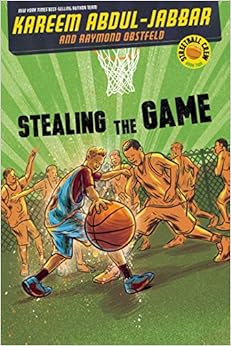
Stealing the Game by Kareem Abdul-Jabbar and Raymond Obstfeld
Chris is a quiet kid. He keeps his head down and doesn't stir the pot. Chris' parents have high expectations for him. They expect him to go to law school like his older brother Jax, who Chris looks up to. But then Jax turns up, apparently having dropped out of law school and gotten involved in some pretty questionable things. Chris is confused. Something doesn't seem right. This isn't the brother he knows. Has Jax gotten himself into something bad? Or is something else going on? Chris has never thought of himself as the smart kid who could figure things out. But this is something he's willing to take on.
What we have here is mystery story with a good dose of sports action. Chris and his friends all play basketball, and one of the shady things Jax does is set up Chris and his friends to play a game against another team, a team who turns out to be way older and bigger than they are.
The story has plenty of action and excitement. Aside from the basketball games, there are blow-ups with family and friends, elaborately staged break-ins, amateur sleuthing, and more sports action. Chris gains confidence throughout the book, realizing he's not just the dumb younger brother who will never live up to his parent's expectations. He's got a lot going for himself, and he finds the courage to speak up and show what he's good at.
What's actually going on with Jax seemed a little far-fetched and out of the realm of likelihood for me, but I think it will work just fine for middle school boys, who will find the story exciting and probably won't focus on plausibility so much.
I will definitely get this book for my library, along with the first one in the series, Sasquatch in the Paint.
Stealing the Game comes out February 1, 2015.
What we have here is mystery story with a good dose of sports action. Chris and his friends all play basketball, and one of the shady things Jax does is set up Chris and his friends to play a game against another team, a team who turns out to be way older and bigger than they are.
The story has plenty of action and excitement. Aside from the basketball games, there are blow-ups with family and friends, elaborately staged break-ins, amateur sleuthing, and more sports action. Chris gains confidence throughout the book, realizing he's not just the dumb younger brother who will never live up to his parent's expectations. He's got a lot going for himself, and he finds the courage to speak up and show what he's good at.
What's actually going on with Jax seemed a little far-fetched and out of the realm of likelihood for me, but I think it will work just fine for middle school boys, who will find the story exciting and probably won't focus on plausibility so much.
I will definitely get this book for my library, along with the first one in the series, Sasquatch in the Paint.
Stealing the Game comes out February 1, 2015.
Labels:
boy appeal,
family,
fiction,
middle grade,
mystery,
realistic fiction,
sports
Thursday, December 25, 2014
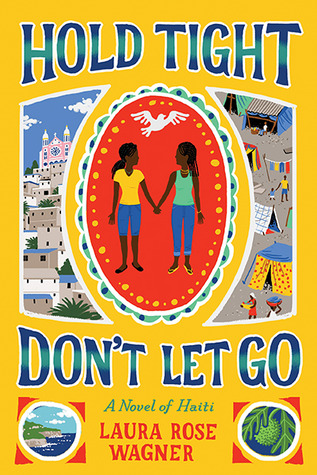
Hold Tight, Don't Let Go by Laura Rose Wagner
Magdalie was living with her aunt and sister-cousin Nadine in Port-au-Prince when the earthquake struck. Magdalie's aunt is killed when the house she worked in collapsed. Magdalie and Nadine are like sisters. They forget that in actuality they are cousins and that Manman wasn't Magdalie's mother by blood. This makes all the difference now, because this means that Nadine, who's father is in the United States, can get a visa to go live with him, and Magdalie can't. Nadine promises to do everything she can to bring Magdalie to the U.S., but years pass, and Magdalie has difficulty letting go of her anger at being left behind.
Nadine leaves to live with her father early on in the book. She swears she will bring Magdalie to America. She'll convince her father, who she hardly knows, to get another visa. At first, Magdalie and Nadine talk often. Nadine says she's doing her best. But as time goes on, Nadine calls and texts less and less often. And when she does, she does not mention bringing Magdalie to live with them.
As long as Magdalie has the hope that Nadine will find a way to bring her to America, she has no reason to try and make things better for herself in Haiti. What's the point of going back to school? Or finding a better place to live? Or making connections with anyone? She'll be leaving soon. She tries some desperate schemes to make money to buy a plane ticket, even though she doesn't have a visa and couldn't have gone anyway. Magdalie falls into an angry depression.
Her life is grim. She's living in a refugee camp with an uncle she was never close to, but they are each other's only family in the city. There's little food, Magdalie doesn't have the money to return to school, and there's violence and despair everywhere. Is there any reason to try and move forward?
Magdalie struggles with that question. She isn't able to move forward for years after the earthquake and Nadine leaving. Magdalie grows up a lot during those years, and finds her inner strength, and the strength to let go, move forward, and move on.
The book ends with a hopefully look at the future. The author envisions Haiti in 2020, clean, safe, rebuilt and beautiful. Magdalie and Nadine are reunited, and Magdalie is able to understand why Nadine drifted away after leaving. It is a beautiful picture on Haiti, let's hope it comes to pass.
Hold Right, Don't Let Go comes out on January 6, 2015.
Nadine leaves to live with her father early on in the book. She swears she will bring Magdalie to America. She'll convince her father, who she hardly knows, to get another visa. At first, Magdalie and Nadine talk often. Nadine says she's doing her best. But as time goes on, Nadine calls and texts less and less often. And when she does, she does not mention bringing Magdalie to live with them.
As long as Magdalie has the hope that Nadine will find a way to bring her to America, she has no reason to try and make things better for herself in Haiti. What's the point of going back to school? Or finding a better place to live? Or making connections with anyone? She'll be leaving soon. She tries some desperate schemes to make money to buy a plane ticket, even though she doesn't have a visa and couldn't have gone anyway. Magdalie falls into an angry depression.
Her life is grim. She's living in a refugee camp with an uncle she was never close to, but they are each other's only family in the city. There's little food, Magdalie doesn't have the money to return to school, and there's violence and despair everywhere. Is there any reason to try and move forward?
Magdalie struggles with that question. She isn't able to move forward for years after the earthquake and Nadine leaving. Magdalie grows up a lot during those years, and finds her inner strength, and the strength to let go, move forward, and move on.
The book ends with a hopefully look at the future. The author envisions Haiti in 2020, clean, safe, rebuilt and beautiful. Magdalie and Nadine are reunited, and Magdalie is able to understand why Nadine drifted away after leaving. It is a beautiful picture on Haiti, let's hope it comes to pass.
Hold Right, Don't Let Go comes out on January 6, 2015.
Labels:
family,
fiction,
growing up,
middle grade,
realistic fiction,
serious issues,
YA
Saturday, November 1, 2014
The Paper Cowboy by Kristin Levine
It's 1953, and Tommy just wants to hang out with friends, be a cowboy and pretend to fight communists. But then Tommy's older sister Mary Lou is terribly burned in an accident, and things begin to fall apart. Tommy's mother, who was always moody, has violent outbursts and beats Tommy. Tommy starts bullying other kids at school, and frames a shopkeeper for being a communist. Rumors of communism spread out of control, and Tommy doesn't know what to do to set things right.
This was very well done. The story is about Tommy and his family, but it's all the more powerful for being set against a backdrop of McCarthyism. Tommy doesn't realize the consequences of his actions when he puts a communist newspaper in Mr. McKenzie's store. He's angry and wants to do something mean. It's shocking to him how quickly people turn away from Mr. McKenzie and boycott his store, even when it's made clear it was a prank. Everyone is so afraid of being labeled a communist. Tommy decides to find out who the communist newspaper actually belonged to, thereby finding the real communist and clearing Mr. McKenzie's name. Every time he's ready to accuse someone else, he realizes things were not what they seem to be. It takes a while for Tommy to learn not to make quick accusations, and also, that having different beliefs don't make a person bad.
The story of Tommy's family is a sad one. Today, Tommy's mother would probably be diagnosed with a manic depressive disorder. There are scenes of her staying up all night cleaning or cooking, and then spending days refusing to get up. She could go from sweet to violent in a second, and seemed paranoid about people making fun of her. After Mary Lou is burned and hospitalized, Tommy's mother because more physically violent. His father doesn't know how to deal with it, and rather than protecting his children he stays away from home as much as possible. It falls on Tommy to take care of his two little sisters, and take up Mary Lou's paper route.
Tommy, who has no one to vent his feelings to, turns into a bully at school. In particular he picks on the new boy, Sam, who is Mr. McKenzie's son. Tommy and his friend Eddie are cruel to Sam, making fun of him, tricking him, and getting him into trouble. It was an interesting perspective to see where a bully might come from. It doesn't excuse Tommy's actions, but it was understandable that he might lash out in this way.
Things finally reach a breaking point and Tommy has to make some hard choices. He learns to ask for help and that accepting charity is not a bad thing. There are people around him who can support him.
It sounds like there's a lot going on in this book, and there is, but it all worked together perfectly. Great historical fiction read.
This was very well done. The story is about Tommy and his family, but it's all the more powerful for being set against a backdrop of McCarthyism. Tommy doesn't realize the consequences of his actions when he puts a communist newspaper in Mr. McKenzie's store. He's angry and wants to do something mean. It's shocking to him how quickly people turn away from Mr. McKenzie and boycott his store, even when it's made clear it was a prank. Everyone is so afraid of being labeled a communist. Tommy decides to find out who the communist newspaper actually belonged to, thereby finding the real communist and clearing Mr. McKenzie's name. Every time he's ready to accuse someone else, he realizes things were not what they seem to be. It takes a while for Tommy to learn not to make quick accusations, and also, that having different beliefs don't make a person bad.
The story of Tommy's family is a sad one. Today, Tommy's mother would probably be diagnosed with a manic depressive disorder. There are scenes of her staying up all night cleaning or cooking, and then spending days refusing to get up. She could go from sweet to violent in a second, and seemed paranoid about people making fun of her. After Mary Lou is burned and hospitalized, Tommy's mother because more physically violent. His father doesn't know how to deal with it, and rather than protecting his children he stays away from home as much as possible. It falls on Tommy to take care of his two little sisters, and take up Mary Lou's paper route.
Tommy, who has no one to vent his feelings to, turns into a bully at school. In particular he picks on the new boy, Sam, who is Mr. McKenzie's son. Tommy and his friend Eddie are cruel to Sam, making fun of him, tricking him, and getting him into trouble. It was an interesting perspective to see where a bully might come from. It doesn't excuse Tommy's actions, but it was understandable that he might lash out in this way.
Things finally reach a breaking point and Tommy has to make some hard choices. He learns to ask for help and that accepting charity is not a bad thing. There are people around him who can support him.
It sounds like there's a lot going on in this book, and there is, but it all worked together perfectly. Great historical fiction read.
Labels:
boy appeal,
bullying,
family,
fiction,
friendship,
historical fiction,
middle grade,
serious issues
Monday, October 20, 2014
The Watcher by Joan Hiatt Harlow
It's 1942 in Berlin, Germany. Wendy has just arrived in Berlin with her newly found mother, Adrie. Wendy's grown up her whole life in America and speaks no German. As happy as she is to be with Adrie, it is hard for Wendy to transition to being a German girl. The war, which seemed so remote in America, is the focus of everything in Berlin, and many things Wendy doesn't understand. It seems she has two choices. She can close her eyes to what's happening, or she can do something about it.
The Watcher is a companion novel to Shadows on the Sea, which I hadn't read. Wendy was a supporting character in that book, and I guess at the end she disappears with her newly discovered mother to Germany. I went a lot of the book thinking that it was going to turn out that Adrie wasn't actually Wendy's real mother, that it was a trick to get Wendy to Germany because they needed an American girl for some secret task. Adrie works for the German military intelligence unit as a spy. I guess if I'd read the other book I would have know that it was true that Adrie was Wendy's real mother. Although honestly, I think it would have made more sense if my idea had ended up being true.
This book didn't work for me very well. I thought it was confusing and choppy. I didn't think it made sense for Adrie to decided that 1942 was the time to let Wendy know she was her real mother and bring her to Germany. Even if she was completely convinced Germany was going to win the war. Why wouldn't she have waited until after? The story of Wendy's father didn't really make sense. Wendy's father was Jewish and they were married briefly but then her father was jailed and Adrie got a divorce and someone was able to make it look like their marriage had never happened and then Adrie got remarried and his name is the name on Wendy's birth certificate, but then Adrie decided to send her daughter to America to be safe, and also to pretend that she was her aunt and that her sister and her husband were Wendy's parents. Yeah. Confusing. And also, it's Germany. You think a member of the Germany military intelligence unit wouldn't have been carefully investigated and it wouldn't have been found out she was married to a Jew? I don't think so.
So the whole premise I found a bit shaky. I liked that the book focused on a couples aspects of WWII that many people would not have heard about. Wendy ends up volunteering at a Lebensborn Nursery. These were places were children who had been kidnapped from other countries because they had the correct Aryan look were taken to be raised to be good German citizens. Lebensborn also housed the children of unwed German women and German soldiers who had been approved as having German ancestors. The children born were taken from their mothers and were considered to belong to the state. At the nursery, Wendy meets Johanna, a girl who has been assigned to Lebensborn for "reeducation." She is a Jehovah's Witness (Bibelforscher), one of the many groups considered undesirable by the Nazis. All Johanna would have to do would be to sign a piece of paper swearing her loyalty to Hitler and Germany and renouncing her religion, but she refuses to do so.
As Wendy befriends Johanna and realizes that Johanna could be sent off to a concentration camp, or killed, for refusing to renounce her religion, Wendy begins to question whether her plan of ignoring the bad things happening around her is going to be possible. Wendy also becomes friends with a blind young man she meets in the park, whose grandfather knows all about Wendy's real father. Wendy also adopts a German Shepard puppy that couldn't make it as an SS dog.
Wendy decides she must escape from Germany and get back to the United States, and the rest of the book is planning and executing the escape. I didn't find it especially gripping or interesting.
So, thumbs up on looking at aspects of WWII that we don't often see in middle grade books. But the books itself I would pass on.
The Watcher comes out November 4, 2014.
The Watcher is a companion novel to Shadows on the Sea, which I hadn't read. Wendy was a supporting character in that book, and I guess at the end she disappears with her newly discovered mother to Germany. I went a lot of the book thinking that it was going to turn out that Adrie wasn't actually Wendy's real mother, that it was a trick to get Wendy to Germany because they needed an American girl for some secret task. Adrie works for the German military intelligence unit as a spy. I guess if I'd read the other book I would have know that it was true that Adrie was Wendy's real mother. Although honestly, I think it would have made more sense if my idea had ended up being true.
This book didn't work for me very well. I thought it was confusing and choppy. I didn't think it made sense for Adrie to decided that 1942 was the time to let Wendy know she was her real mother and bring her to Germany. Even if she was completely convinced Germany was going to win the war. Why wouldn't she have waited until after? The story of Wendy's father didn't really make sense. Wendy's father was Jewish and they were married briefly but then her father was jailed and Adrie got a divorce and someone was able to make it look like their marriage had never happened and then Adrie got remarried and his name is the name on Wendy's birth certificate, but then Adrie decided to send her daughter to America to be safe, and also to pretend that she was her aunt and that her sister and her husband were Wendy's parents. Yeah. Confusing. And also, it's Germany. You think a member of the Germany military intelligence unit wouldn't have been carefully investigated and it wouldn't have been found out she was married to a Jew? I don't think so.
So the whole premise I found a bit shaky. I liked that the book focused on a couples aspects of WWII that many people would not have heard about. Wendy ends up volunteering at a Lebensborn Nursery. These were places were children who had been kidnapped from other countries because they had the correct Aryan look were taken to be raised to be good German citizens. Lebensborn also housed the children of unwed German women and German soldiers who had been approved as having German ancestors. The children born were taken from their mothers and were considered to belong to the state. At the nursery, Wendy meets Johanna, a girl who has been assigned to Lebensborn for "reeducation." She is a Jehovah's Witness (Bibelforscher), one of the many groups considered undesirable by the Nazis. All Johanna would have to do would be to sign a piece of paper swearing her loyalty to Hitler and Germany and renouncing her religion, but she refuses to do so.
As Wendy befriends Johanna and realizes that Johanna could be sent off to a concentration camp, or killed, for refusing to renounce her religion, Wendy begins to question whether her plan of ignoring the bad things happening around her is going to be possible. Wendy also becomes friends with a blind young man she meets in the park, whose grandfather knows all about Wendy's real father. Wendy also adopts a German Shepard puppy that couldn't make it as an SS dog.
Wendy decides she must escape from Germany and get back to the United States, and the rest of the book is planning and executing the escape. I didn't find it especially gripping or interesting.
So, thumbs up on looking at aspects of WWII that we don't often see in middle grade books. But the books itself I would pass on.
The Watcher comes out November 4, 2014.
Labels:
family,
fiction,
friendship,
historical fiction,
middle grade,
series,
war
Sunday, August 24, 2014
brown girl dreaming by Jacqueline Woodson.
Jacqueline Woodson tells the story of her early life in beautiful verse. Woodson had the unique experience of growing up in both the South and the North in the 60s and 70s. She never felt completely at home in either place, always missing somewhere. Although very young, she was aware of the dramatic cultural shifts happening around her, even if she didn't really understand them.
Another beautiful book from Jacqueline Woodson. Woodson started off her life in Ohio. Her father did not like where her mother came from, South Carolina, where Black people had to sit in the back of the bus and say "yes sir" and "no sir" to white people. He never wanted any of his children to have that experience. But when Woodson's mother and father separated, they returned to her mother's home.
South Carolina was very different from Ohio. Woodson and her siblings had lots of new rules to learn. Despite her mother telling them they "were as good as anyone else" that was not how it seemed. Despite the things she observes, Woodson and her siblings love living with their grandparents. Their mother is often away in New York though, and after a time, they all move to New York.
Another move, another completely different cultural experience. It's the 70s now, and with it comes the Black Pride movement and the Black Panthers. Woodson is still to young to really understand what's going on. But she can see that there are places where only Black people live, and places where only white people live.
Over the course of the story, Woodson also expresses her growing love of writing and telling stories.
Sometimes she spins fantastical stories about things she's done. They're things she wishes she had done, or places she wishes she had gone too. Doesn't that make them kind of true? Her stories get her into trouble sometimes, but she never stops.
It's Woodson's life, but it reads like historical fiction. Simple and engaging, yet so much going on behind it.
I wonder about shelving this. It should go in nonfiction, right? It's the story of her life, told in verse. But a kid would be much more likely to stumble on this in the fiction section, with the rest of her books. But it wouldn't be right to put it in fiction. Thoughts?
brown girl dreaming comes out August 28, 2014.
Another beautiful book from Jacqueline Woodson. Woodson started off her life in Ohio. Her father did not like where her mother came from, South Carolina, where Black people had to sit in the back of the bus and say "yes sir" and "no sir" to white people. He never wanted any of his children to have that experience. But when Woodson's mother and father separated, they returned to her mother's home.
South Carolina was very different from Ohio. Woodson and her siblings had lots of new rules to learn. Despite her mother telling them they "were as good as anyone else" that was not how it seemed. Despite the things she observes, Woodson and her siblings love living with their grandparents. Their mother is often away in New York though, and after a time, they all move to New York.
Another move, another completely different cultural experience. It's the 70s now, and with it comes the Black Pride movement and the Black Panthers. Woodson is still to young to really understand what's going on. But she can see that there are places where only Black people live, and places where only white people live.
Over the course of the story, Woodson also expresses her growing love of writing and telling stories.
Sometimes she spins fantastical stories about things she's done. They're things she wishes she had done, or places she wishes she had gone too. Doesn't that make them kind of true? Her stories get her into trouble sometimes, but she never stops.
It's Woodson's life, but it reads like historical fiction. Simple and engaging, yet so much going on behind it.
I wonder about shelving this. It should go in nonfiction, right? It's the story of her life, told in verse. But a kid would be much more likely to stumble on this in the fiction section, with the rest of her books. But it wouldn't be right to put it in fiction. Thoughts?
brown girl dreaming comes out August 28, 2014.
Labels:
family,
middle grade,
moving,
non fiction,
poetry,
serious issues,
verse
Saturday, August 23, 2014
The Turtles of Oman by Naomi Shihab Nye
Aref Al-Amri has lived his whole life in Muscat, Oman. Now his family is moving to Ann Arbor, Michigan so his parents can get Ph.D.s. The last thing Aref wants to do is leave his home, friends, grandfather, and everything familiar. In the last days before the move, Aref spends time with his grandfather, Sidi, enjoying his country.
This was a lovely, quiet book. It was not what I was expecting. When the book started and it was about a boy nervous about moving, I assumed the story would be about his nervousness, the move, being new, and then making new friends and realizing everything was fine. That was not the story at all. In fact, Aref does not even leave Oman for Michigan in the book. It was entirely about Aref and Sidi enjoying the time they have together, doing things that Aref loves, and gradually learning to accept the move.
Aref struggles with the idea of leaving his home. His father has gone on ahead to get their apartment ready, and Aref and his mother and packing up their home and getting ready to leave. At least, that's what Aref is suppose to be doing. He can't quite start packing his suitcase. What can he possibly bring from his home? None of the important things, like his friends or his cat or his entire rock collection. Aref tries to express to his mother how he is feeling, but his mother, who clearly loves him very much, is busy and assures Aref that this is an adventure and he'll make friends and everything will be fine.
Aref finds solace and empathy in his grandfather Sidi. Sidi lets Aref talk. The two take a camping trip together, and go see sea turtles lying on the beach. Turtles are Aref's favorite. Sidi allows Aref to come around in his own time and his own way. He is the one who finally helps Aref to pack his suitcase, and helps him to feel better about his cousins living in his house while he is away.
Over the course of the story, I was aware of how old Sidi was. He gets tired sometimes, and is stiff. Sidi mentions not being quite as spry as he once was. I kept thinking how it was possible that Sidi might die before Aref and his family returns. They will be in the U.S. for three years. I think this was intentional. I wonder if middle grade kids will pick up on it?
This is one of those books that might be a hard sell. It's beautiful, but not a whole lot happens. It's thoughtful and lovely and paints a beautiful picture of the country and family and life. Maybe a good book to be read in a book group or in class where a discussion can be invovled.
The Turtles of Oman comes out August 26, 2014.
This was a lovely, quiet book. It was not what I was expecting. When the book started and it was about a boy nervous about moving, I assumed the story would be about his nervousness, the move, being new, and then making new friends and realizing everything was fine. That was not the story at all. In fact, Aref does not even leave Oman for Michigan in the book. It was entirely about Aref and Sidi enjoying the time they have together, doing things that Aref loves, and gradually learning to accept the move.
Aref struggles with the idea of leaving his home. His father has gone on ahead to get their apartment ready, and Aref and his mother and packing up their home and getting ready to leave. At least, that's what Aref is suppose to be doing. He can't quite start packing his suitcase. What can he possibly bring from his home? None of the important things, like his friends or his cat or his entire rock collection. Aref tries to express to his mother how he is feeling, but his mother, who clearly loves him very much, is busy and assures Aref that this is an adventure and he'll make friends and everything will be fine.
Aref finds solace and empathy in his grandfather Sidi. Sidi lets Aref talk. The two take a camping trip together, and go see sea turtles lying on the beach. Turtles are Aref's favorite. Sidi allows Aref to come around in his own time and his own way. He is the one who finally helps Aref to pack his suitcase, and helps him to feel better about his cousins living in his house while he is away.
Over the course of the story, I was aware of how old Sidi was. He gets tired sometimes, and is stiff. Sidi mentions not being quite as spry as he once was. I kept thinking how it was possible that Sidi might die before Aref and his family returns. They will be in the U.S. for three years. I think this was intentional. I wonder if middle grade kids will pick up on it?
This is one of those books that might be a hard sell. It's beautiful, but not a whole lot happens. It's thoughtful and lovely and paints a beautiful picture of the country and family and life. Maybe a good book to be read in a book group or in class where a discussion can be invovled.
The Turtles of Oman comes out August 26, 2014.
Labels:
family,
fiction,
immigration,
middle grade,
moving,
philosophy
Wednesday, August 13, 2014
The Night Journey by Kathryn Lasky
Rachel isn't supposed to ask her great-grandmother, Nana Sashie, about her past. Her parents say it upsets her. But Nana Sashie seems to want to tell Rachel her story. Rachel begins sneaking up to Nana Sashie's room whenever she can, and listens in amazement to Nana Sashie's story of her family's escape from tsarist Russia.
There are so many books about the Holocaust, and those are very important books. There are fewer books about tsarist Russia, and how Jews were treated during this time period. There are fewer books about Jews who were subject to pogroms by Russian soldiers that could happen at any moment, and the fact that despite this treatment, Jewish men were forced to serve in the army. Books like these are important so that history is not forgotten.
Rachel is a typical pre-teen. Her parents annoy her at times. She isn't thrilled with having to sit with her great-grandmother, who isn't always lucid. But when Nana Sashie begins talking about how her family escaped from Russia, Rachel is pulled into the story. She had no idea that this was part of her family history.
Nana Sashie tells Rachel what it was like to live in Russia during this time period. Jews were constantly afraid. They never knew when a pogrom might happen. At any moment their village could be full of Russian soldiers who would kill everyone and burn down the village. And there was no one to stop them, and there were no consequences for the killers. Nana Sashie was just a little girl when her father decided they must leave Russia. But the family, made up of Sashie, her mother and father, her two younger siblings, her grandfather and her aunt, couldn't just leave. They couldn't just stroll over the border. They would have to find a way to sneak themselves close enough to the border, and then bribe a guard to get them across. It would be very dangerous. They would need a plan.
Nana Sashie tells Rachel how she came up with much of the plan on her own, even though she was a little girl. The escape had many frightening moments, when it seemed like they might be caught, which would certainly mean death. But they made it.
Rachel begins to see how important it is to Nana Sashie that she tells someone this story. It's important that someone knows and someone remembers what happened so long ago. Rachel begins to write down her great-grandmother's story so it will never be forgotten.
There are so many books about the Holocaust, and those are very important books. There are fewer books about tsarist Russia, and how Jews were treated during this time period. There are fewer books about Jews who were subject to pogroms by Russian soldiers that could happen at any moment, and the fact that despite this treatment, Jewish men were forced to serve in the army. Books like these are important so that history is not forgotten.
Rachel is a typical pre-teen. Her parents annoy her at times. She isn't thrilled with having to sit with her great-grandmother, who isn't always lucid. But when Nana Sashie begins talking about how her family escaped from Russia, Rachel is pulled into the story. She had no idea that this was part of her family history.
Nana Sashie tells Rachel what it was like to live in Russia during this time period. Jews were constantly afraid. They never knew when a pogrom might happen. At any moment their village could be full of Russian soldiers who would kill everyone and burn down the village. And there was no one to stop them, and there were no consequences for the killers. Nana Sashie was just a little girl when her father decided they must leave Russia. But the family, made up of Sashie, her mother and father, her two younger siblings, her grandfather and her aunt, couldn't just leave. They couldn't just stroll over the border. They would have to find a way to sneak themselves close enough to the border, and then bribe a guard to get them across. It would be very dangerous. They would need a plan.
Nana Sashie tells Rachel how she came up with much of the plan on her own, even though she was a little girl. The escape had many frightening moments, when it seemed like they might be caught, which would certainly mean death. But they made it.
Rachel begins to see how important it is to Nana Sashie that she tells someone this story. It's important that someone knows and someone remembers what happened so long ago. Rachel begins to write down her great-grandmother's story so it will never be forgotten.
Labels:
family,
fiction,
historical fiction,
middle grade,
religion,
serious issues
Tuesday, August 12, 2014
A Millions Ways Home by Dianna Dorisi Winget
Poppy Parker has lived with her grandmother practically her whole life. But now Grandma Beth has had a stroke and can't take care of Poppy anymore, which means Poppy is stuck in an orphanage. Things get even more confusing when Poppy is witness to a crime and the police want to keep an eye on her until the suspect is caught. Poppy ends up in the home of Detective Brannigan's mother. Poppy just wants everything to go back to the way it was before, but some changes are here to stay.
A lot was going on in this book. There's Poppy having to deal with her grandmother's stroke and scheming to get her home, there's the crime Poppy's seen committed and maybe the suspect is looking for her, there's the German shepherd, Gunner, at the animal shelter she volunteers at that might get put to sleep. It was a lot, and sometimes it seemed like all the different plots were fighting against each other. Most of the time, however, I suspended my disbelief because it was a good story and I liked Poppy.
Poppy is described as being "impulsive." She doesn't always think things through. It's because she so much wants to see her grandmother she can't wait another day and heads out on her own to find her, even though she doesn't even really know where the nursing home her grandmother is recovering at is, that she inadvertently is a witness in a drug store robbery gone wrong that leaves the cashier dead. Poppy was face-to-face with the bugler. The police don't have enough people to make sure Poppy is safe at all times while they search for their suspect, so Detective Brannigan brings Poppy to his mother's house.
A lot was going on in this book. There's Poppy having to deal with her grandmother's stroke and scheming to get her home, there's the crime Poppy's seen committed and maybe the suspect is looking for her, there's the German shepherd, Gunner, at the animal shelter she volunteers at that might get put to sleep. It was a lot, and sometimes it seemed like all the different plots were fighting against each other. Most of the time, however, I suspended my disbelief because it was a good story and I liked Poppy.
Poppy is described as being "impulsive." She doesn't always think things through. It's because she so much wants to see her grandmother she can't wait another day and heads out on her own to find her, even though she doesn't even really know where the nursing home her grandmother is recovering at is, that she inadvertently is a witness in a drug store robbery gone wrong that leaves the cashier dead. Poppy was face-to-face with the bugler. The police don't have enough people to make sure Poppy is safe at all times while they search for their suspect, so Detective Brannigan brings Poppy to his mother's house.
Labels:
animals,
family,
fiction,
friendship,
middle grade,
realistic fiction,
serious issues
Thursday, August 7, 2014
One of Those Hideous Books Where the Mother Dies by Sonya Sones
Ruby's mother died, and now she has to leave her home and her friends, her boyfriend and everything she's ever know and move in with her father on the opposite coast. Her father who left before she was born, who Ruby has never seen or spoken to. At least in real life. Ruby's father is a famous actor. And now she's stuck with him.
One of Those Hideous Books Where the Mother Dies was written in verse, which for most books written this way I often feel that it doesn't work super well, like the writer just didn't want to have to worry about hashing things out and went with stream of consciousness instead. In this case, however, I liked it a lot. It made sense that Ruby would be writing in a fractured, distracted kind of way. She feels fractured and distracted. She's mourning the loss of her mother, but on top of that, she's mourning the loss of everything that's been familiar to her her entire life.
When Ruby first arrives in L.A., she's naturally miserable. She angry and resentful of her father, who couldn't take the time from his busy movie career to call or visit her. She misses her best friend and her boyfriend. She misses her aunt, who's going off on a six month archaeological dig with her boyfriend and won't even be available for Ruby to talk to. And, of course, she misses her mother. And on top of all that she has to start a new school, which turns out to be this weird, hippy place full of famous actor's kids and Ruby feels lost and out of place.
As time goes on, Ruby struggles to stay miserable. Her father, Whip (yes, Whip) is always nice to her and is always trying to give her things and take her places. Her father's assistant is really nice and he and Ruby get on great. She's making some friends. She even flirted with another guy and instantly feels guilty. And as the book goes on, we learn more about Ruby's mother. Ruby's mother wasn't perfect. Not that she was a bad parent by any means, but that she had her flaws, just like anyone else. Ruby feels guilty thinking about that too.
Spoilers
One of Those Hideous Books Where the Mother Dies was written in verse, which for most books written this way I often feel that it doesn't work super well, like the writer just didn't want to have to worry about hashing things out and went with stream of consciousness instead. In this case, however, I liked it a lot. It made sense that Ruby would be writing in a fractured, distracted kind of way. She feels fractured and distracted. She's mourning the loss of her mother, but on top of that, she's mourning the loss of everything that's been familiar to her her entire life.
When Ruby first arrives in L.A., she's naturally miserable. She angry and resentful of her father, who couldn't take the time from his busy movie career to call or visit her. She misses her best friend and her boyfriend. She misses her aunt, who's going off on a six month archaeological dig with her boyfriend and won't even be available for Ruby to talk to. And, of course, she misses her mother. And on top of all that she has to start a new school, which turns out to be this weird, hippy place full of famous actor's kids and Ruby feels lost and out of place.
As time goes on, Ruby struggles to stay miserable. Her father, Whip (yes, Whip) is always nice to her and is always trying to give her things and take her places. Her father's assistant is really nice and he and Ruby get on great. She's making some friends. She even flirted with another guy and instantly feels guilty. And as the book goes on, we learn more about Ruby's mother. Ruby's mother wasn't perfect. Not that she was a bad parent by any means, but that she had her flaws, just like anyone else. Ruby feels guilty thinking about that too.
Spoilers
Labels:
family,
fiction,
middle grade,
realistic fiction,
relationships,
serious issues,
verse,
YA
Saturday, July 26, 2014
Ninth Ward by Jewell Parker Rhodes
Lanesha lives in New Orleans' Ninth Ward with Mama Ya-Ya who's cared for her since she was born. Lanesha doesn't really have any contact with her uptown family, but she doesn't let it bother her. Mama Ya-Ya is all she needs. Mama Ya-Ya has visions and see ghosts. When Mama Ya-Ya has a vision about upcoming hurricane Katrina that leaves her unable to take care of Lanesha, Lanesha knows it's time for her to help them both.
This was a beautiful, lyrical story. It's not told in verse, but the language itself had a poetic, flowing quality to it. Lanesha is a strange child, and she knows it. She doesn't have any friends at school, all the kids think she's weird. Lanesha loves math (she practices for fun) and sees ghosts, like the ghost of her mother who died giving birth to her. Many people are scared of Mama Ya-Ya and think she's a witch. Mama Ya-Ya was a midwife, but people stop wanting her to deliver their babies.
Lanesha is happy and secure inside her small world with Mama Ya-Ya, despite her lack of friends and the fact her blood family want nothing to do with her. She has everything she needs, and Mama Ya-Ya takes care of her.
As the hurricane approaches, Mama Ya-Ya starts to act strange. She's had a vision she doesn't understand. She keeps saying, "the hurricane is not the problem." Lanesha is worried. Mama Ya-Ya has never acted like this before. She's never not taken care of things. So it falls to Lanesha to prepare for the hurricane, and it's Lanesha that keeps them safe.
After the hurricane, Lanesha's one friend, TaShon, who lives across the street from her comes back, having lost his family while taking shelter in the Superdome. They are together when the levees break and the water starts to rise. By this point, Mama Ya-Ya is sick and Lanesha and TaShon must work together to survive.
The ending of the book was hopeful but sad. We feel Lanesha's triumph at having survived and taken care of herself and TaShon, but we don't know what will happen to her. And we, the reader, know all the pain that will be coming in New Orleans. But we're left feeling that Lanesha will be all right. She is an exceptional child. She will make it through.
This was a beautiful, lyrical story. It's not told in verse, but the language itself had a poetic, flowing quality to it. Lanesha is a strange child, and she knows it. She doesn't have any friends at school, all the kids think she's weird. Lanesha loves math (she practices for fun) and sees ghosts, like the ghost of her mother who died giving birth to her. Many people are scared of Mama Ya-Ya and think she's a witch. Mama Ya-Ya was a midwife, but people stop wanting her to deliver their babies.
Lanesha is happy and secure inside her small world with Mama Ya-Ya, despite her lack of friends and the fact her blood family want nothing to do with her. She has everything she needs, and Mama Ya-Ya takes care of her.
As the hurricane approaches, Mama Ya-Ya starts to act strange. She's had a vision she doesn't understand. She keeps saying, "the hurricane is not the problem." Lanesha is worried. Mama Ya-Ya has never acted like this before. She's never not taken care of things. So it falls to Lanesha to prepare for the hurricane, and it's Lanesha that keeps them safe.
After the hurricane, Lanesha's one friend, TaShon, who lives across the street from her comes back, having lost his family while taking shelter in the Superdome. They are together when the levees break and the water starts to rise. By this point, Mama Ya-Ya is sick and Lanesha and TaShon must work together to survive.
The ending of the book was hopeful but sad. We feel Lanesha's triumph at having survived and taken care of herself and TaShon, but we don't know what will happen to her. And we, the reader, know all the pain that will be coming in New Orleans. But we're left feeling that Lanesha will be all right. She is an exceptional child. She will make it through.
Thursday, July 24, 2014
Kinda Like Brothers by Coe Booth
Jarrett's mom takes in foster kids. Usually babies whom need a safe place for a short period of time. But this time it's not just a baby. It's a baby and her older brother. Jarrett hates having to share his room Kevon, a total stranger, and doesn't appreciate people assuming they're cousins or friends. And since Kevon's father can't be found, it looks like they'll be staying for a while...
I thought this was really well done. It showed Jarrett's complex feelings about what his mother does. It's admirable and selfless that his mother takes in babies. Jarrett knows that. But sometimes he feels like it's all about the babies. They can't do anything, or go anywhere. He feels like he doesn't get as much of his mother's attention as he should. His mother's been talking about going back to school for years, but hasn't. And it's hard, getting attached to the babies and then having them leave.
Jarrett is 11 and Kevon is 12. The start off pretty much ignoring each other. But it's summer, and Kevon ends up going with Jarrett to the Center, where Kevon instantly makes friends with all the guys and turns out to be awesome at basketball. Jarrett is a little jealous and wants to take Kevon down a peg. The two sabotage each other back and forth, until they each do something to each other that is possibly unforgivable.
Kevon situation was realistically sad. He had his sister, Treasure, end up with Jarrett's family because Treasure is hurt, social services are call, and their father can't be found. Kevon insists he doesn't know where his father is, but Jarrett is pretty sure he's lying. It turns out that Kevon's father is mentally unstable and off his medication. Kevon has mostly been caring for Treasure on his own.
Other, less serious stuff is going on as well. There's a girl Jarrett really likes but can't get up the courage to talk to. Jarrett and his friend Ennis, who has a secret of his own, are making movie trailers. Jarrett is in summer school and he's afraid he might have to repeat a grade. All this stuff about Kevon and his father make Jarrett wonder about his own father, about who he knows nothing.
I thought it was a really well done guys-friendship book, and one that might ring true for a lot of kids.
Kinda Like Brothers comes out August 26, 2014.
I thought this was really well done. It showed Jarrett's complex feelings about what his mother does. It's admirable and selfless that his mother takes in babies. Jarrett knows that. But sometimes he feels like it's all about the babies. They can't do anything, or go anywhere. He feels like he doesn't get as much of his mother's attention as he should. His mother's been talking about going back to school for years, but hasn't. And it's hard, getting attached to the babies and then having them leave.
Jarrett is 11 and Kevon is 12. The start off pretty much ignoring each other. But it's summer, and Kevon ends up going with Jarrett to the Center, where Kevon instantly makes friends with all the guys and turns out to be awesome at basketball. Jarrett is a little jealous and wants to take Kevon down a peg. The two sabotage each other back and forth, until they each do something to each other that is possibly unforgivable.
Kevon situation was realistically sad. He had his sister, Treasure, end up with Jarrett's family because Treasure is hurt, social services are call, and their father can't be found. Kevon insists he doesn't know where his father is, but Jarrett is pretty sure he's lying. It turns out that Kevon's father is mentally unstable and off his medication. Kevon has mostly been caring for Treasure on his own.
Other, less serious stuff is going on as well. There's a girl Jarrett really likes but can't get up the courage to talk to. Jarrett and his friend Ennis, who has a secret of his own, are making movie trailers. Jarrett is in summer school and he's afraid he might have to repeat a grade. All this stuff about Kevon and his father make Jarrett wonder about his own father, about who he knows nothing.
I thought it was a really well done guys-friendship book, and one that might ring true for a lot of kids.
Kinda Like Brothers comes out August 26, 2014.
Labels:
boy appeal,
family,
fiction,
friendship,
middle grade,
realistic fiction,
serious issues
Monday, July 21, 2014
I Remember Beirut by Zeina Abirached
Zeina Abirached, who wrote the beautiful and poignant A Game for Swallows writes another graphic novel of wartime memories.
In A Game of Swallows, Abirached tells the story of her time growing up during the civil war in Lebanon. It was more of a tradition telling of her life during that time. In I Remember Beirut, Abirached simply tells things she remembers.
"I remember when there was no electricity or gas, we used kerosene for heating." "I remember traffic jams." "I remember how to fold a paper boat." Each of these memories relates to a larger event or experience Abirached recalls from the time of the war.
It paints a detailed picture of everyday life for a child during this time. It also allows us to see the things that Abirached remembers and considers important as an adult, and in some cases, how they impacted her.
What I've loved about Abirached's graphic novels is that the simple and straightforward way they are told allows them to be appropriate for a middle grade audience. Her graphic novels are an excellent way to help a younger child understand war the effects it has on the children, or to explore how another child's life can be so different from their own.
The illustrations are impactful. Done in black and white, and fitting with the story, simple in detail, the panels and full page illustrations further show the impact these events had on Abirached's life.
I Remember Beirut comes out October 1, 2014.
In A Game of Swallows, Abirached tells the story of her time growing up during the civil war in Lebanon. It was more of a tradition telling of her life during that time. In I Remember Beirut, Abirached simply tells things she remembers.
"I remember when there was no electricity or gas, we used kerosene for heating." "I remember traffic jams." "I remember how to fold a paper boat." Each of these memories relates to a larger event or experience Abirached recalls from the time of the war.
It paints a detailed picture of everyday life for a child during this time. It also allows us to see the things that Abirached remembers and considers important as an adult, and in some cases, how they impacted her.
What I've loved about Abirached's graphic novels is that the simple and straightforward way they are told allows them to be appropriate for a middle grade audience. Her graphic novels are an excellent way to help a younger child understand war the effects it has on the children, or to explore how another child's life can be so different from their own.
The illustrations are impactful. Done in black and white, and fitting with the story, simple in detail, the panels and full page illustrations further show the impact these events had on Abirached's life.
I Remember Beirut comes out October 1, 2014.
Labels:
family,
growing up,
memoir,
middle grade,
non fiction,
serious issues,
war
Tuesday, July 15, 2014
Sisters by Raina Telgemeier
Raina Telgemeier returns in this companion to Smile. Raina always wanted a sister, but Amara isn't the fun friend to play with Raina had in mind! Amara is grouchy and likes to keep to herself. Their relationship only becomes more strained as they get older. It all comes to a head when they're trapped on a family car trip from San Francisco to Colorado.
As with all of Raina Telgemeier's books, this was cute and sweet and thoughtful. I didn't enjoy it quite as much as Smile or Drama, perhaps I had unrealistically high expectations. I just didn't feel like there was a much to this one as there was to the others. And the ending felt unfinished and sudden. I still loved reading it, and fans of Raina's will be delighted with this.
Raina's siblings don't come into Smile very much. Smile is mostly focused on Raina's relationships with her friends. In Sisters, we get to see the family dynamics. The book goes back and forth between the present day with Raina, Amara, their little brother and their mother setting off on the road trip, and when Raina and Amara were little. We get to see Raina as a toddler wishing for a sister, and her disappointment that Amara didn't turn out to be the sister she was hoping for. We see Amara's personality beginning to develop, which is a demanding, independent, and rather grouchy one. Both sisters have a love for drawing, but it doesn't seem to be something they can share and do together.
The family is going to visit Raina's mother's sister, who they haven't seen in years, and Raina will get to spend time with her cousins. She's very anxious about fitting in and making sure they like her. Amara doesn't care. Raina has learned to tune out problems at home, which include her parent's constant fighting, Amara's tantrums, and her little brother's general noise, by listening to music. Music is clearly an important part of her life, but she comes to realize that she's missing out on a lot by plugging herself in.
As the family returns home, Raina's mother tells the siblings that she and their father need some time apart. Raina is surprised, but Amara isn't. The book ends with the hope that the sisters will begin to support each other more.
The ARC I had wasn't in full color yet, but the pages that were in color had a slightly darker color pallet. More greens and browns and yellows than her others, I think. As with her other graphic novels, the story is told through standard panels with Raina's adorable and friendly looking characters.
Sisters comes out August 26, 2014.
As with all of Raina Telgemeier's books, this was cute and sweet and thoughtful. I didn't enjoy it quite as much as Smile or Drama, perhaps I had unrealistically high expectations. I just didn't feel like there was a much to this one as there was to the others. And the ending felt unfinished and sudden. I still loved reading it, and fans of Raina's will be delighted with this.
Raina's siblings don't come into Smile very much. Smile is mostly focused on Raina's relationships with her friends. In Sisters, we get to see the family dynamics. The book goes back and forth between the present day with Raina, Amara, their little brother and their mother setting off on the road trip, and when Raina and Amara were little. We get to see Raina as a toddler wishing for a sister, and her disappointment that Amara didn't turn out to be the sister she was hoping for. We see Amara's personality beginning to develop, which is a demanding, independent, and rather grouchy one. Both sisters have a love for drawing, but it doesn't seem to be something they can share and do together.
The family is going to visit Raina's mother's sister, who they haven't seen in years, and Raina will get to spend time with her cousins. She's very anxious about fitting in and making sure they like her. Amara doesn't care. Raina has learned to tune out problems at home, which include her parent's constant fighting, Amara's tantrums, and her little brother's general noise, by listening to music. Music is clearly an important part of her life, but she comes to realize that she's missing out on a lot by plugging herself in.
As the family returns home, Raina's mother tells the siblings that she and their father need some time apart. Raina is surprised, but Amara isn't. The book ends with the hope that the sisters will begin to support each other more.
The ARC I had wasn't in full color yet, but the pages that were in color had a slightly darker color pallet. More greens and browns and yellows than her others, I think. As with her other graphic novels, the story is told through standard panels with Raina's adorable and friendly looking characters.
Sisters comes out August 26, 2014.
Wednesday, June 25, 2014
Climbing the Stairs by Padma Venkatraman
Vidya is growing up in British occupied India during 1941. She loves school and sports and her family. When a tragedy hits her family that Vidya blames herself for, her family must move in with her extended family, who is very traditional. The men live upstairs, and the women live downstairs and serve the men. Vidya is afraid that soon she'll be married off and never finish school or fulfill her dream of going to college.
This looked at a side of history we rarely see: India during WWII. India is still under British rule, and England is involved in the war. There were all-Indian troops under British leadership that are rarely heard about.
While WWII is going on, India is involved in their own fight for freedom against British rule. Lead by Gandhi, this fight was largely a non-violent one. Vidya's father strongly believes in the non-violent approach, although Vidya's brother questions whether it is the right way.
This looked at a side of history we rarely see: India during WWII. India is still under British rule, and England is involved in the war. There were all-Indian troops under British leadership that are rarely heard about.
While WWII is going on, India is involved in their own fight for freedom against British rule. Lead by Gandhi, this fight was largely a non-violent one. Vidya's father strongly believes in the non-violent approach, although Vidya's brother questions whether it is the right way.
Labels:
family,
fiction,
friendship,
historical fiction,
middle grade,
religion,
romance,
war
Subscribe to:
Posts (Atom)