Unlike most people, Archie Dent knows that monsters are real. That's because his parents are members of the Septemberist Society who protect the world from the monstrous Mangleborns. They are currently trapped under ground, but every thousand years or so they rise again but have always been defeated by The League of Seven, who form in the time of need. The Mangleborn are now waking, and when Archie's parents and the rest of the society is taken over by the Mangleborn, Archie sets out to save the day, and maybe form the new League of Seven himself.
This was a great start to the series, plus it was steampunk, which I very much enjoy. It's 1875 America, and the reason everything is run on steam is because the Mangleborn feed off electricity. It's the Septemberist's job to make sure electricity isn't discovered, and put an end to when it is. There was some good world building going on, most mysterious is that all contact has been lost with Europe, which might mean it's been overtaken by the Mangleborn. That was just mentioned in passing, but I'm sure it will show up again later. Essentially the world kind of gets remade every time the Mangleborn show up and destroy everything.
The League of Seven is always made up of seven kinds of people - a tinker (like an inventor or mechanic), a law-bringer, a scientist, a trickster, a warrior, a strong man, and a hero. Archie is convinced he is the hero of the new League of Seven, even though he can't quite figure out what his strengths are. He meets two other kids around his age while trying to save his parents, Fergus, a young mechanic, and Hachi, a First Nations girl out for revenge. It's after they start working together that Archie decides they're the new League of Seven, with Fergus as the tinker and Hachi as the warrior.
Various historic figures show up in the story. We have Thomas Edison, the crazed scientist who's determined to harness electricity no matter what the cost. There's Tesla, a paranoid recluse and member of the Septemberist Society. There's also lots of delightful mechanical creations, I mean, it's steampunk. So we have the ever polite Mr. Rivets, Archie's family's Tik Tok servant, who can fill a variety of roles from pilot to protector depending on which card is inserted in his back.
As the story progresses, Archie, Fergus, and Hachi begin having strange dreams, where they hear the Mangleborn speaking to them, and see Archie's parents working toward freeing one of the monsters (remember, they're brainwashed). Archie, however, seems to have a strange connection with the monster, who keeps calling him Jandal a Haad and telling him he's made of stone. As the group struggles to find answers, Archie learns more about the previous Leagues of Seven, and begins to worry that he's not the hero after all, he's something stranger and more dangerous.
It was a great mix of action, adventure, and even a bit of horror (what with monsters eating people). I also like the entire League wasn't formed by the end of the book. They may have defeated one monster, but there's plenty more where that came from. Further members will be found in future books.
And don't you worry, steampunk fans, there are airships. There are always airships. There's even a battle while on an airship. It doesn't get better than that.
The League of Seven comes out August 19, 2014.
Thursday, July 31, 2014
Saturday, July 26, 2014
Ninth Ward by Jewell Parker Rhodes
Lanesha lives in New Orleans' Ninth Ward with Mama Ya-Ya who's cared for her since she was born. Lanesha doesn't really have any contact with her uptown family, but she doesn't let it bother her. Mama Ya-Ya is all she needs. Mama Ya-Ya has visions and see ghosts. When Mama Ya-Ya has a vision about upcoming hurricane Katrina that leaves her unable to take care of Lanesha, Lanesha knows it's time for her to help them both.
This was a beautiful, lyrical story. It's not told in verse, but the language itself had a poetic, flowing quality to it. Lanesha is a strange child, and she knows it. She doesn't have any friends at school, all the kids think she's weird. Lanesha loves math (she practices for fun) and sees ghosts, like the ghost of her mother who died giving birth to her. Many people are scared of Mama Ya-Ya and think she's a witch. Mama Ya-Ya was a midwife, but people stop wanting her to deliver their babies.
Lanesha is happy and secure inside her small world with Mama Ya-Ya, despite her lack of friends and the fact her blood family want nothing to do with her. She has everything she needs, and Mama Ya-Ya takes care of her.
As the hurricane approaches, Mama Ya-Ya starts to act strange. She's had a vision she doesn't understand. She keeps saying, "the hurricane is not the problem." Lanesha is worried. Mama Ya-Ya has never acted like this before. She's never not taken care of things. So it falls to Lanesha to prepare for the hurricane, and it's Lanesha that keeps them safe.
After the hurricane, Lanesha's one friend, TaShon, who lives across the street from her comes back, having lost his family while taking shelter in the Superdome. They are together when the levees break and the water starts to rise. By this point, Mama Ya-Ya is sick and Lanesha and TaShon must work together to survive.
The ending of the book was hopeful but sad. We feel Lanesha's triumph at having survived and taken care of herself and TaShon, but we don't know what will happen to her. And we, the reader, know all the pain that will be coming in New Orleans. But we're left feeling that Lanesha will be all right. She is an exceptional child. She will make it through.
This was a beautiful, lyrical story. It's not told in verse, but the language itself had a poetic, flowing quality to it. Lanesha is a strange child, and she knows it. She doesn't have any friends at school, all the kids think she's weird. Lanesha loves math (she practices for fun) and sees ghosts, like the ghost of her mother who died giving birth to her. Many people are scared of Mama Ya-Ya and think she's a witch. Mama Ya-Ya was a midwife, but people stop wanting her to deliver their babies.
Lanesha is happy and secure inside her small world with Mama Ya-Ya, despite her lack of friends and the fact her blood family want nothing to do with her. She has everything she needs, and Mama Ya-Ya takes care of her.
As the hurricane approaches, Mama Ya-Ya starts to act strange. She's had a vision she doesn't understand. She keeps saying, "the hurricane is not the problem." Lanesha is worried. Mama Ya-Ya has never acted like this before. She's never not taken care of things. So it falls to Lanesha to prepare for the hurricane, and it's Lanesha that keeps them safe.
After the hurricane, Lanesha's one friend, TaShon, who lives across the street from her comes back, having lost his family while taking shelter in the Superdome. They are together when the levees break and the water starts to rise. By this point, Mama Ya-Ya is sick and Lanesha and TaShon must work together to survive.
The ending of the book was hopeful but sad. We feel Lanesha's triumph at having survived and taken care of herself and TaShon, but we don't know what will happen to her. And we, the reader, know all the pain that will be coming in New Orleans. But we're left feeling that Lanesha will be all right. She is an exceptional child. She will make it through.
Friday, July 25, 2014
News
Winners of the 2014 International Latino Book Award. From SLJ.
School librarian cutbacks widen digital divide. From District Administration.
Maker culture and the library. From PW.
Carnegie medal row over 'depressing' winner grows, and, why teenagers need bleak books. From The Guardian.
Why your library needs music. From SLJ.
Judy Blume’s first novel for adults since Summer Sisters will be released in summer 2015. From The New York Times.
The Story of Ferdinand: talking with kids about the first children's book on gender nonconformity. From The Huffington Post.
Annie on My Mind author Nancy Garden dies at age 76. From SLJ.
Children's books given away at food banks. From The Telegraph.
ALA report confirms negative impact of filtering on student learning. From The Digital Shift.
American Association of School Libraries announces 2014 best websites for teaching & learning. From SLJ.
Why J.K. Rowling will always be your favorite author. From BuzzFeed.
10 best boarding school books. From PW.
Reflecting on 25 years of The Giver. From The Huffington Post.
Duncan Tonatiuh wants Latino children to see themselves in books. From NBC News.
School librarian cutbacks widen digital divide. From District Administration.
Maker culture and the library. From PW.
Carnegie medal row over 'depressing' winner grows, and, why teenagers need bleak books. From The Guardian.
Why your library needs music. From SLJ.
Judy Blume’s first novel for adults since Summer Sisters will be released in summer 2015. From The New York Times.
The Story of Ferdinand: talking with kids about the first children's book on gender nonconformity. From The Huffington Post.
Annie on My Mind author Nancy Garden dies at age 76. From SLJ.
Children's books given away at food banks. From The Telegraph.
ALA report confirms negative impact of filtering on student learning. From The Digital Shift.
American Association of School Libraries announces 2014 best websites for teaching & learning. From SLJ.
Why J.K. Rowling will always be your favorite author. From BuzzFeed.
10 best boarding school books. From PW.
Reflecting on 25 years of The Giver. From The Huffington Post.
Duncan Tonatiuh wants Latino children to see themselves in books. From NBC News.
Labels:
entertainment,
news
Thursday, July 24, 2014
Kinda Like Brothers by Coe Booth
Jarrett's mom takes in foster kids. Usually babies whom need a safe place for a short period of time. But this time it's not just a baby. It's a baby and her older brother. Jarrett hates having to share his room Kevon, a total stranger, and doesn't appreciate people assuming they're cousins or friends. And since Kevon's father can't be found, it looks like they'll be staying for a while...
I thought this was really well done. It showed Jarrett's complex feelings about what his mother does. It's admirable and selfless that his mother takes in babies. Jarrett knows that. But sometimes he feels like it's all about the babies. They can't do anything, or go anywhere. He feels like he doesn't get as much of his mother's attention as he should. His mother's been talking about going back to school for years, but hasn't. And it's hard, getting attached to the babies and then having them leave.
Jarrett is 11 and Kevon is 12. The start off pretty much ignoring each other. But it's summer, and Kevon ends up going with Jarrett to the Center, where Kevon instantly makes friends with all the guys and turns out to be awesome at basketball. Jarrett is a little jealous and wants to take Kevon down a peg. The two sabotage each other back and forth, until they each do something to each other that is possibly unforgivable.
Kevon situation was realistically sad. He had his sister, Treasure, end up with Jarrett's family because Treasure is hurt, social services are call, and their father can't be found. Kevon insists he doesn't know where his father is, but Jarrett is pretty sure he's lying. It turns out that Kevon's father is mentally unstable and off his medication. Kevon has mostly been caring for Treasure on his own.
Other, less serious stuff is going on as well. There's a girl Jarrett really likes but can't get up the courage to talk to. Jarrett and his friend Ennis, who has a secret of his own, are making movie trailers. Jarrett is in summer school and he's afraid he might have to repeat a grade. All this stuff about Kevon and his father make Jarrett wonder about his own father, about who he knows nothing.
I thought it was a really well done guys-friendship book, and one that might ring true for a lot of kids.
Kinda Like Brothers comes out August 26, 2014.
I thought this was really well done. It showed Jarrett's complex feelings about what his mother does. It's admirable and selfless that his mother takes in babies. Jarrett knows that. But sometimes he feels like it's all about the babies. They can't do anything, or go anywhere. He feels like he doesn't get as much of his mother's attention as he should. His mother's been talking about going back to school for years, but hasn't. And it's hard, getting attached to the babies and then having them leave.
Jarrett is 11 and Kevon is 12. The start off pretty much ignoring each other. But it's summer, and Kevon ends up going with Jarrett to the Center, where Kevon instantly makes friends with all the guys and turns out to be awesome at basketball. Jarrett is a little jealous and wants to take Kevon down a peg. The two sabotage each other back and forth, until they each do something to each other that is possibly unforgivable.
Kevon situation was realistically sad. He had his sister, Treasure, end up with Jarrett's family because Treasure is hurt, social services are call, and their father can't be found. Kevon insists he doesn't know where his father is, but Jarrett is pretty sure he's lying. It turns out that Kevon's father is mentally unstable and off his medication. Kevon has mostly been caring for Treasure on his own.
Other, less serious stuff is going on as well. There's a girl Jarrett really likes but can't get up the courage to talk to. Jarrett and his friend Ennis, who has a secret of his own, are making movie trailers. Jarrett is in summer school and he's afraid he might have to repeat a grade. All this stuff about Kevon and his father make Jarrett wonder about his own father, about who he knows nothing.
I thought it was a really well done guys-friendship book, and one that might ring true for a lot of kids.
Kinda Like Brothers comes out August 26, 2014.
Labels:
boy appeal,
family,
fiction,
friendship,
middle grade,
realistic fiction,
serious issues
Wednesday, July 23, 2014
Frank Einstein and the Antimatter Motor by Jon Scieszka, illustrated by Brian Biggs
Frank Einstein is a scientist and an inventor. He's also a kid. Frank is determined to win this year's Midville Science Prize. With the winnings, he'll be able to save his grandfather's Fix It! repair shop. With Frank's invention of two SmartBots, Klink and Klank, he tackles his biggest project of all: an antimatter motor. But Frank, his friend Watson, and the two robots realizes they have bigger problems to worry about than the science fair: Frank's rival kid-scientist Edison has some evil ideas of his own.
I love the idea of these books. A series that teaches scientific concepts! So cool! This first book looked at the concept of matter, the next book will look at energy, and so on it will go through six planned books. Really great idea. And I totally learned things. For example, on the second page, I learned the correct way to calculate distance between seeing lightening and hearing thunder. I always thought the number of seconds between them was the number of miles a way the storm was. Wrong! You have to divide it by five, because there's five seconds between light and sound for every mile. I've been doing it wrong my whole life.
As for the story itself, I wasn't blown away. It was a fine lower-middle grade read. It wasn't quite what I expect from Jon Scieszka, which is really sharp and funny. I mean, it's quite the undertaking, explaining the entire concept of matter while also making a fun story! Future books will probably be smoother. I thought it was perhaps a little clunky, melding the adventure story with the science concepts.
I liked that along with the story there are diagrams of the scientific concepts. You can ignore them if you want, but they definitely helped a visual person like me better understand the concepts Frank was using in his inventions. And aside from the diagrams there were very cute illustrations by Brain Biggs.
I look forward to seeing where the rest of the series goes.
Frank Einstein and the Antimatter Motor comes out August 19, 2014.
I love the idea of these books. A series that teaches scientific concepts! So cool! This first book looked at the concept of matter, the next book will look at energy, and so on it will go through six planned books. Really great idea. And I totally learned things. For example, on the second page, I learned the correct way to calculate distance between seeing lightening and hearing thunder. I always thought the number of seconds between them was the number of miles a way the storm was. Wrong! You have to divide it by five, because there's five seconds between light and sound for every mile. I've been doing it wrong my whole life.
As for the story itself, I wasn't blown away. It was a fine lower-middle grade read. It wasn't quite what I expect from Jon Scieszka, which is really sharp and funny. I mean, it's quite the undertaking, explaining the entire concept of matter while also making a fun story! Future books will probably be smoother. I thought it was perhaps a little clunky, melding the adventure story with the science concepts.
I liked that along with the story there are diagrams of the scientific concepts. You can ignore them if you want, but they definitely helped a visual person like me better understand the concepts Frank was using in his inventions. And aside from the diagrams there were very cute illustrations by Brain Biggs.
I look forward to seeing where the rest of the series goes.
Frank Einstein and the Antimatter Motor comes out August 19, 2014.
Labels:
adventure,
boy appeal,
fiction,
friendship,
middle grade,
science,
science fiction,
series
Tuesday, July 22, 2014
News
March Book Two coming in 2015. From PW.
Remembering Mary Rodgers, author of Freaky Friday. From The New York Times.
A Florida school pulls Paper Towns from its summer reading list. From Los Angeles Times.
The Amazon vs. Hathett battle goes on. From SLJ.
College graduates have trouble doing deep online searches. From The Chronicle of Higher Education.
12 great graphic novel adaptations. From PW.
Roger Sutton says the Children’s Choice Book Awards are nonsense. From The Horn Book.
FCC approves e-rate plan to inject $2 billion into wifi for schools and libraries. From SLJ.
The bench in Amsterdam where Hazel and August kiss in The Fault in Our Stars movie is missing. From The Huffington Post.
Go Boston! Boston leads in young adult and children's books. From The Boston Globe.
Comic Con 2014. From PW.
Book drive for unaccompanied immigrant children now underway. From Los Angeles Times.
Gayle Forman's If I Stay coming to theaters this August. From SLJ.
Should children's books have happy endings? From The Guardian.
The Brontes made tiny books as children. From BuzzFeed.
The Comic Book Legal Defense Fund has released its first Banned Books Week Handbook. And it's free! From PW.
On adapting The Graveyard Book to a graphic novel. From PW.
Remembering Mary Rodgers, author of Freaky Friday. From The New York Times.
A Florida school pulls Paper Towns from its summer reading list. From Los Angeles Times.
The Amazon vs. Hathett battle goes on. From SLJ.
College graduates have trouble doing deep online searches. From The Chronicle of Higher Education.
12 great graphic novel adaptations. From PW.
Roger Sutton says the Children’s Choice Book Awards are nonsense. From The Horn Book.
FCC approves e-rate plan to inject $2 billion into wifi for schools and libraries. From SLJ.
The bench in Amsterdam where Hazel and August kiss in The Fault in Our Stars movie is missing. From The Huffington Post.
Go Boston! Boston leads in young adult and children's books. From The Boston Globe.
Comic Con 2014. From PW.
Book drive for unaccompanied immigrant children now underway. From Los Angeles Times.
Gayle Forman's If I Stay coming to theaters this August. From SLJ.
Should children's books have happy endings? From The Guardian.
The Brontes made tiny books as children. From BuzzFeed.
The Comic Book Legal Defense Fund has released its first Banned Books Week Handbook. And it's free! From PW.
Soviet children’s literature: The struggle between ideology and creativity. From Russia Beyond the Headlines.
On adapting The Graveyard Book to a graphic novel. From PW.
Labels:
entertainment,
news
Monday, July 21, 2014
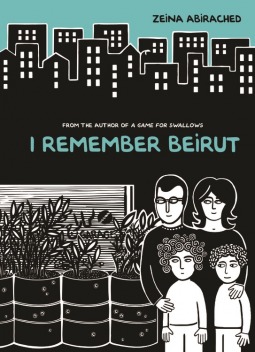
I Remember Beirut by Zeina Abirached
Zeina Abirached, who wrote the beautiful and poignant A Game for Swallows writes another graphic novel of wartime memories.
In A Game of Swallows, Abirached tells the story of her time growing up during the civil war in Lebanon. It was more of a tradition telling of her life during that time. In I Remember Beirut, Abirached simply tells things she remembers.
"I remember when there was no electricity or gas, we used kerosene for heating." "I remember traffic jams." "I remember how to fold a paper boat." Each of these memories relates to a larger event or experience Abirached recalls from the time of the war.
It paints a detailed picture of everyday life for a child during this time. It also allows us to see the things that Abirached remembers and considers important as an adult, and in some cases, how they impacted her.
What I've loved about Abirached's graphic novels is that the simple and straightforward way they are told allows them to be appropriate for a middle grade audience. Her graphic novels are an excellent way to help a younger child understand war the effects it has on the children, or to explore how another child's life can be so different from their own.
The illustrations are impactful. Done in black and white, and fitting with the story, simple in detail, the panels and full page illustrations further show the impact these events had on Abirached's life.
I Remember Beirut comes out October 1, 2014.
In A Game of Swallows, Abirached tells the story of her time growing up during the civil war in Lebanon. It was more of a tradition telling of her life during that time. In I Remember Beirut, Abirached simply tells things she remembers.
"I remember when there was no electricity or gas, we used kerosene for heating." "I remember traffic jams." "I remember how to fold a paper boat." Each of these memories relates to a larger event or experience Abirached recalls from the time of the war.
It paints a detailed picture of everyday life for a child during this time. It also allows us to see the things that Abirached remembers and considers important as an adult, and in some cases, how they impacted her.
What I've loved about Abirached's graphic novels is that the simple and straightforward way they are told allows them to be appropriate for a middle grade audience. Her graphic novels are an excellent way to help a younger child understand war the effects it has on the children, or to explore how another child's life can be so different from their own.
The illustrations are impactful. Done in black and white, and fitting with the story, simple in detail, the panels and full page illustrations further show the impact these events had on Abirached's life.
I Remember Beirut comes out October 1, 2014.
Labels:
family,
growing up,
memoir,
middle grade,
non fiction,
serious issues,
war
Subscribe to:
Posts (Atom)