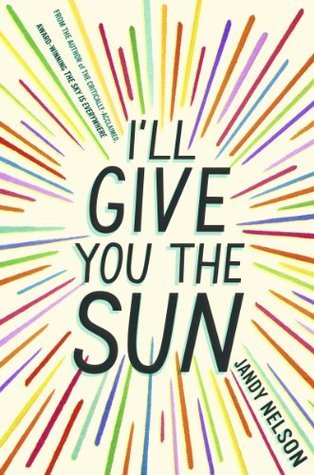
Twins Jude and Noah once shared everything. But when they were 13, a chain of events pushed them apart. Now at 16, the two hardly speak, each having knowledge of something that would make the puzzle pieces of the last three years fit together. But each is trapped in their created world of lies and jealously and fear.
I'll Give You the Sun just won the 2015 Printz Award. So convenient since I'd just read it the week before and it was my favorite YA of the year. The Printz Award has never gone to my favorite YA of the year, so it was all very exciting.
This was really beautiful. The framing device worked perfectly, the characters were relatable, and even when they did some pretty terrible, I cared about them and wanted everything to work out in the end. I actually ruined it for myself by flipping around and reading things out of order to find out what happened. Don't do that! It all comes together quite nicely if you let it.
Showing posts with label relationships. Show all posts
Wednesday, February 4, 2015
I'll Give You the Sun by Jandy Nelson
Labels:
family,
fiction,
LGBTQ,
relationships,
serious issues,
YA
Thursday, January 29, 2015
Gabi A Girl in Pieces by Isabel Quintero
Gabi starts keeping a diary the summer before her senior year of high school. She writes about her life. Her best friend Cindy, who finds out she's pregnant, her father and his meth habit, her mother who worries that Gabi's too fat, her friend Sebastian who's just come out, the boys Gabi has crushes on, and the poetry class she is coming to love.
It sounds like every single Issue Storyline is in this book. And I guess it is. But it worked, so, so well. It did not feel like an after school special. It felt heartbreakingly realistic. This was Gabi's daily life. This is what she is surrounded by in her community.
Gabi is hysterical. She's sassy and vulgar and completely open. She does not mince words. She's full of self-doubt like any teenage girl, but also has a wonderful spirit. She is empowered. And she only becomes more so.
Her mother is constantly telling her she's too fat and to lose weight. No one will ever love her when she's fat. Gabi thinks about this sometime. She'd like to lose weight and be skinny and, in her mind (and her mother's), prettier. But it's also clearly not the most important thing to her. Gabi thinks on it, certainly, but she does not let it define her, despite her mother. The other physical aspect Gabi thinks about is her skin color. She's light skinned, and people sometimes don't know she's Mexican. Some people think she doesn't look Mexican enough. It frustrates her and makes her angry.
Gabi has two great friends who are also going through some tough issues. Cindy is pregnant and is going to keep the baby. Sebastian has been kicked out of his house after coming out to his parents. Gabi tries to be a good, supportive friend, even though she doesn't always agree with their actions.
The saddest part of the story, I thought, was Gabi's father. He's a meth addict, and is constantly disappearing for weeks or months on end. Gabi is afraid he'll die while he's out on one of his binges and they'll never see him again. She's so angry with him for doing this to their family, but loves him anyway. She loves her mother, even though sometimes her mother says some really cruel things to her. She tries to help her little brother, who acts like he's OK, but is feeling so much it's exploding out of him in destructive ways.
All this serious stuff is going on, but they're all still just teenagers, and Gabi wants to find herself a boyfriend. She's excited to go out on dates and kiss boys. She makes lots of mistakes, messes things up, tries to fix things.
A definite bonus to this book was that the diary entries were done in a realistic way. There was no, "I'm writing this while I'm supposedly in the middle of a big dramatic fight with someone." All the entries are Gabi writing after the fact, telling what happened and reflecting on how she dealt with things and how she feels now.
Gabi is such a wonderful, relatable, joyful character. Teens will connect with her and care about her and see aspects of their own lives in her stories. This is definitely a book for older teens, because language and some graphic content.
Really wonderful. A must read.
It sounds like every single Issue Storyline is in this book. And I guess it is. But it worked, so, so well. It did not feel like an after school special. It felt heartbreakingly realistic. This was Gabi's daily life. This is what she is surrounded by in her community.
Gabi is hysterical. She's sassy and vulgar and completely open. She does not mince words. She's full of self-doubt like any teenage girl, but also has a wonderful spirit. She is empowered. And she only becomes more so.
Her mother is constantly telling her she's too fat and to lose weight. No one will ever love her when she's fat. Gabi thinks about this sometime. She'd like to lose weight and be skinny and, in her mind (and her mother's), prettier. But it's also clearly not the most important thing to her. Gabi thinks on it, certainly, but she does not let it define her, despite her mother. The other physical aspect Gabi thinks about is her skin color. She's light skinned, and people sometimes don't know she's Mexican. Some people think she doesn't look Mexican enough. It frustrates her and makes her angry.
Gabi has two great friends who are also going through some tough issues. Cindy is pregnant and is going to keep the baby. Sebastian has been kicked out of his house after coming out to his parents. Gabi tries to be a good, supportive friend, even though she doesn't always agree with their actions.
The saddest part of the story, I thought, was Gabi's father. He's a meth addict, and is constantly disappearing for weeks or months on end. Gabi is afraid he'll die while he's out on one of his binges and they'll never see him again. She's so angry with him for doing this to their family, but loves him anyway. She loves her mother, even though sometimes her mother says some really cruel things to her. She tries to help her little brother, who acts like he's OK, but is feeling so much it's exploding out of him in destructive ways.
All this serious stuff is going on, but they're all still just teenagers, and Gabi wants to find herself a boyfriend. She's excited to go out on dates and kiss boys. She makes lots of mistakes, messes things up, tries to fix things.
A definite bonus to this book was that the diary entries were done in a realistic way. There was no, "I'm writing this while I'm supposedly in the middle of a big dramatic fight with someone." All the entries are Gabi writing after the fact, telling what happened and reflecting on how she dealt with things and how she feels now.
Gabi is such a wonderful, relatable, joyful character. Teens will connect with her and care about her and see aspects of their own lives in her stories. This is definitely a book for older teens, because language and some graphic content.
Really wonderful. A must read.
Labels:
family,
fiction,
friendship,
realistic fiction,
relationships,
serious issues,
YA
Thursday, August 7, 2014
One of Those Hideous Books Where the Mother Dies by Sonya Sones
Ruby's mother died, and now she has to leave her home and her friends, her boyfriend and everything she's ever know and move in with her father on the opposite coast. Her father who left before she was born, who Ruby has never seen or spoken to. At least in real life. Ruby's father is a famous actor. And now she's stuck with him.
One of Those Hideous Books Where the Mother Dies was written in verse, which for most books written this way I often feel that it doesn't work super well, like the writer just didn't want to have to worry about hashing things out and went with stream of consciousness instead. In this case, however, I liked it a lot. It made sense that Ruby would be writing in a fractured, distracted kind of way. She feels fractured and distracted. She's mourning the loss of her mother, but on top of that, she's mourning the loss of everything that's been familiar to her her entire life.
When Ruby first arrives in L.A., she's naturally miserable. She angry and resentful of her father, who couldn't take the time from his busy movie career to call or visit her. She misses her best friend and her boyfriend. She misses her aunt, who's going off on a six month archaeological dig with her boyfriend and won't even be available for Ruby to talk to. And, of course, she misses her mother. And on top of all that she has to start a new school, which turns out to be this weird, hippy place full of famous actor's kids and Ruby feels lost and out of place.
As time goes on, Ruby struggles to stay miserable. Her father, Whip (yes, Whip) is always nice to her and is always trying to give her things and take her places. Her father's assistant is really nice and he and Ruby get on great. She's making some friends. She even flirted with another guy and instantly feels guilty. And as the book goes on, we learn more about Ruby's mother. Ruby's mother wasn't perfect. Not that she was a bad parent by any means, but that she had her flaws, just like anyone else. Ruby feels guilty thinking about that too.
Spoilers
One of Those Hideous Books Where the Mother Dies was written in verse, which for most books written this way I often feel that it doesn't work super well, like the writer just didn't want to have to worry about hashing things out and went with stream of consciousness instead. In this case, however, I liked it a lot. It made sense that Ruby would be writing in a fractured, distracted kind of way. She feels fractured and distracted. She's mourning the loss of her mother, but on top of that, she's mourning the loss of everything that's been familiar to her her entire life.
When Ruby first arrives in L.A., she's naturally miserable. She angry and resentful of her father, who couldn't take the time from his busy movie career to call or visit her. She misses her best friend and her boyfriend. She misses her aunt, who's going off on a six month archaeological dig with her boyfriend and won't even be available for Ruby to talk to. And, of course, she misses her mother. And on top of all that she has to start a new school, which turns out to be this weird, hippy place full of famous actor's kids and Ruby feels lost and out of place.
As time goes on, Ruby struggles to stay miserable. Her father, Whip (yes, Whip) is always nice to her and is always trying to give her things and take her places. Her father's assistant is really nice and he and Ruby get on great. She's making some friends. She even flirted with another guy and instantly feels guilty. And as the book goes on, we learn more about Ruby's mother. Ruby's mother wasn't perfect. Not that she was a bad parent by any means, but that she had her flaws, just like anyone else. Ruby feels guilty thinking about that too.
Spoilers
Labels:
family,
fiction,
middle grade,
realistic fiction,
relationships,
serious issues,
verse,
YA
Sunday, June 22, 2014
This One Summer by Mariko Tamaki and Jillian Tamaki
Rose and her parents have been going to Awago Beach since Rose was five. Rose loves it there, and loves seeing her summer friend, Windy. This summer, however, things are not the same. Rose's mother is acting odd, and her parent's keep fighting. Rose and Windy find themselves witnessing the drama of the local teenagers and taking sides. Everything seems the same but different.
Beautiful coming of age story. There's so much that's left unsaid, that doesn't need to be said because of the power of the illustrations.
I don't think it's ever explicitly said how old Rose is. My guess is 12, maybe? She's in that in-between stage. She isn't a teenager, not in high school yet. She's too old to think of herself as a kid anymore. She's getting crushes on boys, thinking about getting breasts and her period. Her best summer friend, Windy, is about a year younger than she is.
It's unclear for most of the story what's going on with Rose's mother. Is she sick? She does appear to be very thin and drawn. She portrayed coughing a few times. But we come to understand that Rose doesn't know what's going on with her mother either. Just that she very withdrawn, often short-tempered, doesn't seem to have to patience for things they've always done.
Rose is close with her father. He laughs and jokes and teases her. She feels abandoned when he leaves to go back to the city in the middle of their summer. Now Rose feels she's completely on her own, trapped with her mother who isn't acting like her mother.
Windy's relationship with her mother is a sharp contrast to how Rose feels about her own mother. Windy's mother seems open and passionate and outwardly shows her love for her child. All the things Rose feels like are missing right now. Although it's never said, Rose also feels some resentment toward her mother for wanting to have another child. Why doesn't her mother feel like she is enough, like Windy's does?
Rose finds herself witness to the drama of the older teenagers of Awago Beach. Rose has a crush on Doug, who works at the town store. His girlfriend, Jenny, gets pregnant. Doug won't talk to Jenny or call her. Rose immediately falls into defending Doug in her head. What if Jenny's lying? What if it's not Doug's? What if Jenny is cheating on him? That Jenny is a slut. Rose has no base for any of this thinking, really. She has none of that "girls should stick together" mentality. She just wants the boy she likes to be a nice, good guy.
There's a theme of children and childbirth. Wanting babies, not wanting babies. Being too old to have one, being too young to have one. It gave the story a life-cycle feel. Beginnings and endings. Summer beginning, summer ending. Growing up, getting older.
The art if just beautiful. It's black and white, but the blacks have shades of blue and gray. The quietness and peace of the summer that Rose so loves is reflected. Through uses of close-ups and wordless panels, we get a clear understanding what the characters are thinking and feeling.
Quiet, beautiful, powerful story. Highly recommended.
Beautiful coming of age story. There's so much that's left unsaid, that doesn't need to be said because of the power of the illustrations.
I don't think it's ever explicitly said how old Rose is. My guess is 12, maybe? She's in that in-between stage. She isn't a teenager, not in high school yet. She's too old to think of herself as a kid anymore. She's getting crushes on boys, thinking about getting breasts and her period. Her best summer friend, Windy, is about a year younger than she is.
It's unclear for most of the story what's going on with Rose's mother. Is she sick? She does appear to be very thin and drawn. She portrayed coughing a few times. But we come to understand that Rose doesn't know what's going on with her mother either. Just that she very withdrawn, often short-tempered, doesn't seem to have to patience for things they've always done.
Rose is close with her father. He laughs and jokes and teases her. She feels abandoned when he leaves to go back to the city in the middle of their summer. Now Rose feels she's completely on her own, trapped with her mother who isn't acting like her mother.
Windy's relationship with her mother is a sharp contrast to how Rose feels about her own mother. Windy's mother seems open and passionate and outwardly shows her love for her child. All the things Rose feels like are missing right now. Although it's never said, Rose also feels some resentment toward her mother for wanting to have another child. Why doesn't her mother feel like she is enough, like Windy's does?
Rose finds herself witness to the drama of the older teenagers of Awago Beach. Rose has a crush on Doug, who works at the town store. His girlfriend, Jenny, gets pregnant. Doug won't talk to Jenny or call her. Rose immediately falls into defending Doug in her head. What if Jenny's lying? What if it's not Doug's? What if Jenny is cheating on him? That Jenny is a slut. Rose has no base for any of this thinking, really. She has none of that "girls should stick together" mentality. She just wants the boy she likes to be a nice, good guy.
There's a theme of children and childbirth. Wanting babies, not wanting babies. Being too old to have one, being too young to have one. It gave the story a life-cycle feel. Beginnings and endings. Summer beginning, summer ending. Growing up, getting older.
The art if just beautiful. It's black and white, but the blacks have shades of blue and gray. The quietness and peace of the summer that Rose so loves is reflected. Through uses of close-ups and wordless panels, we get a clear understanding what the characters are thinking and feeling.
Quiet, beautiful, powerful story. Highly recommended.
Friday, May 16, 2014
This Song Will Save Your Life by Leila Sales
Elise Dembowski has always been an outsider. She makes one final attempt to change herself and make friends, and when that fails she thinks she's ready to give up for good. Then Elise comes across and underground party and finds her passion - DJing. With it come real friends and crushes, but Elise still hasn't made her night life and the rest of her life come together.
Elise is an odd duck. The kind of kid who I see in high school sometimes and I just want to tell them to hang on until they can go to college. That it's going to get so much better for them. She's not interested in things most other kids her age are interested in. She doesn't like the sorts of clothes they wear so she doesn't dress like most kids. Without common interests, Elise is alone most of the time. She doesn't really know how to interact with people her own age. Elise gets teased and bullied constantly. She's always alone. School is a torment for her.
The book kind of starts in the middle of the story. Elise is reflecting back on her attempt to reinvent herself the summer between freshman and sophomore year. She buys new clothes. She studies pop culture and TV even though she doesn't care about any of it. And on the first day of school she realizes it's never going to work. She's always just going to be herself. Elise decides she's going to kill herself. But after cutting herself she realizes she doesn't actually want to die, but just wants to be noticed and cared about.
This attempt comes back to haunt her later on, when someone starts an online journal under Elise's name. The journal says things about how everyone hates her (Elise) and she wants to kill herself. Elise doesn't know who's doing it, but everyone at school thinks it's really her.
While Elise is suffering at school, she's blossoming in the underground club scene. She accidentally stumbles upon the party during one of her evening walks and, amazingly to her, makes friends with two girls, who introduce her to the DJ Char, who takes her under his wing. Elise feels like a different person there. A confident person with friends who is talented and has something to give. As DJing becomes more important to her, Elise finds it hard to keep on getting up to go to school each day. And DJing can't magically make all her problems go away.
Elise continues to struggle with her feelings of worthlessness. She starts hooking up with Char, even though she knows he fools around with lots of other girls. When Elise is offered her own DJing gig, rather than be happy for her, Char is jealous and wants her to turn it down. Elise doesn't know what to do. She's gone so long believing that she'll never be good enough, never be what anyone wants. I wanted to grab Elise and shake her and say, "Don't listen to that stupid boy! You're going to be awesome! He's just jealous of you! Also you should probably stop hooking up with him!"
Elise's two worlds collide when her parents see a journal entry on the fake Elise's site that says she's going to kill herself. Her parents, of course, freak out and set out to find her. With everything out in the open, real change can finally be made.
The book doesn't end with everything being fixed and better. But we are left with the feeling that Elise is going to be OK. She's found a place for herself, and she's found a way to bring that person she is at night into the rest of her life.
It's a great story and also deals with those tricky themes of bullying and identity that can so easily become heavy handed and preachy. It was an finding yourself with an edge, realistically portrayed. I found Elise's voice to very true and on point. Highly recommended.
Elise is an odd duck. The kind of kid who I see in high school sometimes and I just want to tell them to hang on until they can go to college. That it's going to get so much better for them. She's not interested in things most other kids her age are interested in. She doesn't like the sorts of clothes they wear so she doesn't dress like most kids. Without common interests, Elise is alone most of the time. She doesn't really know how to interact with people her own age. Elise gets teased and bullied constantly. She's always alone. School is a torment for her.
The book kind of starts in the middle of the story. Elise is reflecting back on her attempt to reinvent herself the summer between freshman and sophomore year. She buys new clothes. She studies pop culture and TV even though she doesn't care about any of it. And on the first day of school she realizes it's never going to work. She's always just going to be herself. Elise decides she's going to kill herself. But after cutting herself she realizes she doesn't actually want to die, but just wants to be noticed and cared about.
This attempt comes back to haunt her later on, when someone starts an online journal under Elise's name. The journal says things about how everyone hates her (Elise) and she wants to kill herself. Elise doesn't know who's doing it, but everyone at school thinks it's really her.
While Elise is suffering at school, she's blossoming in the underground club scene. She accidentally stumbles upon the party during one of her evening walks and, amazingly to her, makes friends with two girls, who introduce her to the DJ Char, who takes her under his wing. Elise feels like a different person there. A confident person with friends who is talented and has something to give. As DJing becomes more important to her, Elise finds it hard to keep on getting up to go to school each day. And DJing can't magically make all her problems go away.
Elise continues to struggle with her feelings of worthlessness. She starts hooking up with Char, even though she knows he fools around with lots of other girls. When Elise is offered her own DJing gig, rather than be happy for her, Char is jealous and wants her to turn it down. Elise doesn't know what to do. She's gone so long believing that she'll never be good enough, never be what anyone wants. I wanted to grab Elise and shake her and say, "Don't listen to that stupid boy! You're going to be awesome! He's just jealous of you! Also you should probably stop hooking up with him!"
Elise's two worlds collide when her parents see a journal entry on the fake Elise's site that says she's going to kill herself. Her parents, of course, freak out and set out to find her. With everything out in the open, real change can finally be made.
The book doesn't end with everything being fixed and better. But we are left with the feeling that Elise is going to be OK. She's found a place for herself, and she's found a way to bring that person she is at night into the rest of her life.
It's a great story and also deals with those tricky themes of bullying and identity that can so easily become heavy handed and preachy. It was an finding yourself with an edge, realistically portrayed. I found Elise's voice to very true and on point. Highly recommended.
Labels:
bullying,
family,
fiction,
friendship,
realistic fiction,
relationships,
serious issues,
YA
Tuesday, November 5, 2013
Ketchup Clouds by Annabel Pitcher
After a traumatic event in Zoe's life, she begins writing to Stuart Harris, a Texas Death Row inmate convicted of murdering his wife. Zoe writes to Mr. Harris, telling him her story, knowing he'll understand, because they both were responsible for the death of someone they loved.
It was an interesting book, and I enjoyed it. The framing devices worked well. Zoe can't tell anyone the truth about what happened to her, and she feels safe writing to Mr. Harris. First of all, she feels he'll understand. Second, she doesn't use her real name or address, so no one can ever find her. And finally, Mr. Harris is going to be executed. Zoe is telling someone her secret, but soon there will once again be no one in the world who knows.
Zoe begins telling her story three months after the event happened, and writes throughout that year until the first anniversary on May 1, also the date that Mr. Harris is to get his lethal injection. Zoe tells, in great detail, meeting two brothers, Aaron and Max at a party (although she doesn't know they're brothers at the time). Zoe feels drawn to Aaron, but Max goes to her high school, is very popular and seems interested in Zoe. Zoe and Max start hooking up, although Zoe keeps an eye out for Aaron (who is older and in college).
It was an interesting book, and I enjoyed it. The framing devices worked well. Zoe can't tell anyone the truth about what happened to her, and she feels safe writing to Mr. Harris. First of all, she feels he'll understand. Second, she doesn't use her real name or address, so no one can ever find her. And finally, Mr. Harris is going to be executed. Zoe is telling someone her secret, but soon there will once again be no one in the world who knows.
Zoe begins telling her story three months after the event happened, and writes throughout that year until the first anniversary on May 1, also the date that Mr. Harris is to get his lethal injection. Zoe tells, in great detail, meeting two brothers, Aaron and Max at a party (although she doesn't know they're brothers at the time). Zoe feels drawn to Aaron, but Max goes to her high school, is very popular and seems interested in Zoe. Zoe and Max start hooking up, although Zoe keeps an eye out for Aaron (who is older and in college).
Labels:
family,
fiction,
realistic fiction,
relationships,
romance,
serious issues,
YA
Monday, September 9, 2013
Living with Jackie Chan by Jo Knowles
This is a companion to Jumping Off Swings, which I have not read. This book stands alone of its own quite well, but after having read it I'm curious to read Jumping Off Swings.
Josh was a relatable character. He's doing his best to act like everything is fine. He doesn't want to be trouble for anyone. But things are not fine at all. Luckily for Josh, he's living with his uncle Larry, who was probably the best person Josh could live with. Larry didn't, and couldn't, fix things for Josh, but he was a presence unlike any Josh had had in his life before. Larry is full of positive energy and life. Josh described him as like a puppy, and that seemed pretty accurate. Larry is an advanced black belt in karate, and convinces Josh to take lessons. Again, karate doesn't fix things for Josh, but it does provide him with an outlet.
I liked reading about Josh's parents. Josh's parents are still together, but from what he says, that hadn't really spoken to each other in years. It didn't seem like there was a whole lot of support for Josh the previous year. But when Josh leaves, his parent's begin to undergo a transformation of their own. Josh's leaving makes them reconsider their own lives, and they start to work to make things better, for themselves and for Josh. We only see Josh's parents through his perspective, it's never their story, but I like that angle. There were a lot of people undergoing transformations of one kind or another over the course of this school year.
The final plot point is Josh's relationship with Stella, who lives in his building and also takes karate. The two are friends outside of school, but Stella has a jealous boyfriend and she won't talk to or even acknowledge Josh in school. Josh tries to convince himself that this is for the best, since it's not like he wants a relationship, not after what happened last year.
Spoilers
Labels:
boy appeal,
family,
fiction,
middle grade,
realistic fiction,
relationships,
serious issues,
YA
Monday, July 22, 2013
Love in the Time of Global Warming by Francesca Lia Block
Penelope's home and everything she knows has been destroyed in a devastating earthquake and tsunami. She is alone. Pen sets out on a journey to find her family and discover her own strengths.
This being Francesca Lia Block, I was expecting the airy, dreamy worlds from Weetzie Bat. While the world in Love in the Time of Global Warming was certain not realism, it was a lot less dream-like then her others. I remember her saying that she wrote this book while dealing with her own loss, and perhaps that is part of that.
Love in the Time of Global Warming is The Odyssey. We have our heroine, Penelope, and her journey exactly mirrors Odysseus', down to the sirens and cyclopses. When the book first begins, it seems we're going to have a dystopia. Los Angeles has been destroyed by earthquake and tsunami, and now Pen must figure out how to survive. But it's not just that. The fantastical element comes in quickly, which is that there are human-eating giants set lose on the country, escaped from a laboratory experimenting in genetics modification.
A Pen journey's, she finds that some people seem to have gained otherworldly powers in the destruction. And she might have gained some too. As she travels, she finds others who she befriends and joins her as they struggle through all the trials of The Odyssey, finally coming face-to-face with the man who created the giants.
Spoilers
This being Francesca Lia Block, I was expecting the airy, dreamy worlds from Weetzie Bat. While the world in Love in the Time of Global Warming was certain not realism, it was a lot less dream-like then her others. I remember her saying that she wrote this book while dealing with her own loss, and perhaps that is part of that.
Love in the Time of Global Warming is The Odyssey. We have our heroine, Penelope, and her journey exactly mirrors Odysseus', down to the sirens and cyclopses. When the book first begins, it seems we're going to have a dystopia. Los Angeles has been destroyed by earthquake and tsunami, and now Pen must figure out how to survive. But it's not just that. The fantastical element comes in quickly, which is that there are human-eating giants set lose on the country, escaped from a laboratory experimenting in genetics modification.
A Pen journey's, she finds that some people seem to have gained otherworldly powers in the destruction. And she might have gained some too. As she travels, she finds others who she befriends and joins her as they struggle through all the trials of The Odyssey, finally coming face-to-face with the man who created the giants.
Spoilers
Labels:
adventure,
family,
fiction,
journeys,
LGBTQ,
middle grade,
relationships,
romance,
YA
Sunday, July 21, 2013
Heaven is Paved with Oreos by Catherine Gilbert Murdock
Sara and her best friend Curtis got tired of everyone in middle school teasing them about whether or not they were dating. So they decided to just to say they were. Now it's the summer before high school, and things are changing. Curtis "breaks up" with Sara, saying he doesn't want a fake girlfriend. He wants a real one. Sara isn't sure of her feelings, and jumps at the chance when her quirky grandmother, Z, invites her on a trip to Rome. But the trip is more than Sara bargained for as she discovers things about her family her never knew.
Very sweet. Much like Dairy Queen, it was heartfelt and thoughtful and middle grade girls, especially the ones who loved Dairy Queen, are going to love this. The Curtis that Sara is "dating" is, of course, the Curtis from Dairy Queen, DJ's little brother. DJ shows up in Heaven is Paved with Oreos as well, playing an important but small role.
Sara is very smart and doesn't have a lot of close friends. This doesn't matter because she has Curtis, but then she doesn't. We, of course, know she like likes him the whole time, but it takes Sara a while to realize that. When Curtis "breaks up" with her, she's hurt and upset and confused about why. But lucky she gets to distract herself with an international trip.
So the relationship aspect is one part of the story and then the family issues are the other part. Sara has a mom and dad and little brother, and a grandmother, her father's mother, who they call Z. Z is not like most grandmothers. She didn't raise Sara's father, having gotten pregnant young and left the baby for her parent's to raise while she went off to the big city. Z is arty and free and adventurous and Sara loves her. It isn't until the trip that she starts thinking about how all the cool stories that Z tells her about her life meant that she wasn't there for her dad when he was growing up.
Sara learns that Z had a much bigger reason for going to Italy then just as a trip for the two of them, and it shakes Sara up quite a bit. She starts to think about how people are not always what they appear to be, on the outside. They are upsetting discoveries, and it takes talking to her family to figure things out. And then she decides what she needs to do is also talk to Curtis.
So there's just the right amount of relationship/romance and just the right amount of family angst and secret discoveries. It was a lovely book and if you have middle grade girls it is a must buy.
Heaven is Paved with Oreos comes out September 23, 2013.
Very sweet. Much like Dairy Queen, it was heartfelt and thoughtful and middle grade girls, especially the ones who loved Dairy Queen, are going to love this. The Curtis that Sara is "dating" is, of course, the Curtis from Dairy Queen, DJ's little brother. DJ shows up in Heaven is Paved with Oreos as well, playing an important but small role.
Sara is very smart and doesn't have a lot of close friends. This doesn't matter because she has Curtis, but then she doesn't. We, of course, know she like likes him the whole time, but it takes Sara a while to realize that. When Curtis "breaks up" with her, she's hurt and upset and confused about why. But lucky she gets to distract herself with an international trip.
So the relationship aspect is one part of the story and then the family issues are the other part. Sara has a mom and dad and little brother, and a grandmother, her father's mother, who they call Z. Z is not like most grandmothers. She didn't raise Sara's father, having gotten pregnant young and left the baby for her parent's to raise while she went off to the big city. Z is arty and free and adventurous and Sara loves her. It isn't until the trip that she starts thinking about how all the cool stories that Z tells her about her life meant that she wasn't there for her dad when he was growing up.
Sara learns that Z had a much bigger reason for going to Italy then just as a trip for the two of them, and it shakes Sara up quite a bit. She starts to think about how people are not always what they appear to be, on the outside. They are upsetting discoveries, and it takes talking to her family to figure things out. And then she decides what she needs to do is also talk to Curtis.
So there's just the right amount of relationship/romance and just the right amount of family angst and secret discoveries. It was a lovely book and if you have middle grade girls it is a must buy.
Heaven is Paved with Oreos comes out September 23, 2013.
Labels:
family,
fiction,
friendship,
growing up,
middle grade,
realistic fiction,
relationships,
romance,
travel
Wednesday, June 19, 2013
How to Say Goodbye in Robot by Natalie Standiford
It's Bea's senior year and she's new in town. Her mother is acting incredibly strange and her father makes sure he's home as little as possible. Bea figures she'll just drift through senior year, but then she meets Jonah, know to others as Ghost Boy. Jonah does not like people much, but for some reason Bea if drawn to him. The two begin to create an unusual friendship, which involves both caring for, and hurting each other.
I really enjoyed reading this, but was so frustrated! But I was frustrated because I really cared about Bea and was angry on her behalf how people were treating her. In particular, her parents and Jonah.
I wanted to shake Bea and say, "You're in an abusive relationship and you don't even know it! You are better than this!" I did not like how Jonah treated Bea at all. I understood why Bea was drawn to him. She felt like an outsider, and Jonah was an outsider too. Bea felt like Jonah understood her like none of her other friends. As things got more and more difficult at home, she needed that. But Jonah, quiet frankly, yanked her around and treated her like crap. He didn't like her hanging out with other people. He would punish her by not speaking to her. They weren't dating, but seriously, it had all the signs of an emotionally abusive relationship.
Bea and Jonah's non-romantic relationship was an interesting one. Jonah was clearly not in love with Bea, but was Bea in love with Jonah? I wasn't sure. I don't think she was. I think she thought she had finally found a kindred spirit. A true friend. Someone who understood her flat, emotionless outside. Bea didn't want to lose him. She dreamed about them going to school in New York together and sharing an apartment. But I don't think it was romantic.
Jonah situation was beyond terrible. The deception from his father was awful, and it's no wonder Jonah did what he did. But it hurt Bea in the process.
I was dying to find out what was going on with Bea's mom. She was clearly depressed. She was acting strange, childlike, irrational. I understood that, but it didn't change that I was angry with her for being so mean to Bea! Bea's mother kept telling her she just didn't understand, she didn't feel anything, she was emotionless like a robot. What a horrible thing for a child to be told by their mother. Bea's mother was dealing with her own issues clearly, but Bea was suffering because of them. And her father, while caring, did nothing to help Bea or her mother and did his best to be out of the house as much as possible so he wouldn't have to deal with it.
The way it ended was really best for Bea. It would allow her to move on. But her relationship with Jonah was a special one, and she will never stop looking for him.
I am being purposefully vague because I don't want to spoil anything. Read it. It was excellent.
I really enjoyed reading this, but was so frustrated! But I was frustrated because I really cared about Bea and was angry on her behalf how people were treating her. In particular, her parents and Jonah.
I wanted to shake Bea and say, "You're in an abusive relationship and you don't even know it! You are better than this!" I did not like how Jonah treated Bea at all. I understood why Bea was drawn to him. She felt like an outsider, and Jonah was an outsider too. Bea felt like Jonah understood her like none of her other friends. As things got more and more difficult at home, she needed that. But Jonah, quiet frankly, yanked her around and treated her like crap. He didn't like her hanging out with other people. He would punish her by not speaking to her. They weren't dating, but seriously, it had all the signs of an emotionally abusive relationship.
Bea and Jonah's non-romantic relationship was an interesting one. Jonah was clearly not in love with Bea, but was Bea in love with Jonah? I wasn't sure. I don't think she was. I think she thought she had finally found a kindred spirit. A true friend. Someone who understood her flat, emotionless outside. Bea didn't want to lose him. She dreamed about them going to school in New York together and sharing an apartment. But I don't think it was romantic.
Jonah situation was beyond terrible. The deception from his father was awful, and it's no wonder Jonah did what he did. But it hurt Bea in the process.
I was dying to find out what was going on with Bea's mom. She was clearly depressed. She was acting strange, childlike, irrational. I understood that, but it didn't change that I was angry with her for being so mean to Bea! Bea's mother kept telling her she just didn't understand, she didn't feel anything, she was emotionless like a robot. What a horrible thing for a child to be told by their mother. Bea's mother was dealing with her own issues clearly, but Bea was suffering because of them. And her father, while caring, did nothing to help Bea or her mother and did his best to be out of the house as much as possible so he wouldn't have to deal with it.
The way it ended was really best for Bea. It would allow her to move on. But her relationship with Jonah was a special one, and she will never stop looking for him.
I am being purposefully vague because I don't want to spoil anything. Read it. It was excellent.
Labels:
family,
fiction,
friendship,
realistic fiction,
relationships,
serious issues,
YA
Tuesday, May 28, 2013
Sparks: The Epic, Completely True Blue, (Almost) Holy Quest of Debbie by S. J. Adams
Debbie has been in love her with best friend Lisa for ages, but has never told for fear of losing her. Now, Lisa seems to be considering going all the way with her new boyfriend. Debbie knows she doesn't have much of a chance, but she HAS to let Lisa knows how she feels. And so Debbie finds herself on a crazy adventure with new friends and devote Blueists, Emma and Tim, to track down Lisa before the night is over so Debbie can declare herself.
I totally loved this. It was sweet, but with a tiny bit of an edge. It had fun, relatable characters that were a delight to read about. The whole "Church of Blue" things was weird at first, but then ended up being quite nice.
I liked that all the action in the book takes place over one day. Just one day. And what a day it was! We get to see Debbie, through each crazy adventure that happens over the course of the evening, take it in and realize something about herself. By the time she actually manages to find and talk to Lisa, she is in a very different place then she was in that morning.
I totally loved this. It was sweet, but with a tiny bit of an edge. It had fun, relatable characters that were a delight to read about. The whole "Church of Blue" things was weird at first, but then ended up being quite nice.
I liked that all the action in the book takes place over one day. Just one day. And what a day it was! We get to see Debbie, through each crazy adventure that happens over the course of the evening, take it in and realize something about herself. By the time she actually manages to find and talk to Lisa, she is in a very different place then she was in that morning.
Labels:
fiction,
friendship,
humor,
LGBTQ,
middle grade,
realistic fiction,
relationships
Tuesday, May 21, 2013
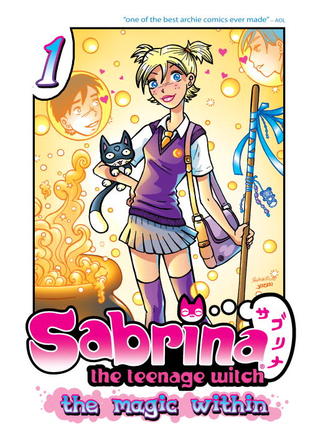
Sabrina the Teenage Witch: The Magic Within by Tania del Rio
Sabrina is a witch, and that means she not only has to go to regular school, but to magical school too! Sabrina is torn between two very different boys: Harvey, a mortal who she's know since kindergarten and has had a crush on forever, and Shinji, and fellow warlock who's recently started going to Sabrina's mortal school too. With her talking cat Salem, her friend Llandra, and her two fabulous aunts, Sabrina will navigate the confusing worlds of both high school and magic.
Meh. Oh it was cute. Fluffy and light. Those that like shoujo manga will love this one. In her introduction, Tania del Rio talks about being asked to do Sabrina and choosing to do it in the manga style. She describes shoujo as "..aimed at young girls filled with romance, adventure, and beautiful, strong-willed heroines." Well, I don't know about the "strong-willed" part. It's appropriate that this comes from Archie comics, since Sabrina and her friend Llandra are Betty and Veronica like in there mooning over the same boy.
This book would not pass the Bechdel test. I don't think Sabrina had a single conversation with her friends, her cat, or her aunts that didn't in some way involve her ever present dilemma over which boy she should chose. Or, once she started dating Harvey, how Harvey wasn't acting enough like a boyfriend.
Meh. Oh it was cute. Fluffy and light. Those that like shoujo manga will love this one. In her introduction, Tania del Rio talks about being asked to do Sabrina and choosing to do it in the manga style. She describes shoujo as "..aimed at young girls filled with romance, adventure, and beautiful, strong-willed heroines." Well, I don't know about the "strong-willed" part. It's appropriate that this comes from Archie comics, since Sabrina and her friend Llandra are Betty and Veronica like in there mooning over the same boy.
This book would not pass the Bechdel test. I don't think Sabrina had a single conversation with her friends, her cat, or her aunts that didn't in some way involve her ever present dilemma over which boy she should chose. Or, once she started dating Harvey, how Harvey wasn't acting enough like a boyfriend.
Labels:
fantasy,
fiction,
friendship,
graphic novel,
manga,
middle grade,
relationships,
romance,
series
Monday, April 22, 2013
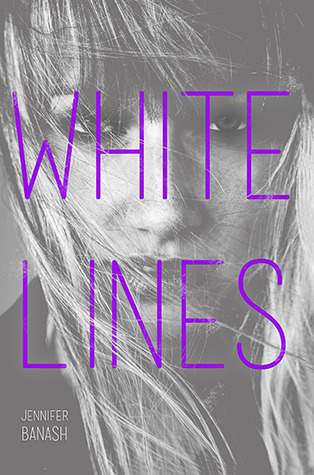
White Lines by Jennifer Banash
Cate is 17 and in the Lower East Side during the 1980s. Having been removed from her mother's abusive home, Cate is under her father's guardianship, but he's put her up in an apartment of her own, and Cate lives alone and isolated during the day. At night though, she is royalty, helping to throw the wildest party as part of the New York club scene. Drugs and alcohol help Cate forget her problems for a time, and she can feel like she belongs. But Cate is beginning to feel like things might be slipping out of her control, and there isn't anyone she can go to for help.
So first of all, I think kids are going to have trouble with a sense of place. It never explicitly says what year we're in. There's lots of references to music I doubt most teens will have ever heard of, with the exception of Madonna, and movies they've never seen. Will they know we're supposed to be in the 80s? Clearly it's not present day, what with the lack of cell phones and Internet. You know what tipped me off about the time period? Paying for the subway with tokens. I don't think we can make the assumption that a story about clubs and drug use immediately says "1980s" to a teen reader. I think it would have been helpful to explicitly say that somewhere.
Labels:
family,
fiction,
friendship,
realistic fiction,
relationships,
survival,
YA
Sunday, December 30, 2012
X-Men: Season One by Dennis Hopeless, art by Jamie McKelvie
Professor Charles Xavier has recruited five extraordinary teen mutants for his "high school" - a place where they will learn to fight together to protect the world from other, dangerous mutants. Jean Gray has her doubts about Professor Xavier, and his seeming willingness to put she and her friends in harms way. After all, they're just kids, trying to deal with major self revelations and crushes!
It's another X-Men reboot, but this time, the story is being told by Jean, which is cool. Professor Xavier is not being portrayed as infallible, and the kids question him and struggle with his ideals, which they don't really share. It's hard protecting people who hate you!
We have the five original X-Men - Jean, Angel, Beast, Iceman and Cyclops. We get to see all their angsty teen interactions, which is lots of fun. Jean at first has a crush on pretty-boy Warren (Angel), and it nothing but annoyed with Scott (Cyclops) who's super intense and does nothing but train.
Hank (Beast) and Bobby (Iceman) are best friends. I enjoyed seeing how Beast is the smartest and most thoughtful of them all. He's a science genius and an inventor and becomes incredibly frustrated that it's only his fighting skills that are looked for, not his intellect. He actually leaves the X-Men for a time, much to Bobby's distress, and it's Jean who's able to bring him back.
By the end of this first volume, the X-Men are beginning to act more like a team, and they've also all emerged alive from their first serious encounter with Magneto. They also have to struggle with the fact and Professor Xavier and Magneto are friends. Who, like, play chess together sometimes. That's a very difficult thing for the teenagers to accept. Isn't Magneto evil? Aren't they trying to defeat him?
I thought this was a great start to the series. I love that we're seeing everything through Jean, and I really like the fact that the X-Men act like the teenagers they are, with all the usual teen problems on top of the fact that they're trying to save the world, and are clearly not ready for it. It will be fun to see them learn to control their powers. Especially Jean, who's already starting to see she's far more powerful than she though.
It's another X-Men reboot, but this time, the story is being told by Jean, which is cool. Professor Xavier is not being portrayed as infallible, and the kids question him and struggle with his ideals, which they don't really share. It's hard protecting people who hate you!
We have the five original X-Men - Jean, Angel, Beast, Iceman and Cyclops. We get to see all their angsty teen interactions, which is lots of fun. Jean at first has a crush on pretty-boy Warren (Angel), and it nothing but annoyed with Scott (Cyclops) who's super intense and does nothing but train.
Hank (Beast) and Bobby (Iceman) are best friends. I enjoyed seeing how Beast is the smartest and most thoughtful of them all. He's a science genius and an inventor and becomes incredibly frustrated that it's only his fighting skills that are looked for, not his intellect. He actually leaves the X-Men for a time, much to Bobby's distress, and it's Jean who's able to bring him back.
By the end of this first volume, the X-Men are beginning to act more like a team, and they've also all emerged alive from their first serious encounter with Magneto. They also have to struggle with the fact and Professor Xavier and Magneto are friends. Who, like, play chess together sometimes. That's a very difficult thing for the teenagers to accept. Isn't Magneto evil? Aren't they trying to defeat him?
I thought this was a great start to the series. I love that we're seeing everything through Jean, and I really like the fact that the X-Men act like the teenagers they are, with all the usual teen problems on top of the fact that they're trying to save the world, and are clearly not ready for it. It will be fun to see them learn to control their powers. Especially Jean, who's already starting to see she's far more powerful than she though.
Monday, October 22, 2012
Annie Sullivan and the Trails of Helen Keller by Joseph Lambert
Annie Sullivan comes from the Perkins Institution for the Blind to work with Helen Keller, and blind and deaf girl with no way of communicating. Helen is wild and savage, trapped in a silent dark world. Annie, however, is no shrinking violet, and is determine to get though to Helen, despite the interference of Helen's parents.
This was excellent. Not only was the story beautifully told, but the visual representation of Helen's world was incredibly striking.
I have never read Helen Keller's The Story of My Life, or anything about Annie Sullivan, but of course I know the story of Annie Sullivan working with Helen and finally having the breakthrough at the water pump. I'm pretty sure I saw a movie about Annie Sullivan and Helen Keller, but I can't remember which one. That is all to say I didn't know very much about Annie Sullivan as a person, apart from her work with Helen, and it was fascinating.
Annie had a difficult childhood, dealing with the death of her parents, younger brother, and growing up in an asylum and poorhouse. She was also partly blind, and couldn't read until she came to Perkins and underwent several operations. Annie had a temper! She was not a patient person, which seems like the wrong sort of person to be a teacher, but she was actually exactly what Helen needed.
We learn about Annie's loneliness, and her close relationship with Dr. Michael Anagnos, the director of Perkins Institution. He was the one who sent Annie to Helen, and he was very proud of both of them. Annie got frustrated with Perkins taking much of the credit for Helen's achievements. Annie and Dr. Anagnos had a falling out over a story Helen wrote, and allegedly plagiarized, which I had never heard about.
Annie was often frustrated while working with Helen in Alabama, and it wasn't just Helen that was causing frustration. Annie lived in New England her whole life, and found the Southern way of doing things enraging. Annie was not one to hold on politeness and formality. She often became angry when she felt people were talking down to her, or didn't think she was smart.
I loved how Helen's dark world was represented. At the beginning, when things are from Helen's point of view, everything is dark and hardly has any form. Things continue this way, until she begins to put it together that things have a name and a use, and then her world starts to take on more defined form. It was a wonderful, beautiful way to represent how Helen's world suddenly opened up when she learned to communicate with people. Helen's world becomes more solid as she learns more and more. Once she understood what Annie was trying to do, Helen wanted to know the name of everything right away. It must have been amazing.
I highly recommend this one!
This was excellent. Not only was the story beautifully told, but the visual representation of Helen's world was incredibly striking.
I have never read Helen Keller's The Story of My Life, or anything about Annie Sullivan, but of course I know the story of Annie Sullivan working with Helen and finally having the breakthrough at the water pump. I'm pretty sure I saw a movie about Annie Sullivan and Helen Keller, but I can't remember which one. That is all to say I didn't know very much about Annie Sullivan as a person, apart from her work with Helen, and it was fascinating.
Annie had a difficult childhood, dealing with the death of her parents, younger brother, and growing up in an asylum and poorhouse. She was also partly blind, and couldn't read until she came to Perkins and underwent several operations. Annie had a temper! She was not a patient person, which seems like the wrong sort of person to be a teacher, but she was actually exactly what Helen needed.
We learn about Annie's loneliness, and her close relationship with Dr. Michael Anagnos, the director of Perkins Institution. He was the one who sent Annie to Helen, and he was very proud of both of them. Annie got frustrated with Perkins taking much of the credit for Helen's achievements. Annie and Dr. Anagnos had a falling out over a story Helen wrote, and allegedly plagiarized, which I had never heard about.
Annie was often frustrated while working with Helen in Alabama, and it wasn't just Helen that was causing frustration. Annie lived in New England her whole life, and found the Southern way of doing things enraging. Annie was not one to hold on politeness and formality. She often became angry when she felt people were talking down to her, or didn't think she was smart.
I loved how Helen's dark world was represented. At the beginning, when things are from Helen's point of view, everything is dark and hardly has any form. Things continue this way, until she begins to put it together that things have a name and a use, and then her world starts to take on more defined form. It was a wonderful, beautiful way to represent how Helen's world suddenly opened up when she learned to communicate with people. Helen's world becomes more solid as she learns more and more. Once she understood what Annie was trying to do, Helen wanted to know the name of everything right away. It must have been amazing.
I highly recommend this one!
Saturday, October 29, 2011
The Impostor's Daughter by Laurie Sandell
Laurie grew up with a larger than life father, a man who she worshiped and feared. His charisma and personality drew people to him even as he took advantage of them, and this was mostly true of his family. Shaped by her father's seeming past, Laurie grew to be a restless wanderer with a difficulty with relationships. While she couldn't seem to trust others romantically she was able to draw out trust in the celebrities that she interviewed, and as she slowly found her place in her job she discovered that her personal life was falling apart. Not until she was able to face her personal demons and find out the truth behind her father was Laurie able to truly grow as a person and be comfortable in her own skin.This was a bit surreal. As someone that was raised by a nice Midwestern Scandinavian family, it seems like total fiction that someone's father would con not only strangers and employers but also his family members and personal friends. Taking not only their money but also their trust and twisting it until you don't know quite where you stand with any of your relationships.
The experiences that Laurie goes through, the fact that she lived in Israel and was an exotic dancer in Japan, make it seem all that more imaginative. But these incredible experiences lead her to journalism and refining her abilities to tell a story whether it's hers or a celebrities'. She has gifts that developed from her father, and a drive to cultivate them in order to find herself. After Laurie starts delving into her past, she realizes that she must confront her father's past to find some sort of peace. It's fascinating to see what happens once she realizes the depth of psychological despair she's going through that has developed from her relationship with her father.
An intense memoir.
Laurie Sandell has written the memoir of the Madoff family which is coming out Oct. 31st. Looks like she's gotten quite good at writing the memories of families that live with con-men.
Labels:
adult,
family,
graphic novel,
memoir,
relationships,
serious issues
Friday, October 28, 2011
Was She Pretty? by Leanne Shapton
These were short little anecdotes, ranging from one sentence to a storyline spanning several pages. There were never more than three sentences per page and a sketched picture always accompanied each paragraph. It's weirdly touching and psychological without giving a lot of details or going into a lot of depth. You see glimpses of back-stories, personality conflicts, and the backlash of relationships.
Gripping, deep, and minimal. Wonderful.
Labels:
adult,
graphic novel,
relationships
Subscribe to:
Posts (Atom)