Darryl Cunningham debunks a number of prevalent myths, from the moon landing being a hoax to vaccinations causing Autism. For each myth Cunningham uses science and proven facts to explain why the myths are just that: myths.
I found this to be a very informative book, but it's also a book that's preaching to the choir. You're not going to pick up this book if you're a person who thinks climate change doesn't exist or that there's no such thing as evolution. This isn't going to be the book that manages to convince naysayers otherwise, because the naysayers aren't going to pick up a book on exposing the myths of science denial, even if it's in a friendly graphic novel format.
But if you're a person who's interested in where these myths come from, and how they can scientifically be refuted (so you can impress your friends and be prepared for your next cocktail party when someone says, "So what do you think about fracking?") this is the book for you.
What I liked about it was that it stressed critical thinking and the scientific method. Cunningham was very clear that just because we find something to be true now using the scientific method, doesn't mean that that will always be the case. Some new piece of information or research might come along that changes things. Something new might be discovered. But we must think critically and base our understanding on facts that come about through careful experimentation and observation. We can't disregard pieces of information because they don't fit with what we personally think, or what we'd like to be true.
Cunningham provided evidence for each issue he was looking at, as well as explaining how the myth originated, and how scientific data and facts can prove the myth inaccurate.
The writing is clear and straightforward, although I found some concepts easier to understand than others. I still find the concept of fracking confusing. Also, frack will never not make me think of Battlestar Galactica (the one with the moral dilemmas, not the one with the laser beams).
The book is arranged in strips, with three rows on each page with two panels per row with little variation. The art is carrtoonish, and is mixed with real photographs and detailed portraits of individuals mentioned. It made for an interesting mix.
While younger middle school students might have difficult, I think this would be appropriate for 8th grade and up.
Showing posts with label non fiction. Show all posts
Tuesday, April 21, 2015
Friday, January 2, 2015
Meltdown: A Race Against Nuclear Disaster at Three Mile Island: A Reporter's Story by Wilborn Hampton
In Meltdown, Wilbornn Hampton, a United Press International reporter, details his experience covering the story of the potential nuclear disaster at Three Mile Island.
The book begins with an overview of Hiroshima. In particular, the terrible aftereffects the nuclear bomb had. It not only killed 100,000 people instantly. Thousands of people developed cancer and radiation sickness. Years after mothers gave birth to deformed babies. The water was polluted and no food could be grown because of radiation in the soil. The effects of nuclear fallout exist for generations to come.
Hampton tells of the call he received on March 30, 1979. The initial incident had actually occurred on March 28, but things had been kept pretty quiet. As the situation worsened, news got out and reporters like Hampton started arriving on the scene.
Hampton details the chain of events that lead to the potential disaster. The book includes diagrams to help illustrate the layout of the nuclear reactors and how the system of pressurized water worked to keep the reactors cool and functioning. The book also contains many primary documents, including images of Three Mile Island and the surrounding area, and newspaper clippings.
I don't think I completely understood the science of the nuclear reactors despite the diagrams and illustrations, but Hampton tells a good story that I was fully engaged in. Honestly, not a whole lot happened! There was a lot of waiting around, a lot of conflicting reports about how dangerous the situation really was and how long they had before a potential meltdown. Hampton was able to tell an exciting story regardless.
The book ends with a brief look at Chernobyl, which was not as lucky. There, a meltdown occurred with terrible short and long-term consequences.
At no point does Hampton give his opinion on whether nuclear power is a good or bad thing. After a book full of all the terrible things that could happen, he finishes with mentioning that nuclear power still has many supporters and how it's today's youth who will need to figure out the best form on new electricity.
The book begins with an overview of Hiroshima. In particular, the terrible aftereffects the nuclear bomb had. It not only killed 100,000 people instantly. Thousands of people developed cancer and radiation sickness. Years after mothers gave birth to deformed babies. The water was polluted and no food could be grown because of radiation in the soil. The effects of nuclear fallout exist for generations to come.
Hampton tells of the call he received on March 30, 1979. The initial incident had actually occurred on March 28, but things had been kept pretty quiet. As the situation worsened, news got out and reporters like Hampton started arriving on the scene.
Hampton details the chain of events that lead to the potential disaster. The book includes diagrams to help illustrate the layout of the nuclear reactors and how the system of pressurized water worked to keep the reactors cool and functioning. The book also contains many primary documents, including images of Three Mile Island and the surrounding area, and newspaper clippings.
I don't think I completely understood the science of the nuclear reactors despite the diagrams and illustrations, but Hampton tells a good story that I was fully engaged in. Honestly, not a whole lot happened! There was a lot of waiting around, a lot of conflicting reports about how dangerous the situation really was and how long they had before a potential meltdown. Hampton was able to tell an exciting story regardless.
The book ends with a brief look at Chernobyl, which was not as lucky. There, a meltdown occurred with terrible short and long-term consequences.
At no point does Hampton give his opinion on whether nuclear power is a good or bad thing. After a book full of all the terrible things that could happen, he finishes with mentioning that nuclear power still has many supporters and how it's today's youth who will need to figure out the best form on new electricity.
Labels:
non fiction
Sunday, August 24, 2014
brown girl dreaming by Jacqueline Woodson.
Jacqueline Woodson tells the story of her early life in beautiful verse. Woodson had the unique experience of growing up in both the South and the North in the 60s and 70s. She never felt completely at home in either place, always missing somewhere. Although very young, she was aware of the dramatic cultural shifts happening around her, even if she didn't really understand them.
Another beautiful book from Jacqueline Woodson. Woodson started off her life in Ohio. Her father did not like where her mother came from, South Carolina, where Black people had to sit in the back of the bus and say "yes sir" and "no sir" to white people. He never wanted any of his children to have that experience. But when Woodson's mother and father separated, they returned to her mother's home.
South Carolina was very different from Ohio. Woodson and her siblings had lots of new rules to learn. Despite her mother telling them they "were as good as anyone else" that was not how it seemed. Despite the things she observes, Woodson and her siblings love living with their grandparents. Their mother is often away in New York though, and after a time, they all move to New York.
Another move, another completely different cultural experience. It's the 70s now, and with it comes the Black Pride movement and the Black Panthers. Woodson is still to young to really understand what's going on. But she can see that there are places where only Black people live, and places where only white people live.
Over the course of the story, Woodson also expresses her growing love of writing and telling stories.
Sometimes she spins fantastical stories about things she's done. They're things she wishes she had done, or places she wishes she had gone too. Doesn't that make them kind of true? Her stories get her into trouble sometimes, but she never stops.
It's Woodson's life, but it reads like historical fiction. Simple and engaging, yet so much going on behind it.
I wonder about shelving this. It should go in nonfiction, right? It's the story of her life, told in verse. But a kid would be much more likely to stumble on this in the fiction section, with the rest of her books. But it wouldn't be right to put it in fiction. Thoughts?
brown girl dreaming comes out August 28, 2014.
Another beautiful book from Jacqueline Woodson. Woodson started off her life in Ohio. Her father did not like where her mother came from, South Carolina, where Black people had to sit in the back of the bus and say "yes sir" and "no sir" to white people. He never wanted any of his children to have that experience. But when Woodson's mother and father separated, they returned to her mother's home.
South Carolina was very different from Ohio. Woodson and her siblings had lots of new rules to learn. Despite her mother telling them they "were as good as anyone else" that was not how it seemed. Despite the things she observes, Woodson and her siblings love living with their grandparents. Their mother is often away in New York though, and after a time, they all move to New York.
Another move, another completely different cultural experience. It's the 70s now, and with it comes the Black Pride movement and the Black Panthers. Woodson is still to young to really understand what's going on. But she can see that there are places where only Black people live, and places where only white people live.
Over the course of the story, Woodson also expresses her growing love of writing and telling stories.
Sometimes she spins fantastical stories about things she's done. They're things she wishes she had done, or places she wishes she had gone too. Doesn't that make them kind of true? Her stories get her into trouble sometimes, but she never stops.
It's Woodson's life, but it reads like historical fiction. Simple and engaging, yet so much going on behind it.
I wonder about shelving this. It should go in nonfiction, right? It's the story of her life, told in verse. But a kid would be much more likely to stumble on this in the fiction section, with the rest of her books. But it wouldn't be right to put it in fiction. Thoughts?
brown girl dreaming comes out August 28, 2014.
Labels:
family,
middle grade,
moving,
non fiction,
poetry,
serious issues,
verse
Monday, July 21, 2014
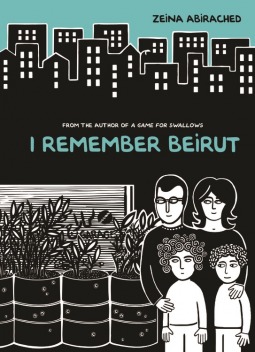
I Remember Beirut by Zeina Abirached
Zeina Abirached, who wrote the beautiful and poignant A Game for Swallows writes another graphic novel of wartime memories.
In A Game of Swallows, Abirached tells the story of her time growing up during the civil war in Lebanon. It was more of a tradition telling of her life during that time. In I Remember Beirut, Abirached simply tells things she remembers.
"I remember when there was no electricity or gas, we used kerosene for heating." "I remember traffic jams." "I remember how to fold a paper boat." Each of these memories relates to a larger event or experience Abirached recalls from the time of the war.
It paints a detailed picture of everyday life for a child during this time. It also allows us to see the things that Abirached remembers and considers important as an adult, and in some cases, how they impacted her.
What I've loved about Abirached's graphic novels is that the simple and straightforward way they are told allows them to be appropriate for a middle grade audience. Her graphic novels are an excellent way to help a younger child understand war the effects it has on the children, or to explore how another child's life can be so different from their own.
The illustrations are impactful. Done in black and white, and fitting with the story, simple in detail, the panels and full page illustrations further show the impact these events had on Abirached's life.
I Remember Beirut comes out October 1, 2014.
In A Game of Swallows, Abirached tells the story of her time growing up during the civil war in Lebanon. It was more of a tradition telling of her life during that time. In I Remember Beirut, Abirached simply tells things she remembers.
"I remember when there was no electricity or gas, we used kerosene for heating." "I remember traffic jams." "I remember how to fold a paper boat." Each of these memories relates to a larger event or experience Abirached recalls from the time of the war.
It paints a detailed picture of everyday life for a child during this time. It also allows us to see the things that Abirached remembers and considers important as an adult, and in some cases, how they impacted her.
What I've loved about Abirached's graphic novels is that the simple and straightforward way they are told allows them to be appropriate for a middle grade audience. Her graphic novels are an excellent way to help a younger child understand war the effects it has on the children, or to explore how another child's life can be so different from their own.
The illustrations are impactful. Done in black and white, and fitting with the story, simple in detail, the panels and full page illustrations further show the impact these events had on Abirached's life.
I Remember Beirut comes out October 1, 2014.
Labels:
family,
growing up,
memoir,
middle grade,
non fiction,
serious issues,
war
Tuesday, December 3, 2013
Relish: My Life in the Kitchen by Lucy Knisley
Lucy Knisley's most vivid memories are of how things tasted. She grew up with a foodie father and caterer mother in the middle of New York's blossoming food scene. Her memoir tells the love story of her relationship to food, and provides many tasty recipes along the way.
Lucy tells vignettes of her life which all revolve around food in some way. She recalls her quest for the perfect chocolate chip cookies; her trip to Mexico with her mother and her friend Drew's family (their moms got the flu and the two of them ran all over San Miguel eating cheap food); working in a cheese shop like her mother; relating to her father through food.
As well as giving us a picture of her life, Lucy gives us some of her recipes. Of course, they are told through image and words, it's a comic, after all! Her recipes include huevos rancheros, veggie sushi (I feel like I could actually make sushi now!), and shepard pie, among others.
At first I thought the art looked much different than it did in French Milk. Then I realized, no, it's not the art that looks so different, it's the colors. The style is the same, but French Milk was in black and white, so the lines were much more clear and detailed. Relish is done in bold, almost muddy colors (I didn't love the color palette), causing the illustrations to appear less detailed. I still like the style, which is very cute.
Relish is great, because it not only tells the story of the love of food, but also the story of an awkward kid growing up and making mistakes. Great for young adults and adults alike.
Lucy tells vignettes of her life which all revolve around food in some way. She recalls her quest for the perfect chocolate chip cookies; her trip to Mexico with her mother and her friend Drew's family (their moms got the flu and the two of them ran all over San Miguel eating cheap food); working in a cheese shop like her mother; relating to her father through food.
As well as giving us a picture of her life, Lucy gives us some of her recipes. Of course, they are told through image and words, it's a comic, after all! Her recipes include huevos rancheros, veggie sushi (I feel like I could actually make sushi now!), and shepard pie, among others.
At first I thought the art looked much different than it did in French Milk. Then I realized, no, it's not the art that looks so different, it's the colors. The style is the same, but French Milk was in black and white, so the lines were much more clear and detailed. Relish is done in bold, almost muddy colors (I didn't love the color palette), causing the illustrations to appear less detailed. I still like the style, which is very cute.
Relish is great, because it not only tells the story of the love of food, but also the story of an awkward kid growing up and making mistakes. Great for young adults and adults alike.
Labels:
adult,
family,
food,
graphic novel,
great graphic novels for girls,
memoir,
non fiction,
YA
Sunday, August 11, 2013
Primates: The Fearless Science of Jane Goodall, Dian Fossey, and Birute Galdikas by Jim Ottaviani and Maris Wicks
The true stories of three scientists who changed the way we think about primates forever. Jane Goodall, Dian Fossey and Birute Galdikas were all recruited by anthropologist Louis Leakey and set out, with little to no training or background, on field research that would result in discoveries that advanced our understanding of the link between humans and primates.
Another triumph from First Second! Seriously, can they do anything wrong? I don't think I've read anything from First Second that I haven't loved.
This is a great middle grade graphic novel that does an excellent job at showing how each of the three women got her big break, the research she did, discoveries made, and also the toll this kind of work took on her personal life.
Jane Goodall was the first to be discovered by Louis Leakey. Jane had always wanted to study animals, but for a while her work had nothing to do with animals. She jumped at the chance to visit a school friend in Kenya, and there she met Louis Leaky, who was working in Nairobi. She started out working as Leakey's secretary, but soon had the chance to study chimpanzees. So off she went, with no schooling in anthropology or sciences, no advanced degree. She named the chimpanzees, much to other scientist's disgust (scientists usually would number them), but when Jane observed chimps using tools and eating meat, she earned the respect of her peers.
Another triumph from First Second! Seriously, can they do anything wrong? I don't think I've read anything from First Second that I haven't loved.
This is a great middle grade graphic novel that does an excellent job at showing how each of the three women got her big break, the research she did, discoveries made, and also the toll this kind of work took on her personal life.
Jane Goodall was the first to be discovered by Louis Leakey. Jane had always wanted to study animals, but for a while her work had nothing to do with animals. She jumped at the chance to visit a school friend in Kenya, and there she met Louis Leaky, who was working in Nairobi. She started out working as Leakey's secretary, but soon had the chance to study chimpanzees. So off she went, with no schooling in anthropology or sciences, no advanced degree. She named the chimpanzees, much to other scientist's disgust (scientists usually would number them), but when Jane observed chimps using tools and eating meat, she earned the respect of her peers.
Saturday, January 5, 2013
A Game for Swallows: To Die, To Leave, To Return by Zeina Abirached
The Lebanese civil war has been going on since before Zeina was born. It is a daily part of life. Because of the bombings, Zeina, her little brother and mother and father live in the foyer; the only safe space in the apartment. One evening, Zeina's parents go to visit her grandparents, and have not returned as bombing intensifies. The other tenants from the building come down to keep watch over Zeina and her brother.
It amazing how things can just become part of everyday life. The fact that there were snipers hiding at the end of your street, and you have to walk a certain way so you won't get hit. The fact that bombings are any everyday occurrence, and sometimes people die, or your home gets destroyed. That it takes hours to get a dial tone on the phone, that you can't go near windows, that you wait on long lines for gas. And somehow there's still the belief that it's "more or less safe" there. Because it's home, and that's how things have always been.
The foyer of Zeina's apartment is the safest place in the apartment building, so usually all the other tenants make their way down to them during heavy bombing. Zeina's parents are not there, having gone to visit her grandparents. But they left an hour ago, and haven't shown up yet. All through the night, the tenants and children find ways to amuse themselves. The adults also show differing opinions on what course of action should be taken in regards to the war. Fight, leave, wait.
That evening, a shell lands in what was Zeina's bedroom, and the next day everyone has to find new places to go. A few leave Lebanon, but most find other people to stay with. Despite the constant danger, most do not seriously think about leaving.
The illustrations are striking. Done in black and white, the pictures are deceptively simple. The first few pages are of the streets, and it took me a minute to realize that there were bullet holes everywhere. It just kind of blends in. The style reminded me a lot of Persepolis.
Much like Little White Duck, this is another excellent middle grade level book that allows young people to see what life is like for children growing up outside of the United States.
It amazing how things can just become part of everyday life. The fact that there were snipers hiding at the end of your street, and you have to walk a certain way so you won't get hit. The fact that bombings are any everyday occurrence, and sometimes people die, or your home gets destroyed. That it takes hours to get a dial tone on the phone, that you can't go near windows, that you wait on long lines for gas. And somehow there's still the belief that it's "more or less safe" there. Because it's home, and that's how things have always been.
The foyer of Zeina's apartment is the safest place in the apartment building, so usually all the other tenants make their way down to them during heavy bombing. Zeina's parents are not there, having gone to visit her grandparents. But they left an hour ago, and haven't shown up yet. All through the night, the tenants and children find ways to amuse themselves. The adults also show differing opinions on what course of action should be taken in regards to the war. Fight, leave, wait.
That evening, a shell lands in what was Zeina's bedroom, and the next day everyone has to find new places to go. A few leave Lebanon, but most find other people to stay with. Despite the constant danger, most do not seriously think about leaving.
The illustrations are striking. Done in black and white, the pictures are deceptively simple. The first few pages are of the streets, and it took me a minute to realize that there were bullet holes everywhere. It just kind of blends in. The style reminded me a lot of Persepolis.
Much like Little White Duck, this is another excellent middle grade level book that allows young people to see what life is like for children growing up outside of the United States.
Sunday, December 30, 2012
Little White Duck: A Childhood in China by Na Liu and Andres Vera Martinez
Da Qin and her little sister are growing up in China during a time of change. Chairman Mao has just died, leading to the country opening slightly to the Western world. La Liu remembers moments that made an impact on her life.
This is a memoir, but it does not tell the story of Na Liu's entire life. Rather it is a series of short stories, small moments from her childhood. While we don't learn all about Na Liu's life, we are given a clear glimpse into the life of a child in China growing up after the death of Mao.
The first story Na Liu tells is going to the funeral of Chairman Mao, and recalling how incredibly sad her parents were. Both of Na Liu's parent's were able to make advances for themselves because of the government - her mother had polio as a child and the government paid for her care, Na Liu's father came from a farming family, but was able to pursue an education because of a government sponsorship. It was nice to hear these stories where Communism worked the way it was intended to work.
Another story is about Na Liu and her sister learning why they must eat all their food - the starving children in China. Na Liu's family was not wanting for food, but later, when she visits her father's family she horrified to see how other people live.
I thought Little White Duck did a good job of illustrating what was going on in China during this time. There were struggling peasants, and there were those who only wanted to be good citizens. Na Liu and her sister try to make sense of it all through their child's understanding, and it's hard.
The art was beautiful. It was done in very muted colors. There were really nice bright spots, even the red was dark. Lots of grays and blue-greens and browns. It reflected the military like feeling of the world Na Liu is growing up in. There is order and everyone does their part, no one steps out of line. The panels were also orderly and regular. At the beginning and end of the book, there were lovely double-paged spreads of Na Liu and her sister flying over China on a crane.
A great middle-grade book for explaining about children growing up in different parts of the world and during different time periods.
This is a memoir, but it does not tell the story of Na Liu's entire life. Rather it is a series of short stories, small moments from her childhood. While we don't learn all about Na Liu's life, we are given a clear glimpse into the life of a child in China growing up after the death of Mao.
The first story Na Liu tells is going to the funeral of Chairman Mao, and recalling how incredibly sad her parents were. Both of Na Liu's parent's were able to make advances for themselves because of the government - her mother had polio as a child and the government paid for her care, Na Liu's father came from a farming family, but was able to pursue an education because of a government sponsorship. It was nice to hear these stories where Communism worked the way it was intended to work.
Another story is about Na Liu and her sister learning why they must eat all their food - the starving children in China. Na Liu's family was not wanting for food, but later, when she visits her father's family she horrified to see how other people live.
I thought Little White Duck did a good job of illustrating what was going on in China during this time. There were struggling peasants, and there were those who only wanted to be good citizens. Na Liu and her sister try to make sense of it all through their child's understanding, and it's hard.
The art was beautiful. It was done in very muted colors. There were really nice bright spots, even the red was dark. Lots of grays and blue-greens and browns. It reflected the military like feeling of the world Na Liu is growing up in. There is order and everyone does their part, no one steps out of line. The panels were also orderly and regular. At the beginning and end of the book, there were lovely double-paged spreads of Na Liu and her sister flying over China on a crane.
A great middle-grade book for explaining about children growing up in different parts of the world and during different time periods.
Monday, October 22, 2012
Annie Sullivan and the Trails of Helen Keller by Joseph Lambert
Annie Sullivan comes from the Perkins Institution for the Blind to work with Helen Keller, and blind and deaf girl with no way of communicating. Helen is wild and savage, trapped in a silent dark world. Annie, however, is no shrinking violet, and is determine to get though to Helen, despite the interference of Helen's parents.
This was excellent. Not only was the story beautifully told, but the visual representation of Helen's world was incredibly striking.
I have never read Helen Keller's The Story of My Life, or anything about Annie Sullivan, but of course I know the story of Annie Sullivan working with Helen and finally having the breakthrough at the water pump. I'm pretty sure I saw a movie about Annie Sullivan and Helen Keller, but I can't remember which one. That is all to say I didn't know very much about Annie Sullivan as a person, apart from her work with Helen, and it was fascinating.
Annie had a difficult childhood, dealing with the death of her parents, younger brother, and growing up in an asylum and poorhouse. She was also partly blind, and couldn't read until she came to Perkins and underwent several operations. Annie had a temper! She was not a patient person, which seems like the wrong sort of person to be a teacher, but she was actually exactly what Helen needed.
We learn about Annie's loneliness, and her close relationship with Dr. Michael Anagnos, the director of Perkins Institution. He was the one who sent Annie to Helen, and he was very proud of both of them. Annie got frustrated with Perkins taking much of the credit for Helen's achievements. Annie and Dr. Anagnos had a falling out over a story Helen wrote, and allegedly plagiarized, which I had never heard about.
Annie was often frustrated while working with Helen in Alabama, and it wasn't just Helen that was causing frustration. Annie lived in New England her whole life, and found the Southern way of doing things enraging. Annie was not one to hold on politeness and formality. She often became angry when she felt people were talking down to her, or didn't think she was smart.
I loved how Helen's dark world was represented. At the beginning, when things are from Helen's point of view, everything is dark and hardly has any form. Things continue this way, until she begins to put it together that things have a name and a use, and then her world starts to take on more defined form. It was a wonderful, beautiful way to represent how Helen's world suddenly opened up when she learned to communicate with people. Helen's world becomes more solid as she learns more and more. Once she understood what Annie was trying to do, Helen wanted to know the name of everything right away. It must have been amazing.
I highly recommend this one!
This was excellent. Not only was the story beautifully told, but the visual representation of Helen's world was incredibly striking.
I have never read Helen Keller's The Story of My Life, or anything about Annie Sullivan, but of course I know the story of Annie Sullivan working with Helen and finally having the breakthrough at the water pump. I'm pretty sure I saw a movie about Annie Sullivan and Helen Keller, but I can't remember which one. That is all to say I didn't know very much about Annie Sullivan as a person, apart from her work with Helen, and it was fascinating.
Annie had a difficult childhood, dealing with the death of her parents, younger brother, and growing up in an asylum and poorhouse. She was also partly blind, and couldn't read until she came to Perkins and underwent several operations. Annie had a temper! She was not a patient person, which seems like the wrong sort of person to be a teacher, but she was actually exactly what Helen needed.
We learn about Annie's loneliness, and her close relationship with Dr. Michael Anagnos, the director of Perkins Institution. He was the one who sent Annie to Helen, and he was very proud of both of them. Annie got frustrated with Perkins taking much of the credit for Helen's achievements. Annie and Dr. Anagnos had a falling out over a story Helen wrote, and allegedly plagiarized, which I had never heard about.
Annie was often frustrated while working with Helen in Alabama, and it wasn't just Helen that was causing frustration. Annie lived in New England her whole life, and found the Southern way of doing things enraging. Annie was not one to hold on politeness and formality. She often became angry when she felt people were talking down to her, or didn't think she was smart.
I loved how Helen's dark world was represented. At the beginning, when things are from Helen's point of view, everything is dark and hardly has any form. Things continue this way, until she begins to put it together that things have a name and a use, and then her world starts to take on more defined form. It was a wonderful, beautiful way to represent how Helen's world suddenly opened up when she learned to communicate with people. Helen's world becomes more solid as she learns more and more. Once she understood what Annie was trying to do, Helen wanted to know the name of everything right away. It must have been amazing.
I highly recommend this one!
Friday, May 4, 2012
Can of Worms by Catherine Doherty
Although she does not use her real full name (the character's name is Catherine Margaret Flaherty), this is the autobiographical story of Catherine Doherty searching for her birth mother.
This was a mostly wordless graphic novel. Catherine discovers she's adopted as a child and much later as an adult she begins the search for her birth mother.
One of the things I enjoyed about this was seeing the process Catherine went through in her search. She began her search in the mid 90s, and it took her three years to track her birth mother down. It involved hours or research at the library looking a microfiche and library indexes and phone books. Now, you'd search for people on Facebook or spend some money to do a classified person search and done.
I did find the story a little confusing at some points because it was wordless. There were some frames that I wasn't totally clear what was going on or what Catherine was thinking about. When Catherine first contacted her birth mother, the woman denied she'd ever had a child, then a year later she contacted Catherine and they met. At the end, there was a letter that seemed to suggest that she wasn't eager to meet again, but maybe that wasn't true. Again, it just wasn't clear what was going on with the birth mother.
Overall though I thought it was a good story and fascinating to follow Catherine on her search. The art was sketch like and not very detailed, which I think was part of why some frames were unclear.
This was a mostly wordless graphic novel. Catherine discovers she's adopted as a child and much later as an adult she begins the search for her birth mother.
One of the things I enjoyed about this was seeing the process Catherine went through in her search. She began her search in the mid 90s, and it took her three years to track her birth mother down. It involved hours or research at the library looking a microfiche and library indexes and phone books. Now, you'd search for people on Facebook or spend some money to do a classified person search and done.
I did find the story a little confusing at some points because it was wordless. There were some frames that I wasn't totally clear what was going on or what Catherine was thinking about. When Catherine first contacted her birth mother, the woman denied she'd ever had a child, then a year later she contacted Catherine and they met. At the end, there was a letter that seemed to suggest that she wasn't eager to meet again, but maybe that wasn't true. Again, it just wasn't clear what was going on with the birth mother.
Overall though I thought it was a good story and fascinating to follow Catherine on her search. The art was sketch like and not very detailed, which I think was part of why some frames were unclear.
Monday, April 9, 2012
Is Everyone Hanging Out Without Me? by Mindy Kaling
Mindy Kaling, of The Office fame, writes a series of essays on things such as karaoke etiquette, the day she stopped eating cupcakes, and franchises she'd like to reboot.
This was lots of fun. I had several, genuine, laugh-out-loud moments, and chuckled through the rest of it. I didn't find everything funny, but I would totally recommend it to someone with a, "This is really cute. Take it to read on your airplane trip or to the beach. You'll get a good laugh."
I think Mindy Kaling is totally someone I'd want to hang out with. However, we would not be able to talk about comedy. She finds people like Will Ferrelle and Sarah Silverman to be geniuses. I cannot even watch them. Then she'd get mad at me because she does not like to be criticized and then we'd be in a fight.
Mindy (I've decided we're not on a first name bases) writes about all sorts of things, but basically she takes us through her life, with some detours. She writes about her happy, normal childhood with her parents. She writes about college. She writes about moving to New York and being unemployed. She interrupts herself from the main story line to talk about how the term "hooking up" is confusing and wonders why men put their shoes on so slowly.
She mentions her weight a lot. At one point she mentions that she's a size 8, but from the way she'd been talking about herself before you'd have thought she weighed 500 pounds. I understand that in the Hollywood world, a size 8 probably might as well be 500 pounds, but I got tired or hearing her talk about weight and diets and so on. That's really my only complaint though.
That and her terrible taste in comedians. A fun read.
This was lots of fun. I had several, genuine, laugh-out-loud moments, and chuckled through the rest of it. I didn't find everything funny, but I would totally recommend it to someone with a, "This is really cute. Take it to read on your airplane trip or to the beach. You'll get a good laugh."
I think Mindy Kaling is totally someone I'd want to hang out with. However, we would not be able to talk about comedy. She finds people like Will Ferrelle and Sarah Silverman to be geniuses. I cannot even watch them. Then she'd get mad at me because she does not like to be criticized and then we'd be in a fight.
Mindy (I've decided we're not on a first name bases) writes about all sorts of things, but basically she takes us through her life, with some detours. She writes about her happy, normal childhood with her parents. She writes about college. She writes about moving to New York and being unemployed. She interrupts herself from the main story line to talk about how the term "hooking up" is confusing and wonders why men put their shoes on so slowly.
She mentions her weight a lot. At one point she mentions that she's a size 8, but from the way she'd been talking about herself before you'd have thought she weighed 500 pounds. I understand that in the Hollywood world, a size 8 probably might as well be 500 pounds, but I got tired or hearing her talk about weight and diets and so on. That's really my only complaint though.
That and her terrible taste in comedians. A fun read.
Labels:
adult,
humor,
non fiction
Monday, March 5, 2012
Char Siddell: Char Shares
Char did a really lovely job recommending new books (as in published in the past year) for kindergarten through fifth grade. I'm linking the list and I'm just going to highlight a few that I really liked.
Picture Books
Picture Books
- Neville by Norton Juster - Really cute story about being the new kid in town. I generally enjoy Norton Juster's books. He has a nice sense of humor.
- This Plus That: Life's Little Equations by Amy Krouse Rosenthal - A book about "math." Except it's more about connecting actions and realizing how they result. Clever.
- The Day Tiger Rose Said Goodbye by Jane Yolen - I hadn't known that Jane Yolen's husband died this past year. This book is about death and dealing with saying goodbye. Very sweet and soft.
- Bless this Mouse by Lois Lowry - As the church mice prepare for the Blessing of the Animals, they must deal with being driven out of their home and the oncoming cats that are also going to be blessed in their church home.
- Dumpling Days by Grace Lin - I did a review of this and really enjoyed it. It's sweet and thought-provoking.
- Dead End in Norvelt by Jack Gantos - A quirky semi-autobiographical story about a boy with a nose-bleed problem that must work for a woman that writes obituaries. Newbery winner.
- World Without Fish by Mark Kurlansky - Kurlansky wrote the adult books Cod and Salt, and how these two things had a HUGE impact on our history. He now does a look at what the impact of fish is on our present ecosystem and how we need to have greater concern for fishes' depletion.
- The Many Faces of George Washington: Remaking a Presidential Icon by Carla Killlough McClafferly - This book brings together science, technology, detective work, art history, and American history; and makes a Founding Father approachable. Ms. McClafferly follows the work of the historians at Mount Vernon's Donald W. Reynolds Museum and Education Center and relates the project of creating three life-size models of Washington to actual events in Washington's life. This book goes beyond the standard biography.
- Me... Jane by Patrick McDonnell - A biography of Jane Goodall, with special attention to her childhood and how her love of observation and chimpanzees developed.
Monday, January 30, 2012
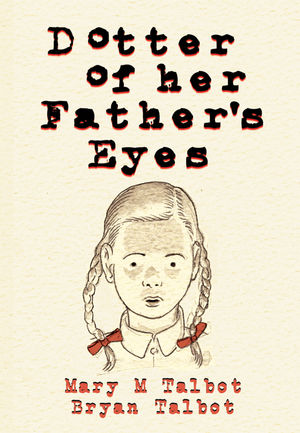
Dotter of Her Father's Eye by Mary M. Talbot, art by Bryan Talbot
Mary Talbot remembers growing up with her father, a renowned James Joyce scholar. Talbot draws parallels between her own life and the life of Joyce's daughter, Lucia.
An interesting story. The main parallel between Mary and Lucia was that they both had fathers who were praised and admired, but when it came to their own families, they were sadly lacking.
Mary's father had moments of kindness and fun, but most of the time he seemed emotionally abusive. He was focused on his work and writing about Joyce, which did not bring in much money for most of Mary's childhood, leaving Mary's mother to not only provide for her family, but also care for all the children.
I thought Lucia's story was fascinating, and I felt absolutely awful for her. I didn't know anything about Lucia Joyce before reading this. She was an incredibly talented dancer, but both her mother and her father discouraged her. It was so sad to see her so excited after a performance, being praised by critics and other dancers and to have her parents say, "Yes, very nice dear, but when are you going to stop this?" Her father's moving around and insisting she come with her ruined her career. When she lashed out in anger after giving up dance at the request of her father, her brother had her put in an asylum. The poor woman. If she was actually crazy, it was completely the fault of her parents, but she probably wasn't. She was finally expressing what she felt and she got shut up for the rest of her life. Yikes.
Mary got pregnant young and she and her then boyfriend, Bryan, got married. And they're still married to this day. That made me happy. They have two children and are making books together. Lucia's story did not have a happy ending, but I think Mary got one.
Dotter of Her Father's Eye come out February 8, 2012.
An interesting story. The main parallel between Mary and Lucia was that they both had fathers who were praised and admired, but when it came to their own families, they were sadly lacking.
Mary's father had moments of kindness and fun, but most of the time he seemed emotionally abusive. He was focused on his work and writing about Joyce, which did not bring in much money for most of Mary's childhood, leaving Mary's mother to not only provide for her family, but also care for all the children.
I thought Lucia's story was fascinating, and I felt absolutely awful for her. I didn't know anything about Lucia Joyce before reading this. She was an incredibly talented dancer, but both her mother and her father discouraged her. It was so sad to see her so excited after a performance, being praised by critics and other dancers and to have her parents say, "Yes, very nice dear, but when are you going to stop this?" Her father's moving around and insisting she come with her ruined her career. When she lashed out in anger after giving up dance at the request of her father, her brother had her put in an asylum. The poor woman. If she was actually crazy, it was completely the fault of her parents, but she probably wasn't. She was finally expressing what she felt and she got shut up for the rest of her life. Yikes.
Mary got pregnant young and she and her then boyfriend, Bryan, got married. And they're still married to this day. That made me happy. They have two children and are making books together. Lucia's story did not have a happy ending, but I think Mary got one.
Dotter of Her Father's Eye come out February 8, 2012.
Wednesday, January 25, 2012
The Next Day by John Porcellino, Paul Peterson and Jason Gilmore
This graphic novel starts with a warning. "This graphic novella is built from intimate interviews with four people who have attempted suicide. It includes descriptions of actual attempts and traumatic events that may be upsetting to some readers." It is the story of four young people, Tina, Ryan, Chantel and Jenn, who all attempt suicide. Each individual's story is told, leading up to their suicide attempt and what happened after.
I think it was a very brave thing to do. Suicide, depression, and other mental illnesses are still taboo subjects. It's something to be ashamed of and people don't like to talk about. It was brave for these four individual's to share their stories and the struggles they face to this day, and it was brave for the authors to put it together and publish it.
Labels:
adult,
Book review,
graphic novel,
non fiction,
serious issues,
YA
Sunday, January 1, 2012
Underwire by Jennifer Hayden
Jennifer Hayden is a member of the webcomic collective act-i-vate where she publishes her autobiographical comic Underwire. Underwire is a collection of the webcomics.
Jennifer is in her forties, married, with two children. Her comics tells stories of moments with her daughter, a dream she had about her husband, laughing and saying bitchy things about other people with her girl friends, and other little moments from her life.
Each comic is about 18 to 20 square boxes, drawn simply in black and white. While I didn't love the style the comic is drawn in, I loved seeing these small moments from Jennifer's life. She is able to say a lot in very few words, and even without her illustrations being especially detailed. A strong feeling comes across in every story she tells.
Jennifer is very truthful. She is not afraid to show that she's far from perfect, that her husband sometimes pisses her off, and that her kids both drive her crazy and amaze her. I feel kind of bad for her family, that they are exposed in this way, but maybe having a mom like Jennifer has prepared them. In any case, I very much enjoyed reading her stories.
Jennifer is currently working on a graphic novel, The Story of My Tits, that tells the story of her breast cancer diagnose. It will be coming out in 2012.
Jennifer is in her forties, married, with two children. Her comics tells stories of moments with her daughter, a dream she had about her husband, laughing and saying bitchy things about other people with her girl friends, and other little moments from her life.
Each comic is about 18 to 20 square boxes, drawn simply in black and white. While I didn't love the style the comic is drawn in, I loved seeing these small moments from Jennifer's life. She is able to say a lot in very few words, and even without her illustrations being especially detailed. A strong feeling comes across in every story she tells.
Jennifer is very truthful. She is not afraid to show that she's far from perfect, that her husband sometimes pisses her off, and that her kids both drive her crazy and amaze her. I feel kind of bad for her family, that they are exposed in this way, but maybe having a mom like Jennifer has prepared them. In any case, I very much enjoyed reading her stories.
Jennifer is currently working on a graphic novel, The Story of My Tits, that tells the story of her breast cancer diagnose. It will be coming out in 2012.
Labels:
adult,
Book review,
graphic novel,
humor,
non fiction
Sunday, December 25, 2011
Around the World by Matt Phelan
In 1873, Jules Verne wrote Around the World in Eighty Days, and exciting adventure of a man racing against time. The book inspired real life adventures to circumnavigate the world. In this graphic novel, the stories of three individuals at the end of the nineteenth century are told, who all went around the world in very different ways.
The first story is of Thomas Stevens who from 1884 to 1886 rode around the world on a bicycle (naturally taking a boat at the water bits). And not the bicycle you're probably picturing. One of the ones with the gigantic front wheel and a tiny back wheel.
The second story is Nellie Bly's, a female reporter for the New York World who set out in 1889 to beat the Jules Verne hero and go around the world in 74 days.
The final story is about Joshua Slocum, a mariner. In 1895 he set out in a small boat to sail around the world, not returning until 1898.
This was a lovely graphic novel. The illustrative style is similar throughout the book, but the color scheme is different for each story. Stevens' story is in blues and grays, Bly's story is more colorful and vibrant with yellows and blues, and Slocum's is the most subdued in dark blue, gray and brown.
I know the story of Nellie Bly, but I'd never heard of Thomas Stevens or Joshua Slocum before, and it was fascinating reading about them. Slocum's story and the least words, and was very sad. It was about his trip around the world in his little boat, but it was really about his sadness and loneliness about the loss of his beloved first wife. Although he's remarried, he clearly still loves her a misses her.
Nellie Bly came off as a total jerk in her story. It might be based on fact. She probably had to be very assertive and not let other people push her around. She was doing things that were unheard of for women. She's glaring or squinting angrily in most of her illustrations. And saying rude things. If it's based on fact, then fine, otherwise, why make her look so unpleasant?
Definitely a very pretty as well as informational graphic novel. Recommended!
The first story is of Thomas Stevens who from 1884 to 1886 rode around the world on a bicycle (naturally taking a boat at the water bits). And not the bicycle you're probably picturing. One of the ones with the gigantic front wheel and a tiny back wheel.
The second story is Nellie Bly's, a female reporter for the New York World who set out in 1889 to beat the Jules Verne hero and go around the world in 74 days.
The final story is about Joshua Slocum, a mariner. In 1895 he set out in a small boat to sail around the world, not returning until 1898.
This was a lovely graphic novel. The illustrative style is similar throughout the book, but the color scheme is different for each story. Stevens' story is in blues and grays, Bly's story is more colorful and vibrant with yellows and blues, and Slocum's is the most subdued in dark blue, gray and brown.
I know the story of Nellie Bly, but I'd never heard of Thomas Stevens or Joshua Slocum before, and it was fascinating reading about them. Slocum's story and the least words, and was very sad. It was about his trip around the world in his little boat, but it was really about his sadness and loneliness about the loss of his beloved first wife. Although he's remarried, he clearly still loves her a misses her.
Nellie Bly came off as a total jerk in her story. It might be based on fact. She probably had to be very assertive and not let other people push her around. She was doing things that were unheard of for women. She's glaring or squinting angrily in most of her illustrations. And saying rude things. If it's based on fact, then fine, otherwise, why make her look so unpleasant?
Definitely a very pretty as well as informational graphic novel. Recommended!
Labels:
adventure,
Book review,
graphic novel,
non fiction
Friday, October 28, 2011
Lily Renee, Escape Artist by Trina Robbins
Lily Renee grew up a privileged child in Vienna, Austria. After Austria was annexed by Germany in 1938, everything changed for Lily and her family because they were Jewish. No longer able to go to her school or play with her friends, things go from bad to worse until Lily is sent away first to England and then to New York. Later, reunited with her parents, Lily eventually began work drawing comic books.
I enjoyed this, and I liked that we got to here a real story about a Jewish child who was part of the Kindertransport. The Kindertransport was a program that got children, mostly Jewish children, out of Nazi-occupied countries and to England. Almost 10,000 were able to escape this way. Nine months before World War II began the program was ended. I could be wrong, but I don't remember reading a lot about this in middle grade or YA books, fiction or non-fiction. It's a really interesting piece of history and it was great to hear about it.
Lily got out on the very tail end of the Kindertransport, she was on one of the last trains that were allowed to leave. Although she was staying in England at the home of her pen-pal, she was not treated well. Lily didn't get to go to school, but stayed home and worked for her friend's mother. Lily had never had to do household chores in her life and wasn't good at them. She was given only one meal a day. Eventually she ran away and for a time worked as a mother's helper, companion, even as a nurse, before discovering her parents had made it out of Nazi-occupied Austria and were waiting for her in New York.
It was in New York that Lily applied for and got a job working for Fiction House. The book ends after she gets the job, pretty much, so we don't get to learn about her later life. Maybe because it's a middle grade book, the thought was not to take the story into her grown-up life? There's a little summary at the end, but not much. Or maybe it was just because the most "interesting" part of her life was the escape from Austria.
I'm a big fan of Trina Robbins, and I always love hearing about women in comics, so I definitely recommend this. Suggest it to your kids who like to read historical fiction, even though it's a biography, it reads like historical fiction.
Lily Renee, Escape Artist comes out November 1.
I enjoyed this, and I liked that we got to here a real story about a Jewish child who was part of the Kindertransport. The Kindertransport was a program that got children, mostly Jewish children, out of Nazi-occupied countries and to England. Almost 10,000 were able to escape this way. Nine months before World War II began the program was ended. I could be wrong, but I don't remember reading a lot about this in middle grade or YA books, fiction or non-fiction. It's a really interesting piece of history and it was great to hear about it.
Lily got out on the very tail end of the Kindertransport, she was on one of the last trains that were allowed to leave. Although she was staying in England at the home of her pen-pal, she was not treated well. Lily didn't get to go to school, but stayed home and worked for her friend's mother. Lily had never had to do household chores in her life and wasn't good at them. She was given only one meal a day. Eventually she ran away and for a time worked as a mother's helper, companion, even as a nurse, before discovering her parents had made it out of Nazi-occupied Austria and were waiting for her in New York.
It was in New York that Lily applied for and got a job working for Fiction House. The book ends after she gets the job, pretty much, so we don't get to learn about her later life. Maybe because it's a middle grade book, the thought was not to take the story into her grown-up life? There's a little summary at the end, but not much. Or maybe it was just because the most "interesting" part of her life was the escape from Austria.
I'm a big fan of Trina Robbins, and I always love hearing about women in comics, so I definitely recommend this. Suggest it to your kids who like to read historical fiction, even though it's a biography, it reads like historical fiction.
Lily Renee, Escape Artist comes out November 1.
Tuesday, May 24, 2011
Nickel and Dimed by Barbara Enrenreich
Journalist Barbara Ehrenreich spends several months working at minimum wage jobs in several different locations around the country. Her goal is to see if it's really possible to live on a minimum wage salary.
The first job Ehrenreich works is as a waitress in her own home of Key West, Florida. She quickly finds that in order to afford housing, she needs to pick up a second job, and the only reason she could afford a down payment on an apartment is that she allowed herself some start-off money. Working two jobs exhausts her, and she moves into a mobile home and drops the lower paying waitressing job.
Next she works as a maid in Maine. Ehrenreich finds working as a maid makes her invisible, more than any of the other jobs she has. Again, one job isn't enough, so she begins working at a nursing home on weekends.
The last job Ehrenreich takes is retail. She works at a Wal-Mart in Minnesota. In Minnesota, Ehrenreich lives in motels, as affordable housing isn't available. She ultimately has to leave because she isn't able to find a second job in time, and can't afford anything on the $7 she makes at Wal-Mart.
The first job Ehrenreich works is as a waitress in her own home of Key West, Florida. She quickly finds that in order to afford housing, she needs to pick up a second job, and the only reason she could afford a down payment on an apartment is that she allowed herself some start-off money. Working two jobs exhausts her, and she moves into a mobile home and drops the lower paying waitressing job.
Next she works as a maid in Maine. Ehrenreich finds working as a maid makes her invisible, more than any of the other jobs she has. Again, one job isn't enough, so she begins working at a nursing home on weekends.
The last job Ehrenreich takes is retail. She works at a Wal-Mart in Minnesota. In Minnesota, Ehrenreich lives in motels, as affordable housing isn't available. She ultimately has to leave because she isn't able to find a second job in time, and can't afford anything on the $7 she makes at Wal-Mart.
Labels:
adult,
audio book review,
non fiction
Wednesday, May 11, 2011
A Walk in the Woods by Bill Bryson
Bill Bryson returns to the United States after living for England for 20 years. He decides it would be an excellent idea to hike the entire Appalachian Trail (about 2,181 miles) despite the fact he knows nothing about hiking. Then he will write a book about it. So off he goes on his quest. Of course, things do not go as planned.
I've never read anything by Bill Bryson before. I'd heard that his books are really funny. Perhaps others are, but I didn't really find this humorous at all. In fact, if it wasn't on our student's summer reading list, I probably would have given up. I listened to this on audio, and the audio was fine. The reader was clear, and actually the voice worked very well with the holier-than-thou picture I was forming of Bryson.
Right at the very beginning, I was just struck by what an idiot Bryson was. He has no experience with this kind of hiking, and he was planning on hiking the AT, the whole thing, alone. What? What kind of fool does that? Please don't try this at home, kids. Seriously, he's lucky he didn't die. Do not screw around with this sort of thing. You don't just waltz out your door and embark on a hardcore hike when you have no idea what you're doing. Bryson was able to recruit a friend to go with him, Katz, but amazingly Katz knew even less and was less prepared to do the AT than Bryson was. So they made quite a pair.
I've never read anything by Bill Bryson before. I'd heard that his books are really funny. Perhaps others are, but I didn't really find this humorous at all. In fact, if it wasn't on our student's summer reading list, I probably would have given up. I listened to this on audio, and the audio was fine. The reader was clear, and actually the voice worked very well with the holier-than-thou picture I was forming of Bryson.
Right at the very beginning, I was just struck by what an idiot Bryson was. He has no experience with this kind of hiking, and he was planning on hiking the AT, the whole thing, alone. What? What kind of fool does that? Please don't try this at home, kids. Seriously, he's lucky he didn't die. Do not screw around with this sort of thing. You don't just waltz out your door and embark on a hardcore hike when you have no idea what you're doing. Bryson was able to recruit a friend to go with him, Katz, but amazingly Katz knew even less and was less prepared to do the AT than Bryson was. So they made quite a pair.
Labels:
adult,
audio book review,
non fiction
Monday, February 28, 2011
Smile by Raina Telgemeier
One ordinary day, Raina has an accident that knocks out both her front teeth. As if being in middle school wasn't bad enough, now she's in middle school with no front teeth. Raina's accident is followed by years of painful surgery and all kinds of unpleasant mouth related drama. While all this is going on, Raina is also learning more about herself, her interests, and whom her friends are.
This was great. It was sweet and uplifting and made me laugh and cringe. It was very honest
While it might seem like this biography is mostly about a young girl's teeth drama, which is partly true, there's also all the stuff that's going on with Raina's group of friends. You're probably familiar with this dynamic. You have a big group of kids who are all friends and there's one kid who ends up being teased a lot. Oh it's all in fun, you're all friends, but there's one who's always getting ganged up on. That's Raina, and as time goes on, she's getting awfully tired of it. She wonders if these people are really her friends at all. I was so glad when in high school Raina finally got up the courage to tell all those not very nice "friends" where they could shove it and went off and did her own thing. And when she did, she found people with similar interests who she really liked and who really liked her.
The art was done in traditional comic strip style in black and white with straight panels
While for much of the book Raina is in middle school, I think both middle grade and high school students would enjoy this. It's not just about middle school or teeth. It was about discovering yourself and that's something that any age person can relate to. Especially when it's done so nicely.
This was great. It was sweet and uplifting and made me laugh and cringe. It was very honest
While it might seem like this biography is mostly about a young girl's teeth drama, which is partly true, there's also all the stuff that's going on with Raina's group of friends. You're probably familiar with this dynamic. You have a big group of kids who are all friends and there's one kid who ends up being teased a lot. Oh it's all in fun, you're all friends, but there's one who's always getting ganged up on. That's Raina, and as time goes on, she's getting awfully tired of it. She wonders if these people are really her friends at all. I was so glad when in high school Raina finally got up the courage to tell all those not very nice "friends" where they could shove it and went off and did her own thing. And when she did, she found people with similar interests who she really liked and who really liked her.
The art was done in traditional comic strip style in black and white with straight panels
While for much of the book Raina is in middle school, I think both middle grade and high school students would enjoy this. It's not just about middle school or teeth. It was about discovering yourself and that's something that any age person can relate to. Especially when it's done so nicely.
Subscribe to:
Posts (Atom)